THE CLASSIC COLLECTION✦An outlaw’s diary: the CommuneCLASSIC FREE BOOKS
An outlaw’s diary: the Commune
Cécile Tormay
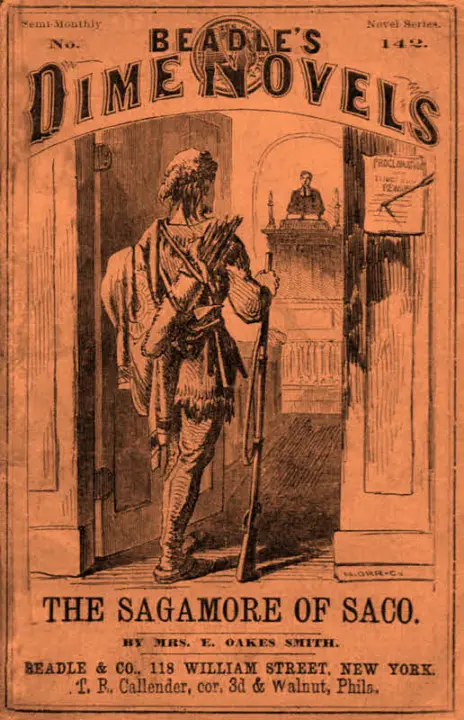
THE CLASSIC COLLECTION · 1868
"The Sagamore of Saco" by Elizabeth Oakes Smith is a historical fiction novel written in the late 19th century. The narrative unfolds during the early colonial period in New England, encompassing themes of love, conflict, and societal tensions through the experiences of young John Bonyton and his beloved, Hope Vines. The story is set against a backdrop of early colonial life, capturing the complexities of relationships between settlers and Native Americans, and the impending conflicts arising from suspicion and prejudice. The opening of the novel introduces us to the emotional turmoil surrounding John Bonyton, whose fierce love for Hope Vines stands at odds with societal expectations and familial pressures. As the narrative unfolds, it reveals the character dynamics between John, Hope, and their parents, particularly reflecting on the clashes between Puritanical beliefs and individual desires. At the same time, a dark undercurrent of jealousy from Acashee, a Native American girl enamored with John, hints at perilous circumstances that could ensnare Hope, culminating in rising tensions as the characters navigate their intertwined fates amidst cultural strife and personal aspirations.
Introduction adapted from the source catalogue; source summaries may be automatically generated.
Free to read · English · 46,077 words · No account needed
MAKE TIME FOR A GOOD BOOK
On by default. Untick to stop anonymous reading totals. Each page counts after 10 seconds in view. How this works.
Anonymous counting is on unless you have switched it off.
At length Hope lifted up her head, wringing her hands, with a face
white as snow.
“Oh! John Bonyton, did I not tell you so years ago? Did I not see Hope always alone--always desolate?”
“My poor bird!”
Their heads were bowed down, their breathing faint and labored, and low moans escaped them. What was the world to them! Stricken and changed, living and breathing, they only knew that they lived and breathed by the pangs that revealed the beating pulse.
Oh! life, life! thou art a fearful boon, and thy love not the least
fearful of thy gifts!
At length Hope remembered the beacon-fire; and she started wildly to her feet, for if the flame decayed her work would be lost; but there was no fear; the flames had kindled a tall hemlock, heavy with the moss of ages, and this poured forth volumes of fiery tongues, lighting the scene with midday radiance. She pointed to the beacon, and would have spoken, but the sagamore held her firmly in his arms, and smoothing back her white hair, he murmured:
“Thou shalt never leave me again, my tender, my beautiful bird! It has
fared ill with thee.”
It was a melancholy contrast--he in the full flush of his noble manhood, gathering the diminutive creature, like a lost lamb, in his arms--he, tall and commanding, she bleached by solitude and grief.
Something of this he felt, for a paternal tenderness caused the tears to gush to his eyes, and he kissed her brow reverently, saying:
“How I have searched for thee, my birdie! my fair child! I have been haunted by the fairies, and goaded well-nigh to madness; but thou art here--yet not thou. Oh, Hope! Hope!”
She listened intent and breathless; she forgot all else, all but the tones of the dear voice, the music of her life; but, hearing these last words, she cried:
“Why did you go over the vast waters, John Bonyton? I knew it would be so. I knew, if we parted, we could never be the same again. The same cloud returns not to the sky; the same blossom blooms not twice; human faces wear not twice the same look; and, alas! alas! the heart of to-day is not that of to-morrow.”
Her eyes had been fixed on the face of her lover, but as she went on, they were raised upward from his loving eyes--upward from his noble brow, and gazed away into the far-off and unknown, with a weird, wistful earnestness, as we have seen a child’s eyes fixed as the spirit found its way to the crystal gates of Paradise.
Your reading position is saved on this browser. Take it to another device with a library code. Reading pages adapt to text, rather than matching a printed edition.
BEHIND THE BOOK
This eBook is for the use of anyone anywhere in the United States and most other parts of the world at no cost and with almost no restrictions whatsoever. You may copy it, give it away or re-use it under the terms of the Project Gutenberg License included with this eBook or online at www.gutenberg.org. If you are not located in the United States, you will have to check the laws of the country where you are located before using this eBook. Read the source licence.
The original source file, including credits and licence, is retained by this library. Request an original-format copy at no charge. Please include the book title and Project Gutenberg identifier #56007.
KEEP YOUR CURIOSITY GOING
Cécile Tormay

Moritz Busch
Coulson Kernahan
John L. Ransom

Maurice Baring
Frances Wright