THE CLASSIC COLLECTION✦An outlaw’s diary: the CommuneCLASSIC FREE BOOKS
An outlaw’s diary: the Commune
Cécile Tormay
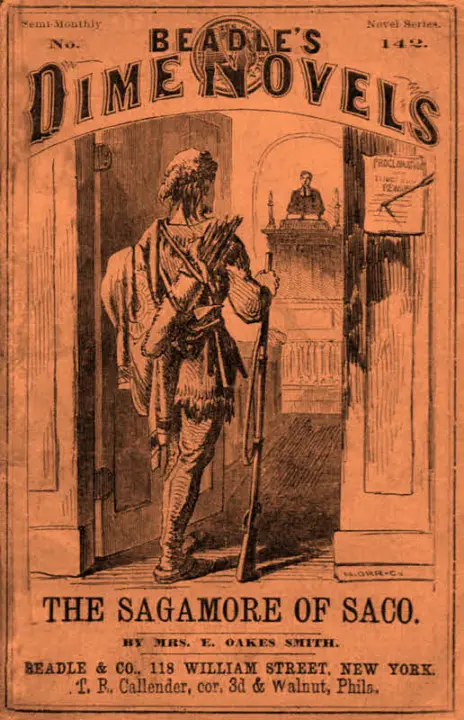
THE CLASSIC COLLECTION · 1868
"The Sagamore of Saco" by Elizabeth Oakes Smith is a historical fiction novel written in the late 19th century. The narrative unfolds during the early colonial period in New England, encompassing themes of love, conflict, and societal tensions through the experiences of young John Bonyton and his beloved, Hope Vines. The story is set against a backdrop of early colonial life, capturing the complexities of relationships between settlers and Native Americans, and the impending conflicts arising from suspicion and prejudice. The opening of the novel introduces us to the emotional turmoil surrounding John Bonyton, whose fierce love for Hope Vines stands at odds with societal expectations and familial pressures. As the narrative unfolds, it reveals the character dynamics between John, Hope, and their parents, particularly reflecting on the clashes between Puritanical beliefs and individual desires. At the same time, a dark undercurrent of jealousy from Acashee, a Native American girl enamored with John, hints at perilous circumstances that could ensnare Hope, culminating in rising tensions as the characters navigate their intertwined fates amidst cultural strife and personal aspirations.
Introduction adapted from the source catalogue; source summaries may be automatically generated.
Free to read · English · 46,077 words · No account needed
MAKE TIME FOR A GOOD BOOK
On by default. Untick to stop anonymous reading totals. Each page counts after 10 seconds in view. How this works.
Anonymous counting is on unless you have switched it off.
Had the party observed the white occupant of the sumptuous couch, they would have been aware of a pair of dark, bright eyes peering through those snowy locks, and red lips parted in the eagerness of the intent ear.
“Has the scout arrived?” asked Acashee.
“Fleet-foot has returned, and the Sacos are coming to reclaim tribute
of the Androscoggins.”
“When will the Sacos be upon the trail?”
“They are already on their way; they have landed at the meeting of the
waters.”
“Why await their coming? Why sit here and invite the tomahawk and the brand? Give me the war-club of a chief, and I will teach them what it is to follow the trail of the Androscoggin!”
The fierce fervor of the woman was not lost upon the council of chiefs, but they replied, gravely:
“Listen, daughter of Samoset! Thou shalt wear the eagle-plume, for thy courage and thy wisdom are becoming to a chief.”
“When arrived the Sacos at the meeting of the rivers?” asked Acashee.
“As the sun went down.”
“Where is the Sagamore of Saco?”
“He leads the expedition.”
Acashee walked back and forth, and then stooped over the couch of Hope, and listened. Apparently she slept, for she returned to the council-fire.
It may be that the effort at concealment had been too great for the nerves of Hope, for hardly had the woman turned away when a low sound, like a human wail, escaped from the couch. Acashee again bent over the recumbent form, but there was no sign of consciousness, no winking of the eye, no perturbation. The panther rolled himself over, stretched out his claws, and threw back his head, showing his long, red tongue and glittering teeth, and uttered a yawn so nearly a howl, that the woman believed the sounds identical, and the warriors resumed their discussion.
“In an hour the moon will set,” said Acashee.
“Our young warriors lean upon their arms. When the moon is down we light a fire above the falls, at Still-Water. This will be the signal for the Terrentines to join us. They will there leave their canoes in the hands of the women, and join our warriors on the bank below. The fire will warn our people how near to approach the falls, for the night will be dark.”
“It is well planned,” said Acashee.
“Has Wa-ain (White Spirit) spoken?” asked an old chief.
“She has had a vision of battle.”
“How went it with the Androscoggins?”
“There is nothing but victory to the brave,” she answered, evading the
truth.
The old chief was not deceived. He eyed her with a keen, penetrating
look, but said not a word.
Your reading position is saved on this browser. Take it to another device with a library code. Reading pages adapt to text, rather than matching a printed edition.
BEHIND THE BOOK
This eBook is for the use of anyone anywhere in the United States and most other parts of the world at no cost and with almost no restrictions whatsoever. You may copy it, give it away or re-use it under the terms of the Project Gutenberg License included with this eBook or online at www.gutenberg.org. If you are not located in the United States, you will have to check the laws of the country where you are located before using this eBook. Read the source licence.
The original source file, including credits and licence, is retained by this library. Request an original-format copy at no charge. Please include the book title and Project Gutenberg identifier #56007.
KEEP YOUR CURIOSITY GOING
Cécile Tormay

Moritz Busch
Coulson Kernahan
John L. Ransom

Maurice Baring
Frances Wright