THE CLASSIC COLLECTION✦An outlaw’s diary: the CommuneCLASSIC FREE BOOKS
An outlaw’s diary: the Commune
Cécile Tormay
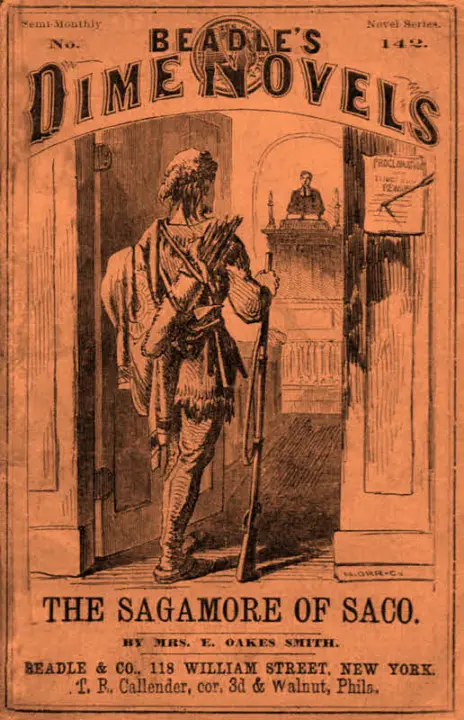
THE CLASSIC COLLECTION · 1868
"The Sagamore of Saco" by Elizabeth Oakes Smith is a historical fiction novel written in the late 19th century. The narrative unfolds during the early colonial period in New England, encompassing themes of love, conflict, and societal tensions through the experiences of young John Bonyton and his beloved, Hope Vines. The story is set against a backdrop of early colonial life, capturing the complexities of relationships between settlers and Native Americans, and the impending conflicts arising from suspicion and prejudice. The opening of the novel introduces us to the emotional turmoil surrounding John Bonyton, whose fierce love for Hope Vines stands at odds with societal expectations and familial pressures. As the narrative unfolds, it reveals the character dynamics between John, Hope, and their parents, particularly reflecting on the clashes between Puritanical beliefs and individual desires. At the same time, a dark undercurrent of jealousy from Acashee, a Native American girl enamored with John, hints at perilous circumstances that could ensnare Hope, culminating in rising tensions as the characters navigate their intertwined fates amidst cultural strife and personal aspirations.
Introduction adapted from the source catalogue; source summaries may be automatically generated.
Free to read · English · 46,077 words · No account needed
MAKE TIME FOR A GOOD BOOK
On by default. Untick to stop anonymous reading totals. Each page counts after 10 seconds in view. How this works.
Anonymous counting is on unless you have switched it off.
In the mean while, the chiefs around the council-fire sat long in solemn conclave. At one time, the debate had been of more than usual animation, but at length a solemn silence prevailed, and the sagamore approached the captive, tomahawk in hand. She lifted her head proudly and looked him in the face while he cut the bonds and set her free.
“Go, Acashee; go, Spider; we need you not.”
The woman looked imploringly up, and even dashed her hands into his face, as he held her by the hair of her head, and cut away the long, heavy braids that depended therefrom. A shout of derision burst from the women, and they followed her with loud and contemptuous jeers far into the forest. Weary at length of their malignant sport, they returned to the camp, leaving the disgraced woman to make her way as best she could, through almost impenetrable forests, to her own people.
John Bonyton, having cut away the black locks of Acashee, retired from the council. A scout had been appointed to follow the woman, never to lose sight of her, to succor her if needed, and after having seen her safely within her own tribe, to return to the camp, and report all he could learn.
When Acashee had departed, John Bonyton, impelled by an irresistible desire to learn something of Hope Vines, whose fate he believed was known to the Indian girl, followed in her path till he saw her throw herself upon the fallen leaves, and give utterance to a fierce, low cry, not unlike that of the hungry panther. She tore at her dishonored locks, and gnashed her teeth in impotent fury.
The sagamore, tall, calm and silent, stood before her. Instantly she sprung to her feet, and throwing back her head, cried:
“Pale-faced coward! I spit upon you, and will work a spell that shall consume all your bones, and--”
“Silence, girl. You will not provoke me to kill you. Live, the scorn of
your people.”
“I will live, but only to work your destruction! No, no, no, John Bonyton,” and she covered her face with her hands, to hide her relenting tears.
The sagamore was softened, and laid his hand upon her shoulder.
“Tell me what became of Hope Vines, Acashee, and I will forget all the
past.”
“She was called away by the Great Spirit.” And her look and tone
softened.
Your reading position is saved on this browser. Take it to another device with a library code. Reading pages adapt to text, rather than matching a printed edition.
BEHIND THE BOOK
This eBook is for the use of anyone anywhere in the United States and most other parts of the world at no cost and with almost no restrictions whatsoever. You may copy it, give it away or re-use it under the terms of the Project Gutenberg License included with this eBook or online at www.gutenberg.org. If you are not located in the United States, you will have to check the laws of the country where you are located before using this eBook. Read the source licence.
The original source file, including credits and licence, is retained by this library. Request an original-format copy at no charge. Please include the book title and Project Gutenberg identifier #56007.
KEEP YOUR CURIOSITY GOING
Cécile Tormay

Moritz Busch
Coulson Kernahan
John L. Ransom

Maurice Baring
Frances Wright