THE CLASSIC COLLECTION✦An outlaw’s diary: the CommuneCLASSIC FREE BOOKS
An outlaw’s diary: the Commune
Cécile Tormay
THE CLASSIC COLLECTION · 1868
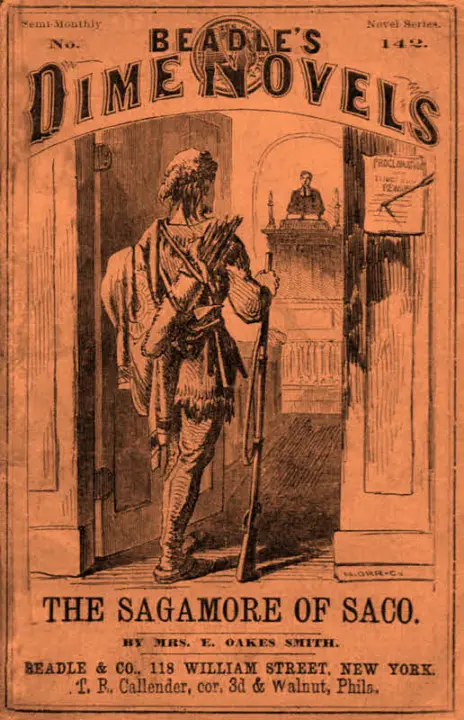
"The Sagamore of Saco" by Elizabeth Oakes Smith is a historical fiction novel written in the late 19th century. The narrative unfolds during the early colonial period in New England, encompassing themes of love, conflict, and societal tensions through the experiences of young John Bonyton and his beloved, Hope Vines. The story is set against a backdrop of early colonial life, capturing the complexities of relationships between settlers and Native Americans, and the impending conflicts arising from suspicion and prejudice. The opening of the novel introduces us to the emotional turmoil surrounding John Bonyton, whose fierce love for Hope Vines stands at odds with societal expectations and familial pressures. As the narrative unfolds, it reveals the character dynamics between John, Hope, and their parents, particularly reflecting on the clashes between Puritanical beliefs and individual desires. At the same time, a dark undercurrent of jealousy from Acashee, a Native American girl enamored with John, hints at perilous circumstances that could ensnare Hope, culminating in rising tensions as the characters navigate their intertwined fates amidst cultural strife and personal aspirations.
Introduction adapted from the source catalogue; source summaries may be automatically generated.
Free to read · English · 46,077 words · No account needed
MAKE TIME FOR A GOOD BOOK
On by default. Untick to stop anonymous reading totals. Each page counts after 10 seconds in view. How this works.
Anonymous counting is on unless you have switched it off.
In a few minutes the woman was seen moving slowly down the street in company with the tall and taciturn man, who moved toward the rude cemetery, in which were laid the dust to dust of the few of the colony who had passed from the strife of the world into the eternal rest. It was a small inclosure in which the stumps of trees were still visible, and the graves were little more than heaps of sand.
Now and then might be seen a few flowers, and a grave rounded with green turf; but it was a desolate-looking place, serving for nothing but the sad necessities of humanity.
In silence the two proceeded onward, and at length stopped where the sod was heaped with unwonted care over a newly made grave. Perseverance burst into tears:
“She lies here, John.”
The sagamore leaned upon his gun--raising the helmet of plumes from his head, and as he gazed downward, tears flowed from his eyes.
“Did she die in peace, at last?”
“Yea, my brother, she deplored your heathenish--”
He waved his hand.
“What said she?”
“At the last she was very gentle. She said she feared the people would bring down the curse of God upon themselves for some of their doings.”
“Go on,” he said, observing her to hesitate.
“She said, ‘I am ill at ease about John,’ and then she burst into tears, and cried, ‘Oh! John, John, my dearest, best! Oh, that I could see him!--oh, that I could bless him, before I die!’”
At this outburst of genuine feeling from his sister, John Bonyton took her hand in his, and long after did Perseverance remember the groan that escaped his bosom.
“Said she nothing of Hope Vines?”
“Yes, John, she said she repented before God the evil she designed in her heart against her.”
“And you?”
As he asked the question, his stern eyes were upon her face.
“I, John?”
“Yes; have you no repentance?”
“I did nothing.”
“Is it nothing to let loose the tongue against the innocent? Do not tell me that you, Perseverance Bonyton, believed these idle stories, which you helped to promulgate.”
“Wiser than I believed them.”
He turned moodily away to the woods, and Perseverance went her way, momentarily softened, but only to resume her hard and vindictive thoughts, and become one in that aggregate of falsehood and malignity which goes to make up human society.
That night, when the village was buried in sleep, John Bonyton might have been seen for hours, kneeling upon his mother’s grave--he, the strong man, weeping like a child upon its mother’s breast.
Your reading position is saved on this browser. Take it to another device with a library code. Reading pages adapt to text, rather than matching a printed edition.
BEHIND THE BOOK
This eBook is for the use of anyone anywhere in the United States and most other parts of the world at no cost and with almost no restrictions whatsoever. You may copy it, give it away or re-use it under the terms of the Project Gutenberg License included with this eBook or online at www.gutenberg.org. If you are not located in the United States, you will have to check the laws of the country where you are located before using this eBook. Read the source licence.
The original source file, including credits and licence, is retained by this library. Request an original-format copy at no charge. Please include the book title and Project Gutenberg identifier #56007.
KEEP YOUR CURIOSITY GOING
Cécile Tormay

Moritz Busch
Coulson Kernahan
John L. Ransom

Maurice Baring
Frances Wright