THE CLASSIC COLLECTION✦An outlaw’s diary: the CommuneCLASSIC FREE BOOKS
An outlaw’s diary: the Commune
Cécile Tormay
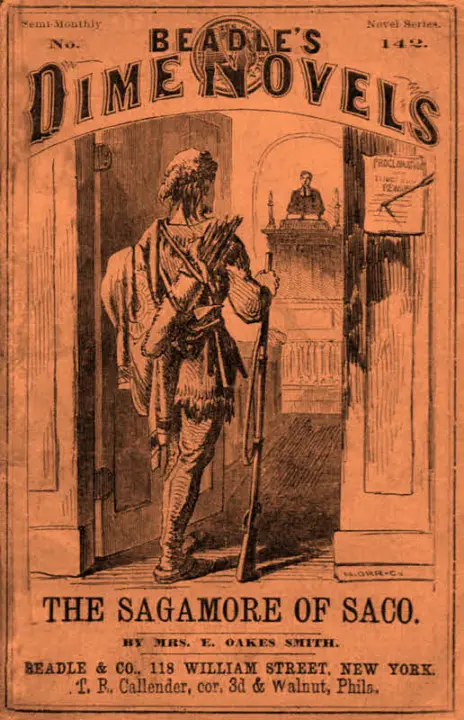
THE CLASSIC COLLECTION · 1868
"The Sagamore of Saco" by Elizabeth Oakes Smith is a historical fiction novel written in the late 19th century. The narrative unfolds during the early colonial period in New England, encompassing themes of love, conflict, and societal tensions through the experiences of young John Bonyton and his beloved, Hope Vines. The story is set against a backdrop of early colonial life, capturing the complexities of relationships between settlers and Native Americans, and the impending conflicts arising from suspicion and prejudice. The opening of the novel introduces us to the emotional turmoil surrounding John Bonyton, whose fierce love for Hope Vines stands at odds with societal expectations and familial pressures. As the narrative unfolds, it reveals the character dynamics between John, Hope, and their parents, particularly reflecting on the clashes between Puritanical beliefs and individual desires. At the same time, a dark undercurrent of jealousy from Acashee, a Native American girl enamored with John, hints at perilous circumstances that could ensnare Hope, culminating in rising tensions as the characters navigate their intertwined fates amidst cultural strife and personal aspirations.
Introduction adapted from the source catalogue; source summaries may be automatically generated.
Free to read · English · 46,077 words · No account needed
MAKE TIME FOR A GOOD BOOK
On by default. Untick to stop anonymous reading totals. Each page counts after 10 seconds in view. How this works.
Anonymous counting is on unless you have switched it off.
While in the porch of the sacred edifice was pasted up a reward, and an ample one, to whomsoever would bring to the Governor the head of the handsome outlaw, one clear summer morning, the inhabitants being assembled for worship, John Bonyton walked in and read the “Notice” in a clear voice, audible to the people inside, who trembled in their boots. He then stuck a flint-headed arrow through the paper, and walked half-way up the central aisle of the little church.
The minister was at prayer; but being an intrepid man, and accustomed to take a peep now and then through his closed lids, he did so on this occasion, and the prayer, ordinarily an hour in length, was greatly abridged.
There stood John Bonyton, rifle in hand, tall, dark, and defiant.
As the minister said “amen,” the women sunk into their seats, but the men remained standing, for it was the custom in that early age and country for the people to stand in prayer--not to kneel, as the reverent will, nor to sit, as the indolent do.
There was a brief pause, and the minister said:
“John Bonyton, what is your will in this place?”
“To worship God,” was the brief reply.
“Know you not that a price has been set upon your head, and any man has the right to kill you?”
“Yea, I know it.”
There was a clatter of fire-locks, and a stir of heavy feet, for every man carried his musket into the house of God in those days, and worshiped armed to the teeth.
John Bonyton cast a fiery eye over the assemblage, and waved his hand.
“Tell your people to sit down. I shall stand.”
The minister gave the signal, and the congregation became seated.
“Come up here, John Bonyton, and sit by me. God forbid that you should be slain, as was Joab, grasping the horns of the altar.”
“Thomas Jenner, I pray thee proceed with thy ministrations; no man will lay hand upon me. You pray and preach; I will listen to you.”
Whereat the Rev. Mr. Jenner gave the people a sermon, which lasted two hours of that hot, midsummer day, in which he enlarged upon the duty of every man, who had come into this new Canaan to plant here the Ark of the Covenant of God, to hold himself in readiness to drive out the heathen, root and branch, as the Israelites of old were commanded to do, when they crossed the Jordan into the promised land, and failing in which, the Jews brought down upon themselves the judgment of an offended Leader and Judge, even the Most High God.
Your reading position is saved on this browser. Take it to another device with a library code. Reading pages adapt to text, rather than matching a printed edition.
BEHIND THE BOOK
This eBook is for the use of anyone anywhere in the United States and most other parts of the world at no cost and with almost no restrictions whatsoever. You may copy it, give it away or re-use it under the terms of the Project Gutenberg License included with this eBook or online at www.gutenberg.org. If you are not located in the United States, you will have to check the laws of the country where you are located before using this eBook. Read the source licence.
The original source file, including credits and licence, is retained by this library. Request an original-format copy at no charge. Please include the book title and Project Gutenberg identifier #56007.
KEEP YOUR CURIOSITY GOING
Cécile Tormay

Moritz Busch
Coulson Kernahan
John L. Ransom

Maurice Baring
Frances Wright