THE CLASSIC COLLECTION✦An outlaw’s diary: the CommuneCLASSIC FREE BOOKS
An outlaw’s diary: the Commune
Cécile Tormay
THE CLASSIC COLLECTION · 1868
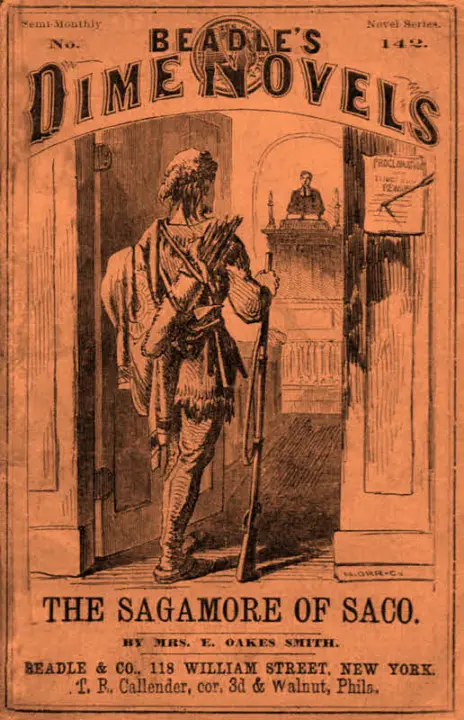
"The Sagamore of Saco" by Elizabeth Oakes Smith is a historical fiction novel written in the late 19th century. The narrative unfolds during the early colonial period in New England, encompassing themes of love, conflict, and societal tensions through the experiences of young John Bonyton and his beloved, Hope Vines. The story is set against a backdrop of early colonial life, capturing the complexities of relationships between settlers and Native Americans, and the impending conflicts arising from suspicion and prejudice. The opening of the novel introduces us to the emotional turmoil surrounding John Bonyton, whose fierce love for Hope Vines stands at odds with societal expectations and familial pressures. As the narrative unfolds, it reveals the character dynamics between John, Hope, and their parents, particularly reflecting on the clashes between Puritanical beliefs and individual desires. At the same time, a dark undercurrent of jealousy from Acashee, a Native American girl enamored with John, hints at perilous circumstances that could ensnare Hope, culminating in rising tensions as the characters navigate their intertwined fates amidst cultural strife and personal aspirations.
Introduction adapted from the source catalogue; source summaries may be automatically generated.
Free to read · English · 46,077 words · No account needed
MAKE TIME FOR A GOOD BOOK
On by default. Untick to stop anonymous reading totals. Each page counts after 10 seconds in view. How this works.
Anonymous counting is on unless you have switched it off.
The youth hardly noticed this kindly outbreak, which, at another time, would have awakened affectionate gratitude, but he still lingered and looked. He took the cap from his head, and shaded his eyes therewith. The fine, freshening breeze lifted the curls from his brow, and showed its whiteness; but now it was too pale, and contracted sharply, making a heavy dent between the eyes.
The white sails were set, the anchor weighed, the wherry grated upon the sand, and impatient voices urged him to embark; and yet John Bonyton lingered. His foot was on the gunwale of the boat; the sailors lifted their oars, when suddenly he started back, waved his hand for them to go, and exclaimed:
“No, by heavens! I will not leave, uncertain of her fate!”
There were adjurations and remonstrances innumerable. The vessel waited; Sir Richard implored; it was in vain.
“I will not go--stand off!” he at length cried, pushing the people aside right and left, and making his way with long strides to the Vines mansion.
Mistress Vines, in a burst of maternal tenderness, threw her arms about
his neck.
“Oh, my son! my beautiful boy! where is Hope? Where is Hope?” she cried.
The young man lifted her arms from his neck, and looked fiercely round.
“Have you hidden her away from me? Tell me truly. Let no one dare
deceive me.”
At this moment his sister Nancy appeared, and going up to him, said:
“I’m ashamed of you, John Bonyton, I am.”
The youth glanced at her. It was evident he was nearly beside himself. He seized her by the arm, and shook her long, thin hands.
“I have heard your talk. I have heard you tell of the ‘witch test,’ on the shoulder of Hope. Go to; if a hair of her head is injured, woe to you and such as you!”
And he pushed her from the door.
In the mean time the vessel departed; the alarm for Hope spread; the whole village was in arms, and people went here and there in wild conjectures. Whatever might have been the feelings of Mistress Bonyton, it was observed that she did not leave her high-backed, flag-bottomed chair, but, with a handkerchief thrown over her head, leaned back, and ever and anon she was heard to croon, in a quavering voice and dismal tone:
“My heart is like a wilderness;
There the wild raven finds her nest,
And there the screeching owl.”
The door opened, and Dr. Mather and Mr. Partridge entered, and seated themselves beside her. Gradually the room filled with the people of the settlement, who regarded Mistress Bonyton as at the head of the movement against Hope Vines.
Your reading position is saved on this browser. Take it to another device with a library code. Reading pages adapt to text, rather than matching a printed edition.
BEHIND THE BOOK
This eBook is for the use of anyone anywhere in the United States and most other parts of the world at no cost and with almost no restrictions whatsoever. You may copy it, give it away or re-use it under the terms of the Project Gutenberg License included with this eBook or online at www.gutenberg.org. If you are not located in the United States, you will have to check the laws of the country where you are located before using this eBook. Read the source licence.
The original source file, including credits and licence, is retained by this library. Request an original-format copy at no charge. Please include the book title and Project Gutenberg identifier #56007.
KEEP YOUR CURIOSITY GOING
Cécile Tormay

Moritz Busch
Coulson Kernahan
John L. Ransom

Maurice Baring
Frances Wright