THE CLASSIC COLLECTION✦An outlaw’s diary: the CommuneCLASSIC FREE BOOKS
An outlaw’s diary: the Commune
Cécile Tormay
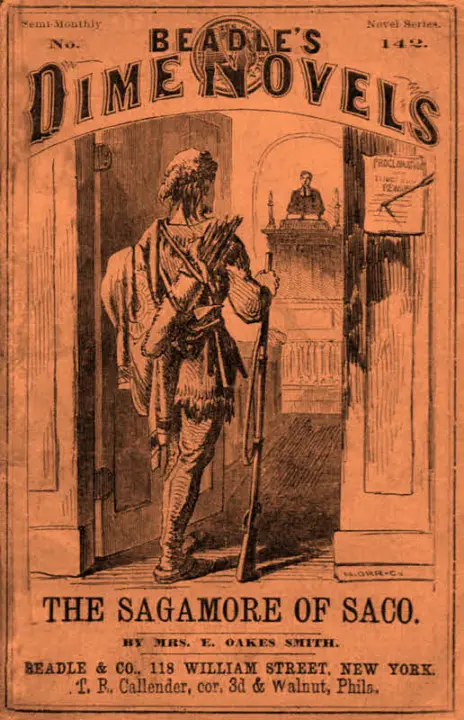
THE CLASSIC COLLECTION · 1868
"The Sagamore of Saco" by Elizabeth Oakes Smith is a historical fiction novel written in the late 19th century. The narrative unfolds during the early colonial period in New England, encompassing themes of love, conflict, and societal tensions through the experiences of young John Bonyton and his beloved, Hope Vines. The story is set against a backdrop of early colonial life, capturing the complexities of relationships between settlers and Native Americans, and the impending conflicts arising from suspicion and prejudice. The opening of the novel introduces us to the emotional turmoil surrounding John Bonyton, whose fierce love for Hope Vines stands at odds with societal expectations and familial pressures. As the narrative unfolds, it reveals the character dynamics between John, Hope, and their parents, particularly reflecting on the clashes between Puritanical beliefs and individual desires. At the same time, a dark undercurrent of jealousy from Acashee, a Native American girl enamored with John, hints at perilous circumstances that could ensnare Hope, culminating in rising tensions as the characters navigate their intertwined fates amidst cultural strife and personal aspirations.
Introduction adapted from the source catalogue; source summaries may be automatically generated.
Free to read · English · 46,077 words · No account needed
MAKE TIME FOR A GOOD BOOK
On by default. Untick to stop anonymous reading totals. Each page counts after 10 seconds in view. How this works.
Anonymous counting is on unless you have switched it off.
“We are straying from the question in hand, gossip,” said the hostess. “I learn, by the last arrivals from home, that the people are not only at their wits’ end in the face of these civil commotions, but that in sundry places have broken out divers cases of witchcraft and possession, whereby the peace and safety of many devout persons has been greatly jeopardized!”
“Yea, yea, I have read thereof; it were a goodly thing if this young church in the wilderness, as yet little disturbed by heresies, should give the older one a lesson. What think you, mistress?”
Mistress Bonyton did not reply directly to the question, but laying her work in her lap, replied, slowly:
“At one time it was thought that your son Ephraim was falling into the snares of this--this--”
“Witch devil.” Perseverance came thus to her mother’s aid.
“Yea, it is most true. Ephraim sat day after day, like a--eh--like a sparrow upon the house-top--eh--lamenting.”
Perseverance eyed Nancy with a malignant smile, whereat the latter,
nothing daunted, replied:
“Many a godly youth has been led astray, but when he returns, and saith ‘I have sinned,’ it shall not be accounted to him.”
“Thou art of a goodly speech, Nancy, and I thank thee,” returned Dame
Higgins.
“There, did you see that?” cried Perseverance, with a sudden start. “Upon my life, Hope Vines jumped off that cliff, the whole hight, and then walked home as if nothing had happened. No goat can do such a thing without help of some kind. I could swear I saw a shape holding her up--there--I am sure I did, and it ran toward the woods in the shape of a black cat.”
All eyes were turned in the direction indicated, where most certainly was to be seen a harmless cat, making her way stealthily, in pursuit of birds--a black, crafty, cruel beast when intent on such game.
John Bonyton now entered with a fine bass, which he laid upon the shelf. He bowed slightly to Dame Higgins, but, observing her work, expressed interest in its progress. It was wonderful how whist the four women became upon his entrance, which observing, he passed out again, saying, with a grave smile, which well became his handsome face:
“I am sure I nipped some woman’s story in the bud by coming in, so I will even go, that ye may finish it,” and he went out again, whereat Dame Higgins exclaimed:
“Ye surely put all your beauty into that boy, mistress, and saved
little for your girls.”
Both the girls pouted somewhat at this, but Perseverance hummed:
“What care I how black I be!
Forty pounds will marry me!”
Your reading position is saved on this browser. Take it to another device with a library code. Reading pages adapt to text, rather than matching a printed edition.
BEHIND THE BOOK
This eBook is for the use of anyone anywhere in the United States and most other parts of the world at no cost and with almost no restrictions whatsoever. You may copy it, give it away or re-use it under the terms of the Project Gutenberg License included with this eBook or online at www.gutenberg.org. If you are not located in the United States, you will have to check the laws of the country where you are located before using this eBook. Read the source licence.
The original source file, including credits and licence, is retained by this library. Request an original-format copy at no charge. Please include the book title and Project Gutenberg identifier #56007.
KEEP YOUR CURIOSITY GOING
Cécile Tormay

Moritz Busch
Coulson Kernahan
John L. Ransom

Maurice Baring
Frances Wright