THE CLASSIC COLLECTION✦An outlaw’s diary: the CommuneCLASSIC FREE BOOKS
An outlaw’s diary: the Commune
Cécile Tormay
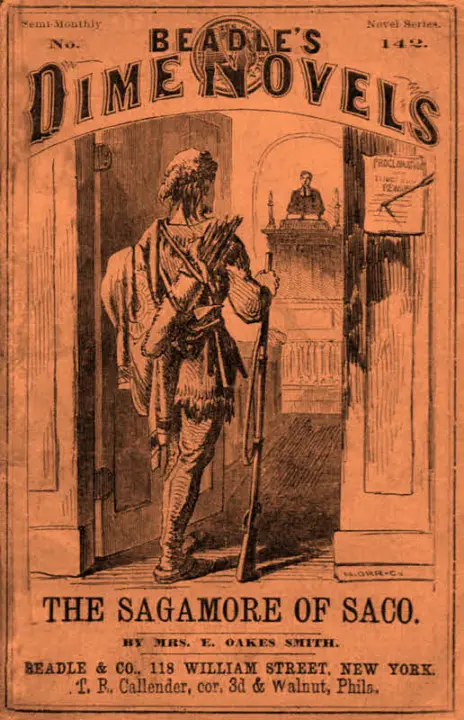
THE CLASSIC COLLECTION · 1868
"The Sagamore of Saco" by Elizabeth Oakes Smith is a historical fiction novel written in the late 19th century. The narrative unfolds during the early colonial period in New England, encompassing themes of love, conflict, and societal tensions through the experiences of young John Bonyton and his beloved, Hope Vines. The story is set against a backdrop of early colonial life, capturing the complexities of relationships between settlers and Native Americans, and the impending conflicts arising from suspicion and prejudice. The opening of the novel introduces us to the emotional turmoil surrounding John Bonyton, whose fierce love for Hope Vines stands at odds with societal expectations and familial pressures. As the narrative unfolds, it reveals the character dynamics between John, Hope, and their parents, particularly reflecting on the clashes between Puritanical beliefs and individual desires. At the same time, a dark undercurrent of jealousy from Acashee, a Native American girl enamored with John, hints at perilous circumstances that could ensnare Hope, culminating in rising tensions as the characters navigate their intertwined fates amidst cultural strife and personal aspirations.
Introduction adapted from the source catalogue; source summaries may be automatically generated.
Free to read · English · 46,077 words · No account needed
MAKE TIME FOR A GOOD BOOK
On by default. Untick to stop anonymous reading totals. Each page counts after 10 seconds in view. How this works.
Anonymous counting is on unless you have switched it off.
“It seems very strange to me, dear John, how people can get along in this world, and why they are put here to be made so miserable. And so you will go away, John Bonyton--go, and we shall never meet again.”
The young man smoothed back the hair which had blown across the face of the speaker, and the passive manner so unlike Hope’s old self, emboldened him to lay her pale cheek upon his shoulder, and he answered:
“I will not be gone long, Hope; the time will soon pass away.”
“But what shall I do, with nobody to understand me? And, besides this, John Bonyton who goes away will not be the John Bonyton that comes back.”
“Why not, little Hope?”
“Why not? How can you ask, when nothing is to-day what it was
yesterday?”
He made the usual protestations of never-changing devotion, which she broke short with her old impetuosity, waving her hand for him to be silent, when a twig snapped near by, and John Bonyton sprung to his feet.
“It is Acashee,” said Hope, coldly. “She is always in your path.”
Again all was silent save the wood-robin, which sung upon a branch
overhead, and Hope resumed:
“Do not go, John Bonyton. Do not enter the ship that will bear you away, for I shall never see you again. You may come back--but my John Bonyton will return no more.”
The youth smiled fondly, for Hope had never before shown him such favor. The mournful tenderness of her looks and words thrilled him with rapture, and he replied:
“I shall return ten times more worthy of you, Hope.”
Hope started, turned pale, and withdrew her hand from his grasp.
“I said you would change, and you boast that you will.”
“Only to be better, nobler, more worthy of your love.”
She looked dreamily into his face and murmured:
“And I? I shall be the same--”
“Surely, dear Hope. Lovely and beautiful. Always growing dear to my
heart.”
She shook her head, and in the same dreamy way went on:
“When the sun goes down I am never quite sure it will come up again; and when it does it has not the same look. The same cloud never returns; the withered blossom does not bloom again; no face wears twice the same look; the smile of yesterday is not that of to-day.”
“But the heart, little Hope, the heart is the same.”
Your reading position is saved on this browser. Take it to another device with a library code. Reading pages adapt to text, rather than matching a printed edition.
BEHIND THE BOOK
This eBook is for the use of anyone anywhere in the United States and most other parts of the world at no cost and with almost no restrictions whatsoever. You may copy it, give it away or re-use it under the terms of the Project Gutenberg License included with this eBook or online at www.gutenberg.org. If you are not located in the United States, you will have to check the laws of the country where you are located before using this eBook. Read the source licence.
The original source file, including credits and licence, is retained by this library. Request an original-format copy at no charge. Please include the book title and Project Gutenberg identifier #56007.
KEEP YOUR CURIOSITY GOING
Cécile Tormay

Moritz Busch
Coulson Kernahan
John L. Ransom

Maurice Baring
Frances Wright