THE CLASSIC COLLECTION✦An outlaw’s diary: the CommuneCLASSIC FREE BOOKS
An outlaw’s diary: the Commune
Cécile Tormay
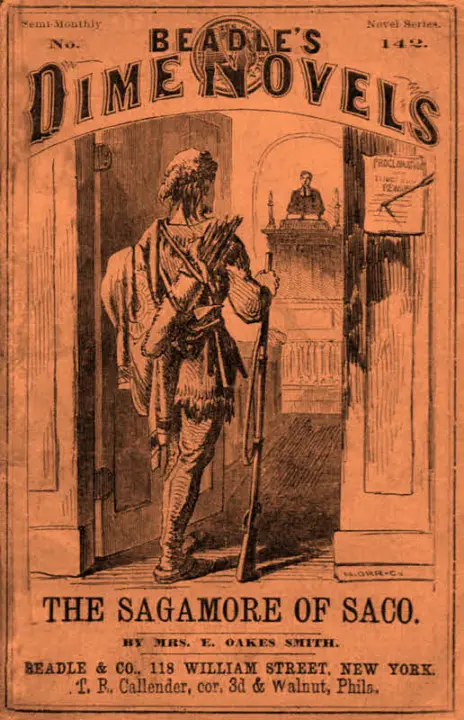
THE CLASSIC COLLECTION · 1868
"The Sagamore of Saco" by Elizabeth Oakes Smith is a historical fiction novel written in the late 19th century. The narrative unfolds during the early colonial period in New England, encompassing themes of love, conflict, and societal tensions through the experiences of young John Bonyton and his beloved, Hope Vines. The story is set against a backdrop of early colonial life, capturing the complexities of relationships between settlers and Native Americans, and the impending conflicts arising from suspicion and prejudice. The opening of the novel introduces us to the emotional turmoil surrounding John Bonyton, whose fierce love for Hope Vines stands at odds with societal expectations and familial pressures. As the narrative unfolds, it reveals the character dynamics between John, Hope, and their parents, particularly reflecting on the clashes between Puritanical beliefs and individual desires. At the same time, a dark undercurrent of jealousy from Acashee, a Native American girl enamored with John, hints at perilous circumstances that could ensnare Hope, culminating in rising tensions as the characters navigate their intertwined fates amidst cultural strife and personal aspirations.
Introduction adapted from the source catalogue; source summaries may be automatically generated.
Free to read · English · 46,077 words · No account needed
MAKE TIME FOR A GOOD BOOK
On by default. Untick to stop anonymous reading totals. Each page counts after 10 seconds in view. How this works.
Anonymous counting is on unless you have switched it off.
There was an Indian village about nine or ten miles off, and though in a straight line, the way was difficult, yet one used to the woods could go and return in a night. Custaloga, believed from his intimate knowledge of the tribe to which Tecumseh--the young chief who had saved Amy--belonged, that the prisoners would in the first instance be taken to that place, as the nearest, and also because it was close to the village of Tecumseh himself, who doubtless would claim Amy as his prize.
“But how do you know it was Tecumseh at all?” said Harvey.
“My brother is very quick of eye, but he is not an Indian, born in the woods. Can you read the little marks on a book?”
“Well, Custa, what a question; you know I can.”
“And an Indian can read the print of a foot,” said the warrior, with a grim smile, as he saw the pun, but could not check it.
“Now for an Injun to make a joke about the print of a foot and the print in a book, is mighty queer,” put in Harvey; “wouldn’t Jane laugh and show her pretty teeth. She’d say six years’ study had done you good, too.”
Custaloga remained silent a moment, as if ashamed of his weakness, and then continued his explanation in the same dignified and solemn manner in which he had commenced it.
He proposed to enter the village under cover of the night, trusting to his skin, and discover, roaming about, whether Amy was really there, as this would materially aid their plan the next day. He undertook to return before daylight, in time for a short rest.
“’Tis plaguy risky,” said Harvey, moodily. “I don’t like it Custa. A pretty kettle of fish if you get took.”
“I will not be taken,” replied Custa, simply.
“I know you won’t--but you’ll be worse,” continued Harvey, sulkily.
“Custa will not be scalped--he has long legs,” said the Indian, again.
“You promise that? Now mind--if you are found, you’ll make tracks and
run.”
Custa made signs that he would, and then began taking off every particle of dress that looked like an assumption of civilized garb. In an instant he stood almost in a state of nature, an apology for a tunic beginning at his waist and hanging to within four inches of his knees, and his moccasins, being his whole dress. He then took from his hunting-bag the necessary materials, and began painting himself with great care. Harrod, however, quickly took the matter out of his hand, and finished him off so perfectly, that Harvey quite started.
Your reading position is saved on this browser. Take it to another device with a library code. Reading pages adapt to text, rather than matching a printed edition.
BEHIND THE BOOK
This eBook is for the use of anyone anywhere in the United States and most other parts of the world at no cost and with almost no restrictions whatsoever. You may copy it, give it away or re-use it under the terms of the Project Gutenberg License included with this eBook or online at www.gutenberg.org. If you are not located in the United States, you will have to check the laws of the country where you are located before using this eBook. Read the source licence.
The original source file, including credits and licence, is retained by this library. Request an original-format copy at no charge. Please include the book title and Project Gutenberg identifier #56007.
KEEP YOUR CURIOSITY GOING
Cécile Tormay

Moritz Busch
Coulson Kernahan
John L. Ransom

Maurice Baring
Frances Wright