THE CLASSIC COLLECTION✦The Countess FannyCLASSIC FREE BOOKS
The Countess Fanny
Marjorie Bowen
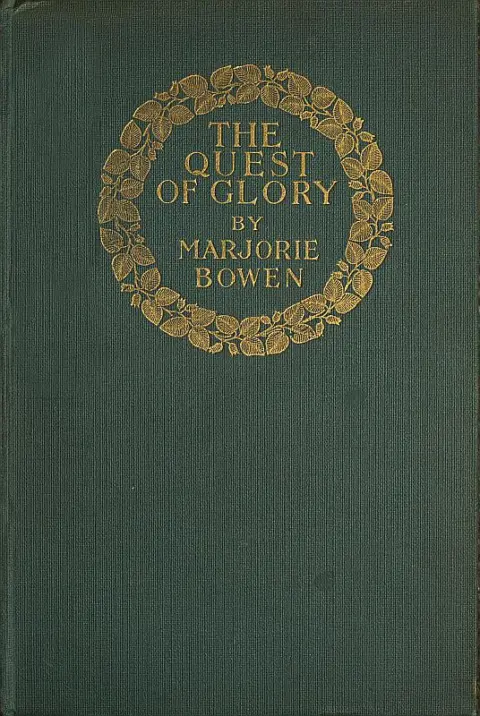
THE CLASSIC COLLECTION · 1912
"The Quest of Glory" by Marjorie Bowen is a historical novel written in the early 20th century. Set against the backdrop of the tumultuous events of the War of the Austrian Succession in the 18th century, the story explores themes of ambition, honor, and the quest for glory through its characters. The narrative follows several French officers, particularly the passionate young lieutenant Georges d’Espagnac, as they navigate the complexities of war, aspirations, and personal relationships while stationed in Prague. The opening of "The Quest of Glory" introduces us to the bleak atmosphere of Prague during a harsh winter siege in December 1742. We meet a group of French officers, each representative of different views on honor and the meaning of glory amidst their mundane and perilous military circumstances. As they share their thoughts, the youthful idealism of Georges d'Espagnac shines through. He is fervently dedicated to the pursuit of glory for France, even as the realities of war weigh heavily on him. The story's initial chapters set the stage for the unfolding drama, emphasizing the struggles and allegiances of the characters in a setting marked by both longing for valor and the bitter hardships of war.
Introduction adapted from the source catalogue; source summaries may be automatically generated.
Free to read · English · 87,825 words · No account needed
MAKE TIME FOR A GOOD BOOK
On by default. Untick to stop anonymous reading totals. Each page counts after 10 seconds in view. How this works.
Anonymous counting is on unless you have switched it off.
Clémence rose, sat down, and rose again.
“Changed--very much?”
“So changed,” said the Marquis slowly, “that only those who love him
would know him.”
“Monseigneur, you try to frighten me!”
“You have to see him to-morrow.”
Her breast heaved and her soft eyes were rebellious.
“He was--beautiful,” she murmured. “I think he had no right. He did
not think of me.”
“He kept the plague from you--from Aix.”
She took no notice.
“For a vagabond’s child,” she continued--“for the sake of a thing of
nought!”
“No,” interrupted the Marquis sternly, “for the sake of his honour.”
Clémence dropped again into the great black chair by the fire.
“You will be here to welcome him to-morrow?” he added. “He speaks of
you so often.”
She did not reply.
“Why do you not answer?” he asked harshly.
“Oh, I shall be here,” she answered. “I was thinking of--how
differently--I dreamed it.”
She rose again, picked up her swansdown-edged muff, her gloves, her cane, and fastened her cloak at the chin.
“Good-bye, Monseigneur,” she said timidly. “My father will bring me to-morrow. I will go now--I think--the horses will be tired--of waiting.”
She curtsied and was turning away when the Marquis rose suddenly and stood between her and the door.
“Mademoiselle,” he said hoarsely.
She stopped and looked at him. He was no longer erect, no longer haughty. He looked old and bitterly troubled. He stood in a deprecating attitude before her delicate young loveliness.
“Forgive me if I was harsh,” he said thickly. “I have no right perhaps to ask what I do.”
She shuddered violently.
“I entreat you not to forsake my son,” continued the old man passionately--“I implore you.”
She closed her eyes.
“I will not deceive you, Mademoiselle. He is--to a woman’s eyes--you
may imagine.”
She shrank against the wall.
The Marquis continued, forcing the words out in almost incoherent
agitation--
“You know what I wish to say, Mademoiselle. You must see him to-morrow. His strength has gone--and his comeliness. He could not use--a sword--or ride a horse--he---- Oh, my God!”
He brought his hands to his grey hair with a gesture of agony.
Clémence quivered into a little sob; she opened her eyes fearfully.
“This is a great scourge,” continued the Marquis, struggling for command over himself--“a great scourge. I want to tell you everything. He is--almost--blind.”
His head sank as if he had confessed a crime. But this humiliation of his fine nobility was lost on Clémence; his words alone impressed her.
“Why was I not told before?” she asked frantically.
“We had not the courage,” the old man confessed. “And if you love
him----”
Your reading position is saved on this browser. Take it to another device with a library code. Reading pages adapt to text, rather than matching a printed edition.
Marjorie Bowen
Marjorie Bowen
Marjorie Bowen
Marjorie Bowen
BEHIND THE BOOK
This eBook is for the use of anyone anywhere in the United States and most other parts of the world at no cost and with almost no restrictions whatsoever. You may copy it, give it away or re-use it under the terms of the Project Gutenberg License included with this eBook or online at www.gutenberg.org. If you are not located in the United States, you will have to check the laws of the country where you are located before using this eBook. Read the source licence.
The original source file, including credits and licence, is retained by this library. Request an original-format copy at no charge. Please include the book title and Project Gutenberg identifier #48767.
KEEP YOUR CURIOSITY GOING
Cécile Tormay

Moritz Busch
Coulson Kernahan
John L. Ransom

Maurice Baring
Frances Wright