THE CLASSIC COLLECTION✦The Countess FannyCLASSIC FREE BOOKS
The Countess Fanny
Marjorie Bowen
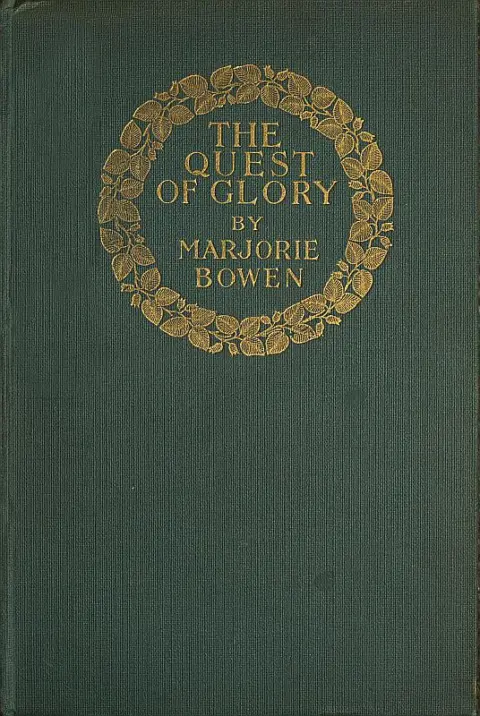
THE CLASSIC COLLECTION · 1912
"The Quest of Glory" by Marjorie Bowen is a historical novel written in the early 20th century. Set against the backdrop of the tumultuous events of the War of the Austrian Succession in the 18th century, the story explores themes of ambition, honor, and the quest for glory through its characters. The narrative follows several French officers, particularly the passionate young lieutenant Georges d’Espagnac, as they navigate the complexities of war, aspirations, and personal relationships while stationed in Prague. The opening of "The Quest of Glory" introduces us to the bleak atmosphere of Prague during a harsh winter siege in December 1742. We meet a group of French officers, each representative of different views on honor and the meaning of glory amidst their mundane and perilous military circumstances. As they share their thoughts, the youthful idealism of Georges d'Espagnac shines through. He is fervently dedicated to the pursuit of glory for France, even as the realities of war weigh heavily on him. The story's initial chapters set the stage for the unfolding drama, emphasizing the struggles and allegiances of the characters in a setting marked by both longing for valor and the bitter hardships of war.
Introduction adapted from the source catalogue; source summaries may be automatically generated.
Free to read · English · 87,825 words · No account needed
MAKE TIME FOR A GOOD BOOK
On by default. Untick to stop anonymous reading totals. Each page counts after 10 seconds in view. How this works.
Anonymous counting is on unless you have switched it off.
“Oh, if I love him!” she interrupted. “I loved the Luc de Clapiers
that was!”
“He is still the same in spirit, still my son, still your lover. Why, this is a chance for you.” He spoke with piteous eagerness. “You used to say how you wished you could prove your love. Do you not remember? Luc told me once--he spoke like a man who holds the Eucharist in his hands when he told me that you had said you wished you could prove---- This is your chance.”
Her heaving bosom, her eyes, the rise and fall of colour in her cheeks
bespoke desperation.
“And you have told me again--just now, that you love him.”
“Monseigneur, give me time--let me think. This is very terrible. I pity him--oh, how I pity him!”
“Pity him! You should be proud of him.”
“Yes, that too--but I am distracted--give me time.”
“There is no time. He is coming home to-morrow. There is your chance, Mademoiselle; you must meet him--as if--he were the same.”
She put her hands before her eyes.
“I do not think--I can,” she whispered.
The Marquis flashed into wild anger.
“Then you never loved him! You were toying with youth and gallantry, and his devotion was but like a brooch to your gown--and you vowed constancy because it sounded pretty, and you liked to be with him because he was a graceful cavalier--you did not love him for his noble soul as it walked before God!”
She cowered and trembled under his fierce rush of words.
“But you pretended you did, Mademoiselle, and now you shall pay the penalty of your pretence.”
She could not answer. He caught her wrist. Then his wrath died, and he was old, and broken, and pitiful again.
“Mademoiselle--my son used to kiss you?”
She stared forlornly.
“Think of him when he used to kiss you.”
Her face flushed.
“Ah, Monseigneur!”
“Forgive an old man, very humble before your beauty. I think no one
else ever kissed you?”
“Never,” she said fiercely--“never--nor he often; I could not bear it, for I loved him--too much.”
She drew her hand away, and as if her own words had loosened memories of too sweet a rapture to be endured she began to weep hotly.
“You can never forsake him!” cried the Marquis. “No--no--and you will make life so pleasant to him that he will not regret even--glory.”
He took the hem of her cloak and kissed it.
“Thank God for women like you.”
She looked up with wet and terrified eyes.
“Do not praise me--I do not know myself--I must have been very young--a few months ago--I said things I did not understand. Let me go, Monseigneur.”
Your reading position is saved on this browser. Take it to another device with a library code. Reading pages adapt to text, rather than matching a printed edition.
Marjorie Bowen
Marjorie Bowen
Marjorie Bowen
Marjorie Bowen
BEHIND THE BOOK
This eBook is for the use of anyone anywhere in the United States and most other parts of the world at no cost and with almost no restrictions whatsoever. You may copy it, give it away or re-use it under the terms of the Project Gutenberg License included with this eBook or online at www.gutenberg.org. If you are not located in the United States, you will have to check the laws of the country where you are located before using this eBook. Read the source licence.
The original source file, including credits and licence, is retained by this library. Request an original-format copy at no charge. Please include the book title and Project Gutenberg identifier #48767.
KEEP YOUR CURIOSITY GOING
Cécile Tormay

Moritz Busch
Coulson Kernahan
John L. Ransom

Maurice Baring
Frances Wright