THE CLASSIC COLLECTION✦The Countess FannyCLASSIC FREE BOOKS
The Countess Fanny
Marjorie Bowen
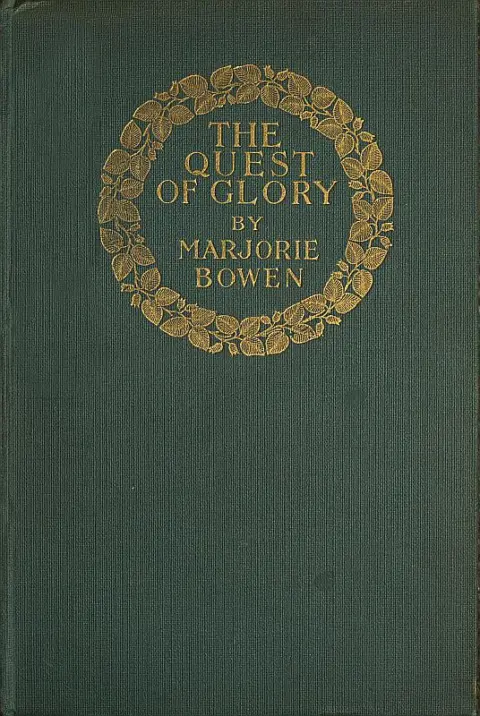
THE CLASSIC COLLECTION · 1912
"The Quest of Glory" by Marjorie Bowen is a historical novel written in the early 20th century. Set against the backdrop of the tumultuous events of the War of the Austrian Succession in the 18th century, the story explores themes of ambition, honor, and the quest for glory through its characters. The narrative follows several French officers, particularly the passionate young lieutenant Georges d’Espagnac, as they navigate the complexities of war, aspirations, and personal relationships while stationed in Prague. The opening of "The Quest of Glory" introduces us to the bleak atmosphere of Prague during a harsh winter siege in December 1742. We meet a group of French officers, each representative of different views on honor and the meaning of glory amidst their mundane and perilous military circumstances. As they share their thoughts, the youthful idealism of Georges d'Espagnac shines through. He is fervently dedicated to the pursuit of glory for France, even as the realities of war weigh heavily on him. The story's initial chapters set the stage for the unfolding drama, emphasizing the struggles and allegiances of the characters in a setting marked by both longing for valor and the bitter hardships of war.
Introduction adapted from the source catalogue; source summaries may be automatically generated.
Free to read · English · 87,825 words · No account needed
MAKE TIME FOR A GOOD BOOK
On by default. Untick to stop anonymous reading totals. Each page counts after 10 seconds in view. How this works.
Anonymous counting is on unless you have switched it off.
M. de Vauvenargues seated himself on the other side of the long black polished table. His erect, massive figure; his old-fashioned, handsome clothes; his aristocratic, proud, yet simple and kindly face, were flooded with red light from the fire, which threw it up against the sombre background of the dark chamber that always, even on the most brilliant day, seemed filled with shadows.
He leant a little forward, and fixed his eyes on the rosy vision of the young girl in her white fur, white silk, and gold laces.
“You love Luc, do you not?” he asked, in a terrible voice.
Her eyes widened, holding his in a full stare of terror.
“Take care what you commit yourself to,” he continued. “Think before you answer. Do you love my son?”
“Yes,” answered Clémence. “How strange for you to ask me, Monseigneur!”
“You have never been to see him--not even when all fear of infection
was over.”
She flushed painfully.
“He did not wish me to--you told me so yourself.”
“Well, you will see him to-morrow, Clémence.” The strong voice was touched with tenderness and sorrow. “And you love him? You know what that means?--Love?”
“Yes, yes,” shivered Clémence.
For a while--a very little while--the Marquis was silent; then he
said--
“Luc will not be able to go to Madrid.”
“Ah!” she murmured.
“He wrote yesterday,” continued the Marquis, “to refuse the post. He will never be able to do any work again.”
Clémence clenched her hands on her lap.
“He is--not strong enough?”
“No.”
“He has--no career?”
“No.”
“I do not quite understand.” She frowned over her words. “He is
recovered?”
“He will never completely recover.”
“Monseigneur, you frighten me. What has happened to Luc?”
“Whatever has happened it can make no difference to us who love him,” answered the Marquis. His eyes held Clémence with a power before which she blenched.
“No, of course not,” she said in a laboured way “But--I am sorry for Luc,” she ended feebly.
“Mademoiselle,” replied M. de Vauvenargues proudly, “this is not a thing one is sorry for. It is a great tragedy.”
“A--tragedy?”
“The word frightens you? But remember that it is in your power to soften it. Luc has lost everything--but you.”
“Oh!” she murmured again. “Yet if he is well----”
The Marquis lifted his head still higher, never taking his eyes from
her changing face.
“You have seen people who have had the plague?”
She gave some miserable little exclamation under her breath. He waited
for her to find words.
“He is changed?” she managed at last.
“Yes.”
She tried to smile.
“Well, I suppose--not much.”
“A great deal.”
Your reading position is saved on this browser. Take it to another device with a library code. Reading pages adapt to text, rather than matching a printed edition.
Marjorie Bowen
Marjorie Bowen
Marjorie Bowen
Marjorie Bowen
BEHIND THE BOOK
This eBook is for the use of anyone anywhere in the United States and most other parts of the world at no cost and with almost no restrictions whatsoever. You may copy it, give it away or re-use it under the terms of the Project Gutenberg License included with this eBook or online at www.gutenberg.org. If you are not located in the United States, you will have to check the laws of the country where you are located before using this eBook. Read the source licence.
The original source file, including credits and licence, is retained by this library. Request an original-format copy at no charge. Please include the book title and Project Gutenberg identifier #48767.
KEEP YOUR CURIOSITY GOING
Cécile Tormay

Moritz Busch
Coulson Kernahan
John L. Ransom

Maurice Baring
Frances Wright