THE CLASSIC COLLECTION✦The Countess FannyCLASSIC FREE BOOKS
The Countess Fanny
Marjorie Bowen
THE CLASSIC COLLECTION · 1912
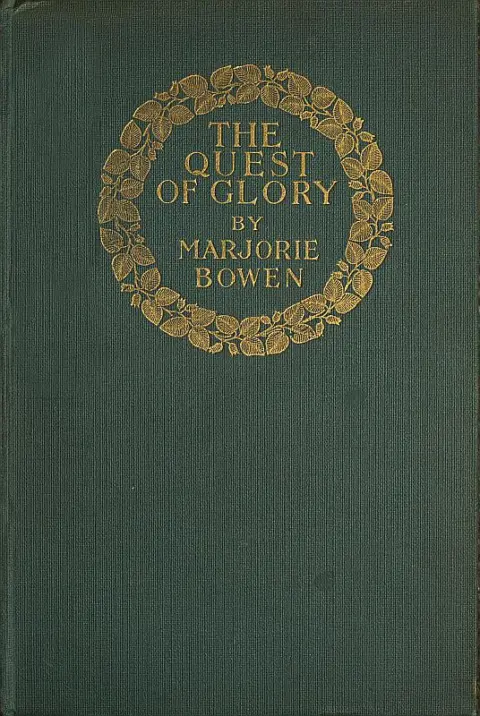
"The Quest of Glory" by Marjorie Bowen is a historical novel written in the early 20th century. Set against the backdrop of the tumultuous events of the War of the Austrian Succession in the 18th century, the story explores themes of ambition, honor, and the quest for glory through its characters. The narrative follows several French officers, particularly the passionate young lieutenant Georges d’Espagnac, as they navigate the complexities of war, aspirations, and personal relationships while stationed in Prague. The opening of "The Quest of Glory" introduces us to the bleak atmosphere of Prague during a harsh winter siege in December 1742. We meet a group of French officers, each representative of different views on honor and the meaning of glory amidst their mundane and perilous military circumstances. As they share their thoughts, the youthful idealism of Georges d'Espagnac shines through. He is fervently dedicated to the pursuit of glory for France, even as the realities of war weigh heavily on him. The story's initial chapters set the stage for the unfolding drama, emphasizing the struggles and allegiances of the characters in a setting marked by both longing for valor and the bitter hardships of war.
Introduction adapted from the source catalogue; source summaries may be automatically generated.
Free to read · English · 87,825 words · No account needed
MAKE TIME FOR A GOOD BOOK
On by default. Untick to stop anonymous reading totals. Each page counts after 10 seconds in view. How this works.
Anonymous counting is on unless you have switched it off.
“It need not have been, Luc, it need not have been.”
The young man did not reply, and his father sighed.
“You were always obstinate, Luc,” he added with a sad tenderness, “from the day you insisted on entering the army--which was Joseph’s place--as the second son.”
Luc moved now; he turned his back to the window, facing now the long, dark room, the table on which the fine cloth, cakes, and wine still gleamed, facing the figure of his father in full peruke and black velvet, brilliants and much Michelin lace.
“I am going to prove myself still further obstinate, Monseigneur,” he said. He stifled a cough and braced his stooping figure. “I have wished--for some weeks--since I returned from the convent--to speak to you. I think this is my chance.”
The old man folded the paper across mechanically, and the great ruffles round his wrists shook with the quivering of his fair hands.
“What can you have to say, Luc?” he asked quickly.
His son came slowly to the table with the hesitating and uncertain step that was the accompaniment of his imperfect sight.
“I want to tell you, Monseigneur, what I mean to do.”
He seated himself on the old, high-backed walnut chair with the fringed leather seat which had been his since the time he had sat there, a stately child in skirts, murmuring grace or eating sugared macaroons.
“What you mean to do?” repeated the Marquis.
Luc raised his face. In the cold light of the early year and the shadows of the dark room this face looked like a mask of colourless clay modelled in lines of perpetual pain. The white curls of his wig fell either side on to his green coat, and his hands were again white, one holding the back of the black chair, one resting on the lace cloth.
He looked at his father steadily, and the blood receded from the
Marquis’s strong features.
“What do you mean to do?” he asked. “Eh, Luc?”
“Monseigneur,”--though the voice was hoarse and broken by constant coughing, there were in it the old sweet notes--“I fear to give you pain. Yet I cannot think that you will not understand.”
“I am ready,” said his father, “to do anything you wish--you know
that--anything.”
Again Luc braced himself with an obvious effort; his bent shoulders straightened and he held up his head.
“I want--I mean to--go to Paris.”
“To--Paris! You want to leave Aix!”
“Monseigneur, I must.”
“Luc,”--the Marquis also was endeavouring to remain calm,--“why do you wish to leave your home? What do you intend to do in Paris?”
The young man answered swiftly--
Your reading position is saved on this browser. Take it to another device with a library code. Reading pages adapt to text, rather than matching a printed edition.
Marjorie Bowen
Marjorie Bowen
Marjorie Bowen
Marjorie Bowen
BEHIND THE BOOK
This eBook is for the use of anyone anywhere in the United States and most other parts of the world at no cost and with almost no restrictions whatsoever. You may copy it, give it away or re-use it under the terms of the Project Gutenberg License included with this eBook or online at www.gutenberg.org. If you are not located in the United States, you will have to check the laws of the country where you are located before using this eBook. Read the source licence.
The original source file, including credits and licence, is retained by this library. Request an original-format copy at no charge. Please include the book title and Project Gutenberg identifier #48767.
KEEP YOUR CURIOSITY GOING
Cécile Tormay

Moritz Busch
Coulson Kernahan
John L. Ransom

Maurice Baring
Frances Wright