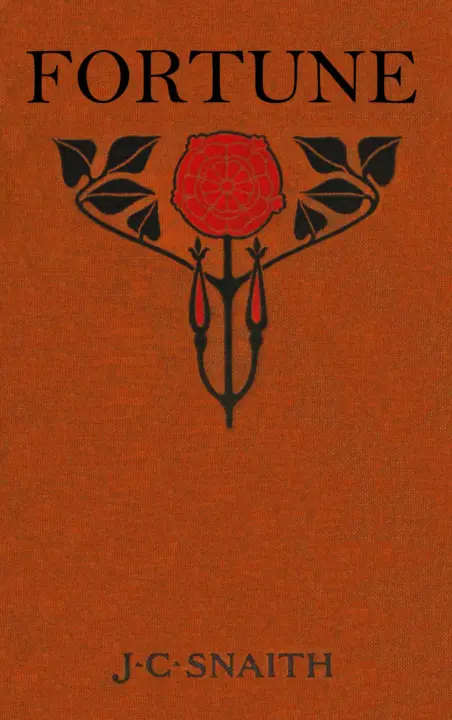
Fortune
J. C. (John Collis) Snaith
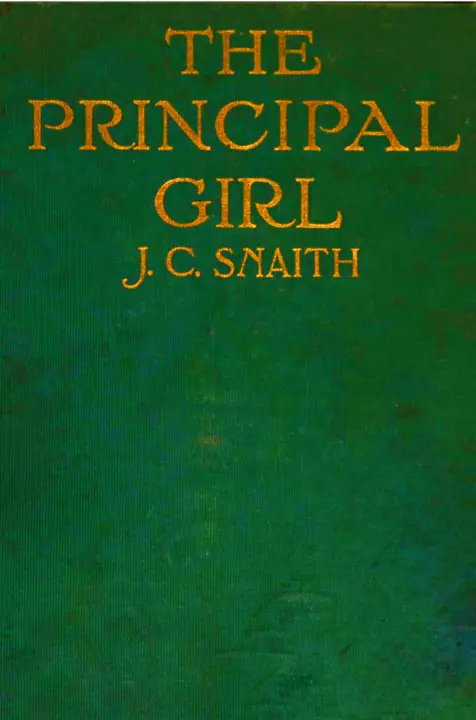
THE CLASSIC COLLECTION · 1912
"The Principal Girl" by J. C. Snaith is a novel written in the early 20th century. The story is set in the context of British high society, focusing on themes of class distinction, societal expectations, and romantic entanglements. The narrative's primary character is the young heir to a barony, Philip Shelmerdine, who becomes entangled with the ambitious and talented actress Mary Caspar, who plays the titular role of Cinderella in a pantomime. The opening of the novel introduces readers to Philip Shelmerdine, who is described as the quintessential upper-class young gentleman, navigating the complexities of societal expectations and his own desires amidst the backdrop of London's elite circles. The first chapter establishes the setting in Grosvenor Square, introducing the character of Shelmerdine and his connection to the public through a controversial letter regarding dog privileges, which leads to his social unpopularity. As he struggles with his newfound role as a public figure and grapples with personal relationships, notably with the charismatic Mary Caspar, the stage is set for a humorous yet poignant exploration of love, social standing, and personal identity in a rapidly transforming society.
Introduction adapted from the source catalogue; source summaries may be automatically generated.
Free to read · English · 65,960 words · No account needed
MAKE TIME FOR A GOOD BOOK
On by default. Untick to stop anonymous reading totals. Each page counts after 10 seconds in view. How this works.
Anonymous counting is on unless you have switched it off.
Should it make a bolt, or should it stay and grapple with the music? The pusillanimity of the former course, tempting no doubt to a weak resolution, would involve death and damnation; but the heroism of the latter required all that could be mustered by the playing fields of Eton and Christ Church. But while the unhappy inhabitant of the Braided Morning Coat was surrendered to this problem, the stern, uncompromising eye of Mother decided the question.
“Phil-ipp!”
“Ma-ter!” And then, of course, the Twin Brethren called out the reserves. “Mrs. Cathcart--My Mother.”
The bow of Grosvenor Square, No. 88, the corner house, was aloof decidedly; the bow of the Lady Macbeth to John Peter Kendall was so full of conscious power and accumulated dignity that it was really quite gracious.
“Pray be seated, Lady Shelmerdine.”
Beautiful elocution on the part of the goddaughter of Edward Bean.
Lady Shelmerdine seated herself rather superbly, and opened fire with her tortoise-shell folders.
The cap-with-lace-that-had-been-worn-by-Siddons touched the electric
button at its elbow.
Entrance of the Bad Girl of the Family, without her apron this time, and divested also of the potato and the bone-hafted knife.
“Mary, child, my spectacles.”
The Bad Girl dived desperately in the inmost recesses of the chiffonnier; found Grandmamma’s spectacles, and prepared to withdraw in something of a hurry. But she was detained.
“Has Jane returned, child?”
“Yes, Granny.”
“Ask her to have the goodness to bring some tea for Lady Shelmerdine.”
“Oh, not for me, thank you.”
“You are quite sure?”
No. 88 Grosvenor Square, the corner house, was quite, quite sure. Exit the Bad Girl of the Family without daring to look once in the direction of the Braided Morning Coat that was still leaning up forlornly against the chimney-piece.
“Mrs. Cathcart,” said the Governing Classes, getting the first gun in action, “I have done myself the honor of calling upon you--”
“The honor, madam, is entirely mine,” Edward Bean’s goddaughter assured
her.
“--because of a most unfortunate state of affairs which has just been
brought to my notice.”
The goddaughter of Edward Bean looked sympathetic, although it doesn’t always do to judge by appearances, you know.
“My unfortunate son--Phil-ipp, perhaps you will be good enough to sit down, as it is most desirable that you should follow what I say with the closest attention--my unfortunate son, to the grief of his father, Lord Shelmerdine, has made a proposal of marriage to your niece.”
Lady Macbeth suggested mildly that granddaughter might be more in accordance with the facts of the case.
Your reading position is saved on this browser. Take it to another device with a library code. Reading pages adapt to text, rather than matching a printed edition.
J. C. (John Collis) Snaith
J. C. (John Collis) Snaith
J. C. (John Collis) Snaith
J. C. (John Collis) Snaith
BEHIND THE BOOK
This eBook is for the use of anyone anywhere in the United States and most other parts of the world at no cost and with almost no restrictions whatsoever. You may copy it, give it away or re-use it under the terms of the Project Gutenberg License included with this eBook or online at www.gutenberg.org. If you are not located in the United States, you will have to check the laws of the country where you are located before using this eBook. Read the source licence.
The original source file, including credits and licence, is retained by this library. Request an original-format copy at no charge. Please include the book title and Project Gutenberg identifier #68069.
KEEP YOUR CURIOSITY GOING
Coulson Kernahan

Maurice Baring
Frances Wright
Cécile Tormay

Frederic Jesup Stimson

W. H. P. (William Henry Pope) Jarvis