Fortune
J. C. (John Collis) Snaith
THE CLASSIC COLLECTION · 1912
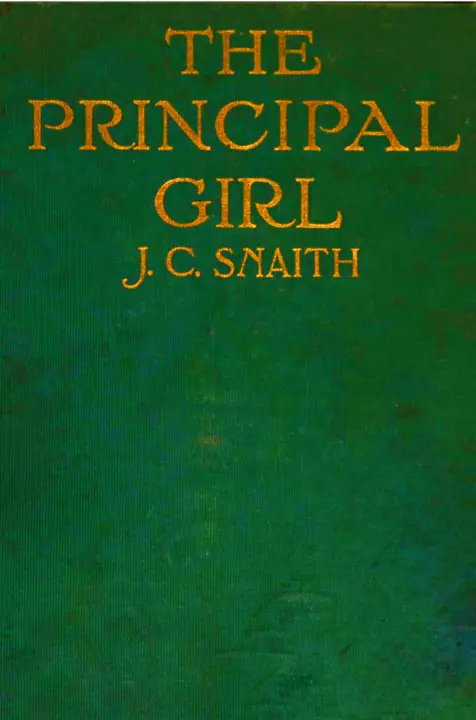
"The Principal Girl" by J. C. Snaith is a novel written in the early 20th century. The story is set in the context of British high society, focusing on themes of class distinction, societal expectations, and romantic entanglements. The narrative's primary character is the young heir to a barony, Philip Shelmerdine, who becomes entangled with the ambitious and talented actress Mary Caspar, who plays the titular role of Cinderella in a pantomime. The opening of the novel introduces readers to Philip Shelmerdine, who is described as the quintessential upper-class young gentleman, navigating the complexities of societal expectations and his own desires amidst the backdrop of London's elite circles. The first chapter establishes the setting in Grosvenor Square, introducing the character of Shelmerdine and his connection to the public through a controversial letter regarding dog privileges, which leads to his social unpopularity. As he struggles with his newfound role as a public figure and grapples with personal relationships, notably with the charismatic Mary Caspar, the stage is set for a humorous yet poignant exploration of love, social standing, and personal identity in a rapidly transforming society.
Introduction adapted from the source catalogue; source summaries may be automatically generated.
Free to read · English · 65,960 words · No account needed
MAKE TIME FOR A GOOD BOOK
On by default. Untick to stop anonymous reading totals. Each page counts after 10 seconds in view. How this works.
Anonymous counting is on unless you have switched it off.
Mother upon the doorstep, in her new ermine tippet, was shocked not a little, deep down in the recesses of her nature. Still of course she was far too well found in the ways of the world to give her feelings publication. But if one is so ill-advised as to visit in Bohemian circles in the afternoon of the Sabbath Day, one must be prepared for all contingencies. Still, a half-pared potato, a sack-cloth apron, and a bone-hafted kitchen knife is a rather informal reception of a real peeress from Grosvenor Square on the part of Bedford Gardens.
“Mrs. Cathcart at home?” said Grosvenor Square, No. 88, the corner house, very bland and splendid.
“Oh, yes--won’t you come in?” said the Bad Girl winningly.
Impressive entrance of Governing Classes into an ill-lit but fairly spacious interior, which had a bust of Edward Bean over the hatstand, and John Peter Kendall as Richard II by--not after--Maclise over the dining-room door.
“Lady Shelmerdine,” said the bland and splendid one, as Mary pushed the front door to with her foot because her hands were occupied.
“Of Potterhanworth?” said the Bad Girl in tones warm and velvety.
“Oh, yes,” said the Governing Classes, pained, perhaps, a little.
“Philip’s mother--so delighted--hope you don’t object to potatoes--it’s Jane’s afternoon out.”
But no further communication was forthcoming from the Governing Classes all the way up the solid length of stair-carpet to Grandmamma’s withdrawing-room.
Mary preceded No. 88 Grosvenor Square, potato, bone-hafted knife, sacking-cloth apron and all, into the stately presence of the cap-with-lace-which-had-been-worn-by-Siddons.
“Lady Shelmerdine of Potterhanworth, Granny.”
The Bad Girl turned and fled; very nearly impaled herself on the bone-hafted knife by counting fourteen stairs instead of thirteen, and continuing her course headlong until she fell howling into the arms of Cook. But in Edward Bean’s goddaughter’s withdrawing-room it was no laughing matter, my lords and gentlemen, we feel bound to tell you that. And we are forced to agree, though very reluctantly, with what Grandmamma said privately to the Bad Girl afterwards, which was that she would be none the worse for a good whipping.
“Mrs. Cathcart, I presume?” said No. 88 Grosvenor Square, very bland and splendid, although the tones had no need to be so icy--they hadn’t, really.
“You have the advantage of me,” said the Lady Macbeth to John Peter Kendall, offering her venerable hand to the angle of 1851, the Exhibition Year. “Ah, yes, Lady Shelmerdine--delighted to make your acquaintance.”
What of the Braided Morning Coat, you ask, while all this was toward? Perspiring freely in every pore and leaning up against the chimney-piece, and looking rather gray about the gills.
Your reading position is saved on this browser. Take it to another device with a library code. Reading pages adapt to text, rather than matching a printed edition.
J. C. (John Collis) Snaith
J. C. (John Collis) Snaith
J. C. (John Collis) Snaith
J. C. (John Collis) Snaith
BEHIND THE BOOK
This eBook is for the use of anyone anywhere in the United States and most other parts of the world at no cost and with almost no restrictions whatsoever. You may copy it, give it away or re-use it under the terms of the Project Gutenberg License included with this eBook or online at www.gutenberg.org. If you are not located in the United States, you will have to check the laws of the country where you are located before using this eBook. Read the source licence.
The original source file, including credits and licence, is retained by this library. Request an original-format copy at no charge. Please include the book title and Project Gutenberg identifier #68069.
KEEP YOUR CURIOSITY GOING
Coulson Kernahan

Maurice Baring
Frances Wright
Cécile Tormay

Frederic Jesup Stimson

W. H. P. (William Henry Pope) Jarvis