
Fortune
J. C. (John Collis) Snaith
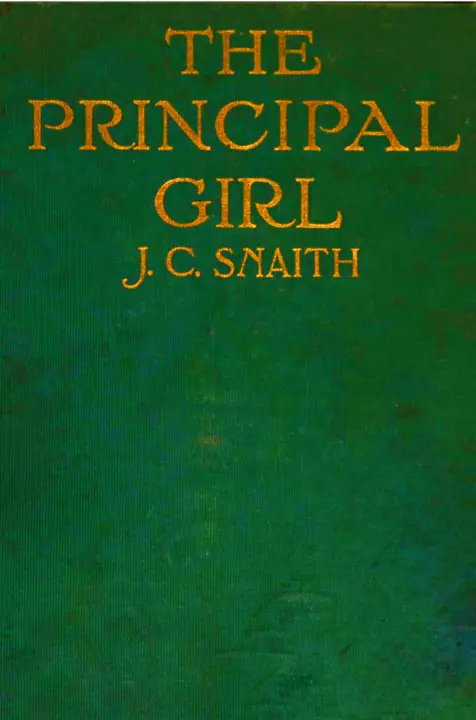
THE CLASSIC COLLECTION · 1912
"The Principal Girl" by J. C. Snaith is a novel written in the early 20th century. The story is set in the context of British high society, focusing on themes of class distinction, societal expectations, and romantic entanglements. The narrative's primary character is the young heir to a barony, Philip Shelmerdine, who becomes entangled with the ambitious and talented actress Mary Caspar, who plays the titular role of Cinderella in a pantomime. The opening of the novel introduces readers to Philip Shelmerdine, who is described as the quintessential upper-class young gentleman, navigating the complexities of societal expectations and his own desires amidst the backdrop of London's elite circles. The first chapter establishes the setting in Grosvenor Square, introducing the character of Shelmerdine and his connection to the public through a controversial letter regarding dog privileges, which leads to his social unpopularity. As he struggles with his newfound role as a public figure and grapples with personal relationships, notably with the charismatic Mary Caspar, the stage is set for a humorous yet poignant exploration of love, social standing, and personal identity in a rapidly transforming society.
Introduction adapted from the source catalogue; source summaries may be automatically generated.
Free to read · English · 65,960 words · No account needed
MAKE TIME FOR A GOOD BOOK
On by default. Untick to stop anonymous reading totals. Each page counts after 10 seconds in view. How this works.
Anonymous counting is on unless you have switched it off.
WHEN you are up against a serious anticlimax it is a golden rule to
begin a fresh chapter.
The Suffolk Colthurst paused, and sat with a further access of natural majesty upon a chair Louis Quinze, supplied, like the hearthrug, by Tottenham Court Road.
“Wally, Philip has declined to come to the Queen’s Hall this afternoon
to hear Busoni.”
Doing his best even in this dangerous anticlimax, S. of P. retrieved the Leading Morning Journal from the carpet, straightened out its crumpled folds with patient humility, laid it on the table, sat down in his own chair--Tottenham Court Road of the best period--put up his eyeglass--by Cary of Pall Mall, maker to the Admiralty--and, in the voice of one pronouncing a benediction, said, “Well, Agatha?”
“Actually declined. Tells me he’s engaged to a pantomime at Drury Lane.”
“Matter of taste, I suppose.”
“Taste, Wally! Dear Adela is coming, and I have taken such trouble to
arrange this.”
The Proconsul showed a little perturbation.
“No accounting for taste, I presume. Why a man of his age, rising twenty-eight, should prefer--”
“Wally, it is very wrong, and you must speak to him. It is not kind to dear Adela. Please ring the bell.”
The Proconsul rang the bell, and a young and very good-looking footman
attended the summons.
“Joseph,” said his mistress, “if Mr. Philip has not gone yet, tell him, please, that his father would like to see him.”
After a lapse of about five minutes, a young man sauntered into the library. He was a somewhat somber-looking young man in a chocolate-colored suiting.
“Good morning, Philip,” said the First Baron.
“Mornin’, father,” said the heir to the barony.
“Philip,” said the First Baron, “your mother tells me that you have declined to accompany her and Adela Rocklaw to the Albert Hall this afternoon to hear Paderewski.”
The heir to the barony knitted the intellectual forehead that was his
by inheritance.
“Not declined, you know, exactly. It’s a bit of a mix. I thought the concert was next Saturday.” Mr. Philip was a slow and rather heavy young man, but his air was quite sweet and humble, and not without a sort of tacit deference for both parents. “Fact is, I was keepin’ next Saturday.”
“Why not go this afternoon as you have got wrong in the date? Your mother has been at so much trouble, and I am sure Adela Rocklaw will be disappointed.”
“Unfortunately I’ve fixed up this other thing.”
“Engaged to a music hall, I understand.”
“Pantomime at Drury Lane,” said Philip the sombre.
Your reading position is saved on this browser. Take it to another device with a library code. Reading pages adapt to text, rather than matching a printed edition.
J. C. (John Collis) Snaith

J. C. (John Collis) Snaith
J. C. (John Collis) Snaith

J. C. (John Collis) Snaith
BEHIND THE BOOK
This eBook is for the use of anyone anywhere in the United States and most other parts of the world at no cost and with almost no restrictions whatsoever. You may copy it, give it away or re-use it under the terms of the Project Gutenberg License included with this eBook or online at www.gutenberg.org. If you are not located in the United States, you will have to check the laws of the country where you are located before using this eBook. Read the source licence.
The original source file, including credits and licence, is retained by this library. Request an original-format copy at no charge. Please include the book title and Project Gutenberg identifier #68069.
KEEP YOUR CURIOSITY GOING
Coulson Kernahan

Maurice Baring
Frances Wright
Cécile Tormay

Frederic Jesup Stimson

W. H. P. (William Henry Pope) Jarvis