Fortune
J. C. (John Collis) Snaith
THE CLASSIC COLLECTION · 1912
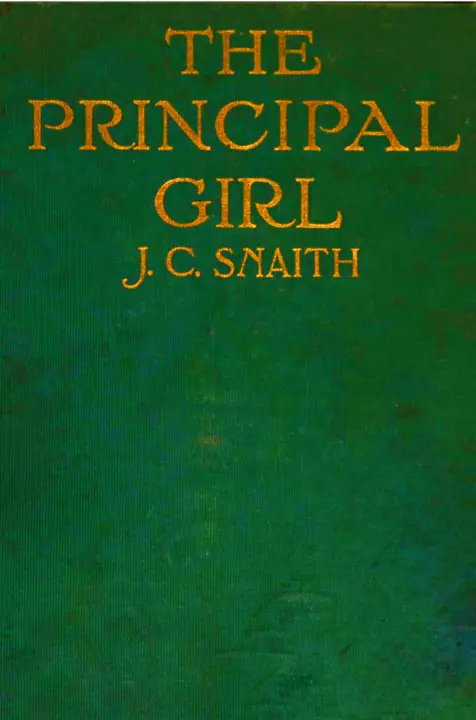
"The Principal Girl" by J. C. Snaith is a novel written in the early 20th century. The story is set in the context of British high society, focusing on themes of class distinction, societal expectations, and romantic entanglements. The narrative's primary character is the young heir to a barony, Philip Shelmerdine, who becomes entangled with the ambitious and talented actress Mary Caspar, who plays the titular role of Cinderella in a pantomime. The opening of the novel introduces readers to Philip Shelmerdine, who is described as the quintessential upper-class young gentleman, navigating the complexities of societal expectations and his own desires amidst the backdrop of London's elite circles. The first chapter establishes the setting in Grosvenor Square, introducing the character of Shelmerdine and his connection to the public through a controversial letter regarding dog privileges, which leads to his social unpopularity. As he struggles with his newfound role as a public figure and grapples with personal relationships, notably with the charismatic Mary Caspar, the stage is set for a humorous yet poignant exploration of love, social standing, and personal identity in a rapidly transforming society.
Introduction adapted from the source catalogue; source summaries may be automatically generated.
Free to read · English · 65,960 words · No account needed
MAKE TIME FOR A GOOD BOOK
On by default. Untick to stop anonymous reading totals. Each page counts after 10 seconds in view. How this works.
Anonymous counting is on unless you have switched it off.
“Granddaughter--I beg your pardon. One has no need to tell you, Mrs. Cathcart, who, I am sure, are a woman of the world, that this act of my son’s has caused concern in his family.”
Lady Macbeth was sorry if that was the case.
“In point of fact, for some little time past my son has been engaged to
Lady Adela Rocklaw.”
“Not quite that, you know, Mater,” murmured the unhappy Braided Morning
Coat.
“--To Lady Adela Rocklaw, a daughter of Lord Warlock, and his conduct will cause pain, although, of course, madam, it has not yet become public property, and I sincerely hope it may not become so.”
“You ain’t puttin’ it quite fair, are you, Mater?” ventured the Braided
Morning Coat.
“Phil-ipp, please!” A wave of a she-proconsular hand. “Allow me to deal with the facts. A most embarrassing situation, madam, for two families.”
“One moment, Lady Shelmerdine,” said Lady Macbeth. “May I ask this question? Do I understand your son to be actually engaged to Lady Adela Rocklaw?”
“Yes, madam, you may take that to be so.”
“Mr. Shelmerdine,” said the Queen of Tragedy, “I must ask you for an
explana-tion.”
Braided Morning Coat, notwithstanding that it was feeling completely undone, unbuttoned itself nervously.
“The Mater’s a bit mixed, ma’am, and that’s the truth. I am not engaged to Lady Adela.”
“Perhaps, Phil-ipp, not officially.”
“No, Mater, and not unofficially, and--” Herculean effort by the Green Chartreuse--“I don’t mind sayin’, I’ve no intention--”
“Phil-ipp!”
“Lady Shelmerdine,” said the Queen of Tragedy, “the situation is not altogether clear to my mind. Either your son is engaged to marry Lady Adela Rocklaw, or he is not.”
“He is morally engaged to her.”
“I am sorry I am unable to appreciate the distinction. Do I understand that your son is engaged to Lady Adela?”
“No, ma’am, I’m not,” said the Braided Morning Coat with honorable
boldness.
“But Phil-ipp!”
“It’s the truth, Mater. Mrs. Cathcart asks a plain question, and there’s a plain answer. And after all, I’m the chap--”
“Quite so, Mr. Shelmerdine,” said Lady Macbeth, looking almost as wise as the Lord Chief Justice of England as he sits in the Court of Appeal. “This is your affair. You have a right to know your own mind--moreover, you have a right to express it.”
The Braided Morning Coat felt the stronger for this well-timed assistance. It was easy to see from which side of the family Miss Mary had inherited her strong, good sense. A masterful old thing, but she really was helpin’ a lame dog over a stile, wasn’t she?
Your reading position is saved on this browser. Take it to another device with a library code. Reading pages adapt to text, rather than matching a printed edition.
J. C. (John Collis) Snaith
J. C. (John Collis) Snaith
J. C. (John Collis) Snaith
J. C. (John Collis) Snaith
BEHIND THE BOOK
This eBook is for the use of anyone anywhere in the United States and most other parts of the world at no cost and with almost no restrictions whatsoever. You may copy it, give it away or re-use it under the terms of the Project Gutenberg License included with this eBook or online at www.gutenberg.org. If you are not located in the United States, you will have to check the laws of the country where you are located before using this eBook. Read the source licence.
The original source file, including credits and licence, is retained by this library. Request an original-format copy at no charge. Please include the book title and Project Gutenberg identifier #68069.
KEEP YOUR CURIOSITY GOING
Coulson Kernahan

Maurice Baring
Frances Wright
Cécile Tormay

Frederic Jesup Stimson

W. H. P. (William Henry Pope) Jarvis