THE CLASSIC COLLECTION✦Karl GrierCLASSIC FREE BOOKS
Karl Grier
Louis Tracy
THE CLASSIC COLLECTION · 1916
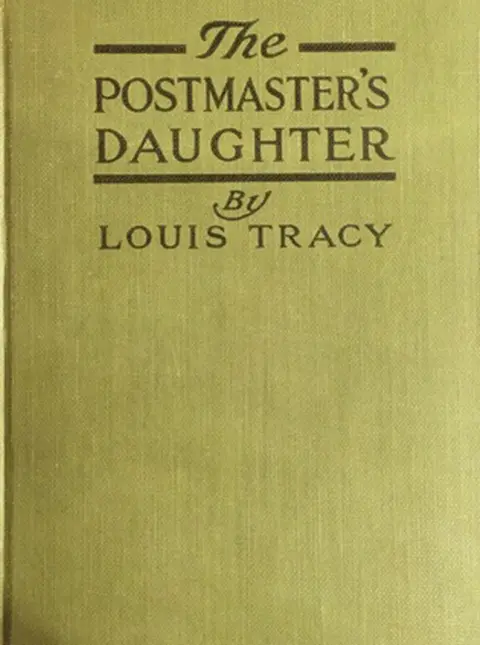
"The Postmaster's Daughter" by Louis Tracy is a mystery novel written in the early 20th century. The story begins with the discovery of a drowned woman, Adelaide Melhuish, whose body is found in the river bordering the estate of John Menzies Grant, a writer and former army officer. The opening establishes a tense atmosphere, hinting at complex relationships, as secrets from the past intertwine with the present, suggesting themes of love, betrayal, and murder. The opening of the book introduces John Menzies Grant as he enjoys a serene morning in his garden, oblivious to the troubling events that will soon unfold. After discovering the body of the drowned woman, he is drawn into a web of suspicion when the police arrive. The narrative hints at his previous connection with the deceased, raising questions about his past relationship with Adelaide and the circumstances leading to her tragic death. Additionally, the presence of Doris Martin, the postmaster's daughter, adds another layer of tension and potential scandal as her involvement with Grant may complicate matters further. The chapter sets the stage for a complex investigation that intertwines personal histories with the broader implications of a crime that disrupts the peace of a small village.
Introduction adapted from the source catalogue; source summaries may be automatically generated.
Free to read · English · 66,859 words · No account needed
MAKE TIME FOR A GOOD BOOK
On by default. Untick to stop anonymous reading totals. Each page counts after 10 seconds in view. How this works.
Anonymous counting is on unless you have switched it off.
“Well, blaze away. I’m ready.”
The younger man leaned against a gate. He looked ill and physically
worn.
“Your business has kept you out late of a night recently, you say, Mr. Elkin,” began the other, speaking as casually as he could contrive. “Now, it might help a lot if you can call to mind anyone you met on the roads at ten or eleven o’clock. For instance, last night—”
Elkin laughed in a queer, croaking way.
“Last night my mare brought me home. I was decidedly sprung, Robinson. Glad you didn’t spot me, or there might have been trouble. What between the inquest, an’ no food, an’ more than a few drinks at Knoleworth, I’d have passed Owd Ben himself without seeing him, though I believe I did squint in at The Hollies as I went by.”
“What time would that be?”
“Oh, soon after eleven.”
“Sure.”
“I can’t be certain to ten minutes or so. The pubs hadn’t closed when I left Knoleworth. What the devil does it matter, anyhow?”
It mattered a great deal. Robinson could testify that Elkin did not cross Steynholme bridge “soon after eleven.”
“Nothing much,” was the answer. “You see, I’m anxious to find out who might be stirring at that hour, an’ you know everybody for miles around. I’d like to fix your journey by the clock, if I could.”
“Dash it all, man, I was full to the eyes. There! You have it
straight.”
“Were you out on Monday night?”
“The night of the murder?”
“Yes.”
“I left the Hare and Hounds at ten, and came straight home.”
“Who was there with you?”
“The usual crowd—Hobbs, and Siddle, and Bob Smith, and a commercial traveler. Siddle went at half past nine, but he generally does.”
“You met no one on the road?”
“No.”
The monosyllable seemed to lack Elkin’s usual confidence. It sounded as if he had been making up his mind what to say, yet faltered at the last moment.
Robinson ruminated darkly. As a matter of fact, long after eleven o’clock on that fateful night, he himself had seen Elkin walking homeward. He was well aware that the licensing hours were not strictly observed by the Hare and Hounds when “commercial gentlemen” were in residence. Closing time was ten o’clock, but the “commercials,” being cheery souls, became nominal hosts on such occasions, and their guests were in no hurry to depart. Robinson saw that he had probably jumped to a conclusion, an acrobatic feat of reasoning which Furneaux had specifically warned him against. At any rate, he resolved now to leave well enough alone.
Your reading position is saved on this browser. Take it to another device with a library code. Reading pages adapt to text, rather than matching a printed edition.
Louis Tracy
Louis Tracy
Louis Tracy
Louis Tracy
BEHIND THE BOOK
This eBook is for the use of anyone anywhere in the United States and most other parts of the world at no cost and with almost no restrictions whatsoever. You may copy it, give it away or re-use it under the terms of the Project Gutenberg License included with this eBook or online at www.gutenberg.org. If you are not located in the United States, you will have to check the laws of the country where you are located before using this eBook. Read the source licence.
The original source file, including credits and licence, is retained by this library. Request an original-format copy at no charge. Please include the book title and Project Gutenberg identifier #10110.
KEEP YOUR CURIOSITY GOING
Coulson Kernahan

Maurice Baring
Frances Wright
Cécile Tormay

Frederic Jesup Stimson

W. H. P. (William Henry Pope) Jarvis