THE CLASSIC COLLECTION✦Karl GrierCLASSIC FREE BOOKS
Karl Grier
Louis Tracy
THE CLASSIC COLLECTION · 1916
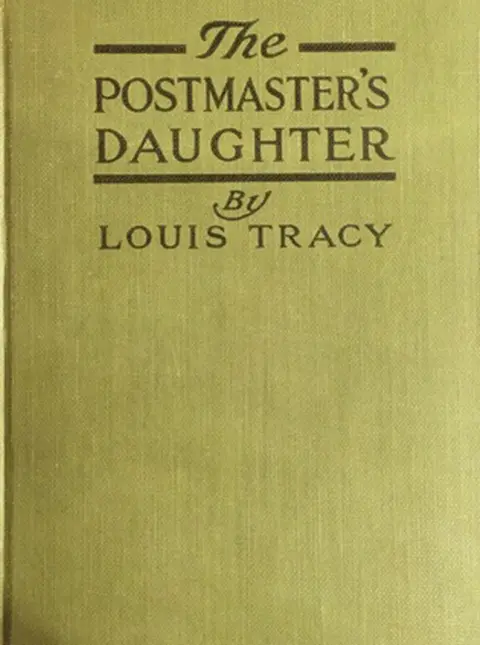
"The Postmaster's Daughter" by Louis Tracy is a mystery novel written in the early 20th century. The story begins with the discovery of a drowned woman, Adelaide Melhuish, whose body is found in the river bordering the estate of John Menzies Grant, a writer and former army officer. The opening establishes a tense atmosphere, hinting at complex relationships, as secrets from the past intertwine with the present, suggesting themes of love, betrayal, and murder. The opening of the book introduces John Menzies Grant as he enjoys a serene morning in his garden, oblivious to the troubling events that will soon unfold. After discovering the body of the drowned woman, he is drawn into a web of suspicion when the police arrive. The narrative hints at his previous connection with the deceased, raising questions about his past relationship with Adelaide and the circumstances leading to her tragic death. Additionally, the presence of Doris Martin, the postmaster's daughter, adds another layer of tension and potential scandal as her involvement with Grant may complicate matters further. The chapter sets the stage for a complex investigation that intertwines personal histories with the broader implications of a crime that disrupts the peace of a small village.
Introduction adapted from the source catalogue; source summaries may be automatically generated.
Free to read · English · 66,859 words · No account needed
MAKE TIME FOR A GOOD BOOK
On by default. Untick to stop anonymous reading totals. Each page counts after 10 seconds in view. How this works.
Anonymous counting is on unless you have switched it off.
But, Owd Ben! What figure did that redoubtable ghost cut in the
mystery?
“There are certain lacunae in your otherwise vigorous and thrilling story, constable,” went on Hart.
“Very likely, sir,” agreed Robinson, much to the surprise of his hearers. He had not the slightest notion what a lacuna, or its plural, signified. He was only adopting Furneaux’s advice, and trying to be civil.
“Ah, you see that, do you?” said Hart. “Well, fill ’em in. When, where, and how did the midget sleuth obtain the specter’s hairy adornments?”
The policeman, whose wits were thoroughly on the alert, realized that he had scored a point, though he knew not how.
“He did not tell me, sir,” he answered. “It’s a rum business, that’s what it is, no matter what way you look at it.”
Grant, agreeably aware of the village constable’s change of front, accepted the olive branch readily.
“We’re just going for a walk,” he said. “If you have ten minutes to spare, Mrs. Bates will find you some luncheon, I have no doubt.”
“Well, sir, meals are a trifle irregular during a busy time like this,” admitted Robinson, feeling that his luck was in, because tongues would surely be loosened in the kitchen to an official guest introduced by the master of the establishment. He was right. No member of the Bates family dreamed of reticence, now that the household was restored to favor with “the force.” Before Robinson departed, he was full of information and good food.
What more natural, then, an hour later, than that he should contrive to meet Elkin as the horse-dealer was taking home a lively two-year-old pony he had been “lungeing” on a strip of common opposite his house?
Each was eager to question the other, but Elkin opened fire.
“Anything fresh?” he cried. “You have a fair course now, Robinson. That little London ’tec has bunked home.”
“Has he?” In the language of the ring, Robinson thought fit to spar for
an opening.
“Oh, none of your kiddin’,” said Elkin, stroking the nervous colt’s neck. “You know he has. You don’t miss much that’s going on. Bet you half a thick ’un you’d have put someone in clink before this if the murder at The Hollies had been left in your hands.”
“That’s as may be, Mr. Elkin. But this affair seems to have gripped you for fair. You look thoroughly run down. Sleepin’ badly?”
“Rotten! Hardly got a wink last night.”
“You shouldn’t be out so late. Why, on’y a week ago you were in bed
regular at 10.15.”
Your reading position is saved on this browser. Take it to another device with a library code. Reading pages adapt to text, rather than matching a printed edition.
Louis Tracy
Louis Tracy
Louis Tracy
Louis Tracy
BEHIND THE BOOK
This eBook is for the use of anyone anywhere in the United States and most other parts of the world at no cost and with almost no restrictions whatsoever. You may copy it, give it away or re-use it under the terms of the Project Gutenberg License included with this eBook or online at www.gutenberg.org. If you are not located in the United States, you will have to check the laws of the country where you are located before using this eBook. Read the source licence.
The original source file, including credits and licence, is retained by this library. Request an original-format copy at no charge. Please include the book title and Project Gutenberg identifier #10110.
KEEP YOUR CURIOSITY GOING
Coulson Kernahan

Maurice Baring
Frances Wright
Cécile Tormay

Frederic Jesup Stimson

W. H. P. (William Henry Pope) Jarvis