THE CLASSIC COLLECTION✦Karl GrierCLASSIC FREE BOOKS
Karl Grier
Louis Tracy
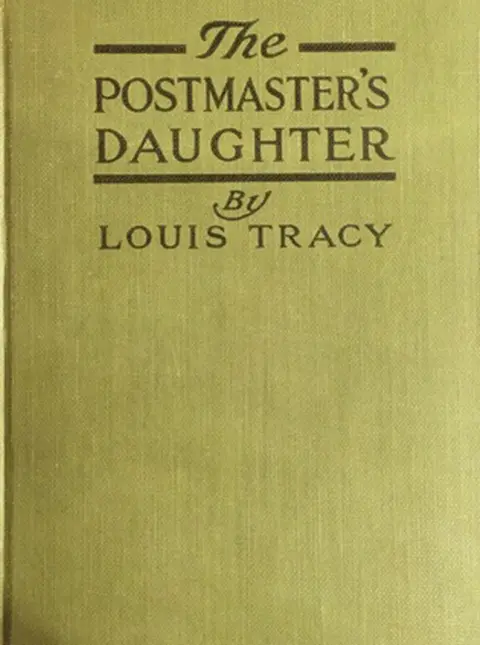
THE CLASSIC COLLECTION · 1916
"The Postmaster's Daughter" by Louis Tracy is a mystery novel written in the early 20th century. The story begins with the discovery of a drowned woman, Adelaide Melhuish, whose body is found in the river bordering the estate of John Menzies Grant, a writer and former army officer. The opening establishes a tense atmosphere, hinting at complex relationships, as secrets from the past intertwine with the present, suggesting themes of love, betrayal, and murder. The opening of the book introduces John Menzies Grant as he enjoys a serene morning in his garden, oblivious to the troubling events that will soon unfold. After discovering the body of the drowned woman, he is drawn into a web of suspicion when the police arrive. The narrative hints at his previous connection with the deceased, raising questions about his past relationship with Adelaide and the circumstances leading to her tragic death. Additionally, the presence of Doris Martin, the postmaster's daughter, adds another layer of tension and potential scandal as her involvement with Grant may complicate matters further. The chapter sets the stage for a complex investigation that intertwines personal histories with the broader implications of a crime that disrupts the peace of a small village.
Introduction adapted from the source catalogue; source summaries may be automatically generated.
Free to read · English · 66,859 words · No account needed
MAKE TIME FOR A GOOD BOOK
On by default. Untick to stop anonymous reading totals. Each page counts after 10 seconds in view. How this works.
Anonymous counting is on unless you have switched it off.
“Who knows?” repeated Furneaux sadly. “Good-day, gentlemen. Some of this merry party will meet again, of course, if not here, at the Assizes. Don’t forget my bill. Mr. Tomlin. By the way, one egg at breakfast had seen vicissitudes. It shouldn’t be rated too highly.”
“I’m traveling by your train,” cried Ingerman.
“So I understood,” said Furneaux over his shoulder.
There was silence for a moment after he had gone. Ingerman looked thoughtful, even puzzled. He was casting back in his mind to discover just how and when the detective “understood” that his departure was imminent, since he himself had only arrived at a decision after leaving the chemist’s.
“That chap is no good,” announced Elkin. “I’ll back old Robinson
against him any day.”
“Sh-s-sh! He may ’ear you,” muttered the landlord.
“Don’t care if he does. Cornhill! What the blazes has Cornhill to do with the murder at The Hollies?”
Ingerman appreciated the value of that concluding phrase. Elkin had used it once before in Siddle’s shop, and was quietly reproved by the chemist for his outspokenness.
Ingerman, however, did not inform the company that his office lay in an alley off Cornhill. He elected to rub in Elkin’s words.
“Mr. Siddle seemed to object to The Hollies being mentioned as the scene of the crime,” he said. “I wonder why?”
“Because he’s an old molly-coddle,” snapped the horse-dealer. “Thinks everyone is like himself, a regular slow-coach.”
Tomlin closed the door into the passage, closed it for the first time in living memory, whereat Furneaux, on the landing above, grinned sardonically, and ran downstairs.
“Wot’s this about them amatoor clo’es?” he inquired portentously. “Oo ’as the key of that box?”
“I have,” said Elkin. “I locked it after the last performance, and, unless you’ve been up to any monkey tricks, Tomlin, the duds are there yet.”
“You’re bitin’ me ’ead off all the mornin’, Fred,” protested the aggrieved landlord. “Fust, the gin was wrong, an’ now I’m supposed to ’ave rummidged yur box. Wot for?”
Furneaux popped in.
“My bill ready?” he squeaked.
“No, sir. The train—”
“Leaves at two, but I’m driving to Knoleworth with Superintendent
Fowler.”
The door closed behind him. Tomlin shook his head.
“Box! Jack-in-the-box, I reckon,” he said darkly, turning to a
dog-eared ledger.
Your reading position is saved on this browser. Take it to another device with a library code. Reading pages adapt to text, rather than matching a printed edition.
Louis Tracy
Louis Tracy
Louis Tracy
Louis Tracy
BEHIND THE BOOK
This eBook is for the use of anyone anywhere in the United States and most other parts of the world at no cost and with almost no restrictions whatsoever. You may copy it, give it away or re-use it under the terms of the Project Gutenberg License included with this eBook or online at www.gutenberg.org. If you are not located in the United States, you will have to check the laws of the country where you are located before using this eBook. Read the source licence.
The original source file, including credits and licence, is retained by this library. Request an original-format copy at no charge. Please include the book title and Project Gutenberg identifier #10110.
KEEP YOUR CURIOSITY GOING
Coulson Kernahan

Maurice Baring
Frances Wright
Cécile Tormay

Frederic Jesup Stimson

W. H. P. (William Henry Pope) Jarvis