THE CLASSIC COLLECTION✦Karl GrierCLASSIC FREE BOOKS
Karl Grier
Louis Tracy
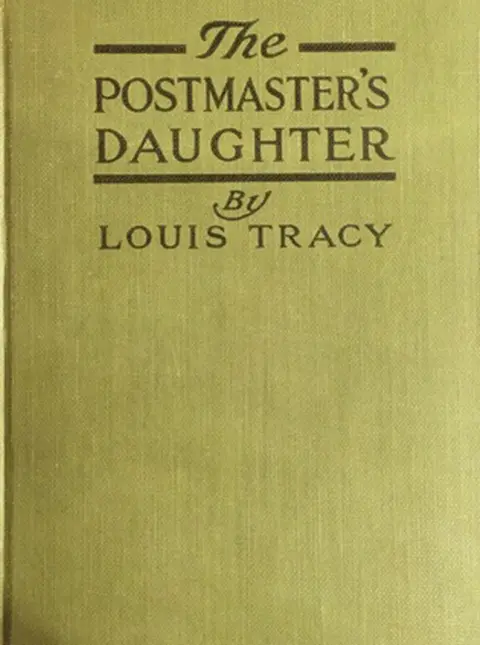
THE CLASSIC COLLECTION · 1916
"The Postmaster's Daughter" by Louis Tracy is a mystery novel written in the early 20th century. The story begins with the discovery of a drowned woman, Adelaide Melhuish, whose body is found in the river bordering the estate of John Menzies Grant, a writer and former army officer. The opening establishes a tense atmosphere, hinting at complex relationships, as secrets from the past intertwine with the present, suggesting themes of love, betrayal, and murder. The opening of the book introduces John Menzies Grant as he enjoys a serene morning in his garden, oblivious to the troubling events that will soon unfold. After discovering the body of the drowned woman, he is drawn into a web of suspicion when the police arrive. The narrative hints at his previous connection with the deceased, raising questions about his past relationship with Adelaide and the circumstances leading to her tragic death. Additionally, the presence of Doris Martin, the postmaster's daughter, adds another layer of tension and potential scandal as her involvement with Grant may complicate matters further. The chapter sets the stage for a complex investigation that intertwines personal histories with the broader implications of a crime that disrupts the peace of a small village.
Introduction adapted from the source catalogue; source summaries may be automatically generated.
Free to read · English · 66,859 words · No account needed
MAKE TIME FOR A GOOD BOOK
On by default. Untick to stop anonymous reading totals. Each page counts after 10 seconds in view. How this works.
Anonymous counting is on unless you have switched it off.
Robinson suspected that, as he himself would have put it, his leg was being pulled rather violently. Furneaux read his face like a printed page. Chewing, much against his will, a mouthful of bread and cheese, he mumbled in solemn, broken tones:
“Think—Robinson. Don’t—answer—offhand. Has—anybody—ever worn—such things—in a play?”
Then the policeman was convinced, galvanized by memory, as it were.
“By gum!” he cried again. “Fred Elkin—in a charity performance last
winter.”
Furneaux choked with excitement.
“A horsey-looking chap, on to-day’s jury,” he gurgled.
“That’s him!”
“The scoundrel!”
“No wonder he looked ill.”
“No wonder, indeed. How oft the sight of means to do ill deeds makes
ill deeds done!”
“But, sir—”
Robinson was flabbergasted. He could only murmur “Fred Elkin!” in a
dazed way.
“Have a drink,” said Furneaux sympathetically. “I’ll wet my whistle, too. Only half a glass, please. Now, we mustn’t jump to conclusions. This Elkin looks a villain, but may not be one. That is to say, his villainy may be confined to dealings in nags. But you see, Robinson, what a queer turn this affair is taking. We must get rid of preconceived notions. Superintendent Fowler and you and I will go into this matter thoroughly to-morrow. Meanwhile, breathe not a syllable to a living soul. If I were you, I’d let Mr. Grant understand that we regard him as rather outside the scope of our inquiry. This beer is very good for a country village. You know a good thing when you see it, I expect. Pity I don’t smoke, or I’d join you in a pipe. I must get a move on, now, or that fat landlord will be locking me out. Good night! Yes. I’ll take the hat. Good night!”
While walking up the hill Furneaux fanned himself with the straw hat.
“One small bit of my brain is evidently a hereditary bequest from a good-natured ass!” he communed. “Here am I, Furneaux, plagued beyond endurance by a first-class murder case, and I must go and busy myself with the love affair of a postmaster’s daughter and a feather-headed novelist!”
When Tomlin admitted him to the Hare and Hounds, he buttonholed the landlord, who, at that hour, was usually somewhat obfuscated.
“Sir,” said the detective gravely, “I am told that you Steynholme folk indulge occasionally in such frivolities as amateur theatricals?”
“Once in a way, sir. Once in a way. Afore I lock up the bar, will you—”
“Not to-night. I’ve mixed port and beer already, and I’m only a little fellow. Now you, Mr. Tomlin, can mix anything, I fancy?”
Your reading position is saved on this browser. Take it to another device with a library code. Reading pages adapt to text, rather than matching a printed edition.
Louis Tracy
Louis Tracy
Louis Tracy
Louis Tracy
BEHIND THE BOOK
This eBook is for the use of anyone anywhere in the United States and most other parts of the world at no cost and with almost no restrictions whatsoever. You may copy it, give it away or re-use it under the terms of the Project Gutenberg License included with this eBook or online at www.gutenberg.org. If you are not located in the United States, you will have to check the laws of the country where you are located before using this eBook. Read the source licence.
The original source file, including credits and licence, is retained by this library. Request an original-format copy at no charge. Please include the book title and Project Gutenberg identifier #10110.
KEEP YOUR CURIOSITY GOING
Coulson Kernahan

Maurice Baring
Frances Wright
Cécile Tormay

Frederic Jesup Stimson

W. H. P. (William Henry Pope) Jarvis