THE CLASSIC COLLECTION✦Karl GrierCLASSIC FREE BOOKS
Karl Grier
Louis Tracy
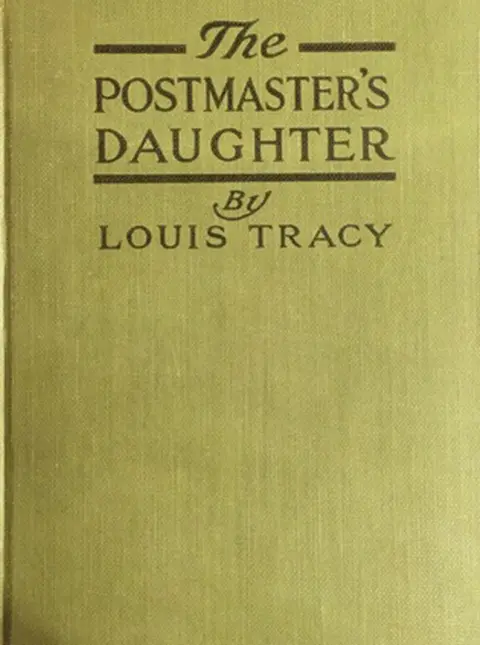
THE CLASSIC COLLECTION · 1916
"The Postmaster's Daughter" by Louis Tracy is a mystery novel written in the early 20th century. The story begins with the discovery of a drowned woman, Adelaide Melhuish, whose body is found in the river bordering the estate of John Menzies Grant, a writer and former army officer. The opening establishes a tense atmosphere, hinting at complex relationships, as secrets from the past intertwine with the present, suggesting themes of love, betrayal, and murder. The opening of the book introduces John Menzies Grant as he enjoys a serene morning in his garden, oblivious to the troubling events that will soon unfold. After discovering the body of the drowned woman, he is drawn into a web of suspicion when the police arrive. The narrative hints at his previous connection with the deceased, raising questions about his past relationship with Adelaide and the circumstances leading to her tragic death. Additionally, the presence of Doris Martin, the postmaster's daughter, adds another layer of tension and potential scandal as her involvement with Grant may complicate matters further. The chapter sets the stage for a complex investigation that intertwines personal histories with the broader implications of a crime that disrupts the peace of a small village.
Introduction adapted from the source catalogue; source summaries may be automatically generated.
Free to read · English · 66,859 words · No account needed
MAKE TIME FOR A GOOD BOOK
On by default. Untick to stop anonymous reading totals. Each page counts after 10 seconds in view. How this works.
Anonymous counting is on unless you have switched it off.
One thing is certain in our Northern land;
Allow that birth, or valor, wealth, or wit,
Give each precedence to their possessor,
Envy, that follows on such eminence,
As comes the lyme-hound on the roebuck’s trace,
Shall pull them down each one.
“Yes,” said Grant.
“Love isn’t mentioned. The fair Doris will be true. You’re in luck, my boy. But somebody is out for your blood, and here is clear warning. Gee whizz! If I remain in Steynholme a week I shall become an occultist. What is a lyme-hound?”
“‘Lyme,’ or ‘leam,’ is the old-time word for ‘leash.’”
“Good!” said Hart. “That will appeal to Furneaux. Have him in to dinner every day, Jack. He’s a tonic!”
Furneaux, for some reason known only to himself, did not accompany Doris to the post office. Once they were across the bridge, and the broad village street, more green than roadway, was seen to be empty, he tapped her on the shoulder and said pleasantly:
“Run away home now, little girl. Sleep well, and don’t worry. The tangle will right itself in time.”
“Poor Mr. Grant is suffering,” she ventured to murmur.
“And a good thing, too. It will steady him. Hurry, please. I’ll wait here till you are behind a locked door.”
“No one in Steynholme will hurt me,” she said.
“You never can tell. I’m not taking any chances to-night, however.”
So Doris sped swiftly up the hill. Arrived at her house, she waved a hand to the detective, who flourished his straw hat in response. A fine June night in England is never really dark, so the two could not only see each other but, when Doris disappeared, Furneaux, turning sharply on his heel, was able to make out the sudden straightening of a pucker in the blind of a ground-floor room in P. C. Robinson’s abode.
The detective walked straight there, and tapped lightly on the window. Robinson, after an affected delay, came to the door.
“Who’s there?” he demanded.
“As if you didn’t know,” laughed Furneaux.
Robinson turned a key, and looked out.
“Oh, it’s you, sir?” he cried.
“You’ll get tired of saying that before I quit Steynholme,” said the detective. “May I come in? No, don’t show a light here. Let’s chat in the back kitchen.”
“I was just going to have a bite of supper, sir,” began Robinson apologetically. “It’s laid in the kitchen. On’y bread and cheese an’ a glass of beer. Will you join me?”
Your reading position is saved on this browser. Take it to another device with a library code. Reading pages adapt to text, rather than matching a printed edition.
Louis Tracy
Louis Tracy
Louis Tracy
Louis Tracy
BEHIND THE BOOK
This eBook is for the use of anyone anywhere in the United States and most other parts of the world at no cost and with almost no restrictions whatsoever. You may copy it, give it away or re-use it under the terms of the Project Gutenberg License included with this eBook or online at www.gutenberg.org. If you are not located in the United States, you will have to check the laws of the country where you are located before using this eBook. Read the source licence.
The original source file, including credits and licence, is retained by this library. Request an original-format copy at no charge. Please include the book title and Project Gutenberg identifier #10110.
KEEP YOUR CURIOSITY GOING
Coulson Kernahan

Maurice Baring
Frances Wright
Cécile Tormay

Frederic Jesup Stimson

W. H. P. (William Henry Pope) Jarvis