THE CLASSIC COLLECTION✦Karl GrierCLASSIC FREE BOOKS
Karl Grier
Louis Tracy
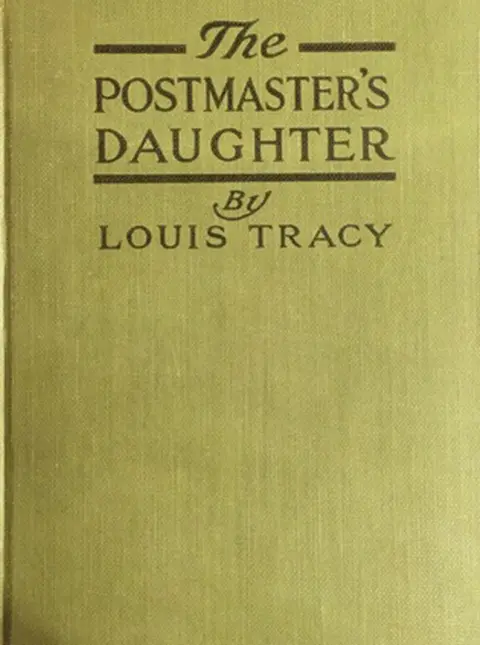
THE CLASSIC COLLECTION · 1916
"The Postmaster's Daughter" by Louis Tracy is a mystery novel written in the early 20th century. The story begins with the discovery of a drowned woman, Adelaide Melhuish, whose body is found in the river bordering the estate of John Menzies Grant, a writer and former army officer. The opening establishes a tense atmosphere, hinting at complex relationships, as secrets from the past intertwine with the present, suggesting themes of love, betrayal, and murder. The opening of the book introduces John Menzies Grant as he enjoys a serene morning in his garden, oblivious to the troubling events that will soon unfold. After discovering the body of the drowned woman, he is drawn into a web of suspicion when the police arrive. The narrative hints at his previous connection with the deceased, raising questions about his past relationship with Adelaide and the circumstances leading to her tragic death. Additionally, the presence of Doris Martin, the postmaster's daughter, adds another layer of tension and potential scandal as her involvement with Grant may complicate matters further. The chapter sets the stage for a complex investigation that intertwines personal histories with the broader implications of a crime that disrupts the peace of a small village.
Introduction adapted from the source catalogue; source summaries may be automatically generated.
Free to read · English · 66,859 words · No account needed
MAKE TIME FOR A GOOD BOOK
On by default. Untick to stop anonymous reading totals. Each page counts after 10 seconds in view. How this works.
Anonymous counting is on unless you have switched it off.
“Yes,” agreed Ingerman, summing up the conclave at a glance. “Somehow, such a lovely night ill accords with the cause of my visit to Steynholme.”
“In-deed, sir?”
“Well, you and these other gentlemen may judge for yourselves. It will be no secret tomorrow. I am the husband of the lady who was found in the river outside Mr. Grant’s residence this morning.”
Sensation, as the descriptive reporters put it. Mr. Tomlin was dumbly but unanimously elected chairman of the meeting, and was vaguely aware of his responsibilities. He drew himself a fresh glass of bitter.
“You don’t tell me, sir!” he gasped. “Well, the idee! The pore lady’s letters were addressed to Miss Adelaide Melhuish. Perhaps you don’t know, sir, that she stayed here!”
“Oh, yes. I was told that by the local police-constable. Have I, by any chance, been given her room?”
“No, sir. Not likely. It’s locked, and the police have the key till the inquest is done with.”
“As for the name,” explained Ingerman, in his suave voice, “that was a mere stage pseudonym, an adopted name. My wife was a famous actress, and there is a sort of tacit agreement that a lady in the theatrical profession shall be known to the public as ‘Miss’ rather than ‘Mrs.’”
“Well, there!” wheezed Tomlin. “Who’d ever ha’ thought it?”
The landlord was not quite rising to the occasion. He was, in fact, stunned by these repeated shocks. So Hobbs took charge.
“It’s a sad errand you’re on, sir,” he said. “Death comes to all of us, man an’ beast alike, but it’s a terrible thing when a lady like Miss— Mrs. ——”
“Ingerman is my name, but my wife will certainly be alluded to by the press as Miss Melhuish.”
“When a lady like Miss Melhuish is knocked on the ’ead like a—”
Mr. Hobbs hesitated again. He also felt that the situation was rather
beyond him.
“But my wife was flung into the river and drowned,” said Ingerman
sadly.
“No, sir. She was killed fust. It was a brutal business, so I’m told.”
“Do you mean that she was struck, her skull battered?” came the demand, in an awed and soul-thrilling whisper.
“Yes, sir. An’ the wust thing is, none of us can guess who could ha’
done it.”
“Lay yer five quid to one, Hobbs, that the police cop the scoundrel afore this day fortnight,” cried Elkin noisily.
Then Mr. Siddle put in a mild word.
“Gentlemen,” he said, “let me remind you that we four will probably be jurors at the inquest.”
Your reading position is saved on this browser. Take it to another device with a library code. Reading pages adapt to text, rather than matching a printed edition.
Louis Tracy
Louis Tracy
Louis Tracy
Louis Tracy
BEHIND THE BOOK
This eBook is for the use of anyone anywhere in the United States and most other parts of the world at no cost and with almost no restrictions whatsoever. You may copy it, give it away or re-use it under the terms of the Project Gutenberg License included with this eBook or online at www.gutenberg.org. If you are not located in the United States, you will have to check the laws of the country where you are located before using this eBook. Read the source licence.
The original source file, including credits and licence, is retained by this library. Request an original-format copy at no charge. Please include the book title and Project Gutenberg identifier #10110.
KEEP YOUR CURIOSITY GOING
Coulson Kernahan

Maurice Baring
Frances Wright
Cécile Tormay

Frederic Jesup Stimson

W. H. P. (William Henry Pope) Jarvis