THE CLASSIC COLLECTION✦Karl GrierCLASSIC FREE BOOKS
Karl Grier
Louis Tracy
THE CLASSIC COLLECTION · 1916
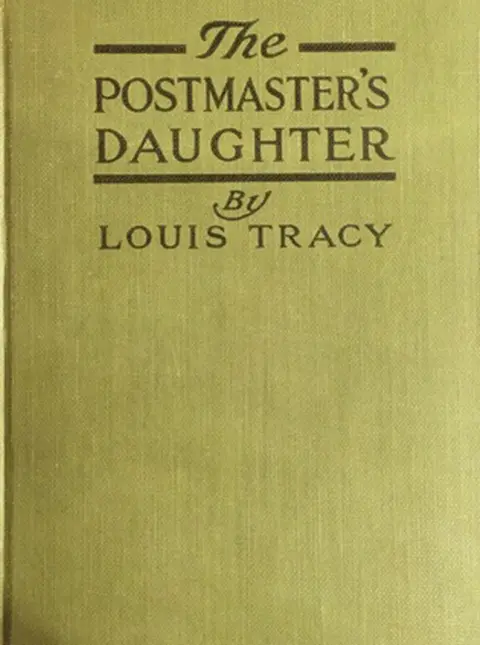
"The Postmaster's Daughter" by Louis Tracy is a mystery novel written in the early 20th century. The story begins with the discovery of a drowned woman, Adelaide Melhuish, whose body is found in the river bordering the estate of John Menzies Grant, a writer and former army officer. The opening establishes a tense atmosphere, hinting at complex relationships, as secrets from the past intertwine with the present, suggesting themes of love, betrayal, and murder. The opening of the book introduces John Menzies Grant as he enjoys a serene morning in his garden, oblivious to the troubling events that will soon unfold. After discovering the body of the drowned woman, he is drawn into a web of suspicion when the police arrive. The narrative hints at his previous connection with the deceased, raising questions about his past relationship with Adelaide and the circumstances leading to her tragic death. Additionally, the presence of Doris Martin, the postmaster's daughter, adds another layer of tension and potential scandal as her involvement with Grant may complicate matters further. The chapter sets the stage for a complex investigation that intertwines personal histories with the broader implications of a crime that disrupts the peace of a small village.
Introduction adapted from the source catalogue; source summaries may be automatically generated.
Free to read · English · 66,859 words · No account needed
MAKE TIME FOR A GOOD BOOK
On by default. Untick to stop anonymous reading totals. Each page counts after 10 seconds in view. How this works.
Anonymous counting is on unless you have switched it off.
Meanwhile, the visitor, finding that the clear-eyed young man seated in an easy chair (from which he had not risen) could seemingly regard him with blank indifference during the next hour, thought fit to say something.
“Is my name familiar to you, Mr. Grant?” he inquired.
The voice was astonishingly soft and pleasant, and the accent agreeably refined. Evidently, there were surprising points about Mr. Ingerman. Long afterwards, Grant learned, by chance, that the man had been an actor before branching off into that mysterious cosmopolitan profession known as “a financier.”
“No,” said Grant. “I have heard it very few times. Once, about three years ago, and today, when I mentioned it to the police.”
The other man’s sallow cheeks grew a shade more sallow. Grant supposed that this slight change of color indicated annoyance. Of course, the association of ideas in that curt answer was intolerably rude. But Grant had been tried beyond endurance that day. He was in a mood to be brusque with an archbishop.
“We can disregard your confidences, or explanations, to the police,” said Ingerman smoothly. “Three years ago, I suppose, my wife spoke of me?”
“If you mean Miss Adelaide Melhuish—yes.”
“I do mean her. To be exact, I mean the lady who was murdered outside this house last night.”
Grant realized instantly that Isidor G. Ingerman was a foeman worthy of even a novelist’s skill in repartee. Thus far, he, Grant, had been merely uncivil, using a bludgeon for wit, whereas the visitor was making play with a finely-tempered rapier.
“Now that you have established your identity, Mr. Ingerman, perhaps you will tell me why you are here,” he said.
“I have come to Steynholme to inquire into my wife’s death.”
“A most laudable purpose. I was given to understand, however, that at one time you took little interest in her living. I have not seen Mrs. Ingerman for three years—until last night, that is—so there is a chance, of course, that husband and wife may have adjusted their differences. Is that so?”
“Until last night!” repeated Ingerman, almost in a startled tone. “You
admit that?”
Grant turned and pointed.
“I saw, or fancied I saw, her face at that window,” he said. “She looked in on me about ten minutes to eleven. I was hard at work, but the vision, as it seemed then, was so weird and unexpected, that I went straight out and searched for her. Perhaps ‘searched’ is not quite the right word. To be exact, I opened the French window, stood there, and listened. Then I persuaded myself that I was imagining a vain thing, and came in.”
Your reading position is saved on this browser. Take it to another device with a library code. Reading pages adapt to text, rather than matching a printed edition.
Louis Tracy
Louis Tracy
Louis Tracy
Louis Tracy
BEHIND THE BOOK
This eBook is for the use of anyone anywhere in the United States and most other parts of the world at no cost and with almost no restrictions whatsoever. You may copy it, give it away or re-use it under the terms of the Project Gutenberg License included with this eBook or online at www.gutenberg.org. If you are not located in the United States, you will have to check the laws of the country where you are located before using this eBook. Read the source licence.
The original source file, including credits and licence, is retained by this library. Request an original-format copy at no charge. Please include the book title and Project Gutenberg identifier #10110.
KEEP YOUR CURIOSITY GOING
Coulson Kernahan

Maurice Baring
Frances Wright
Cécile Tormay

Frederic Jesup Stimson

W. H. P. (William Henry Pope) Jarvis