THE CLASSIC COLLECTION✦Karl GrierCLASSIC FREE BOOKS
Karl Grier
Louis Tracy
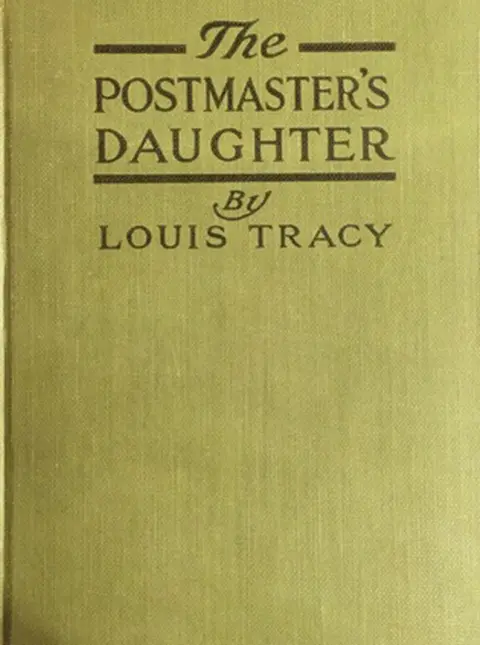
THE CLASSIC COLLECTION · 1916
"The Postmaster's Daughter" by Louis Tracy is a mystery novel written in the early 20th century. The story begins with the discovery of a drowned woman, Adelaide Melhuish, whose body is found in the river bordering the estate of John Menzies Grant, a writer and former army officer. The opening establishes a tense atmosphere, hinting at complex relationships, as secrets from the past intertwine with the present, suggesting themes of love, betrayal, and murder. The opening of the book introduces John Menzies Grant as he enjoys a serene morning in his garden, oblivious to the troubling events that will soon unfold. After discovering the body of the drowned woman, he is drawn into a web of suspicion when the police arrive. The narrative hints at his previous connection with the deceased, raising questions about his past relationship with Adelaide and the circumstances leading to her tragic death. Additionally, the presence of Doris Martin, the postmaster's daughter, adds another layer of tension and potential scandal as her involvement with Grant may complicate matters further. The chapter sets the stage for a complex investigation that intertwines personal histories with the broader implications of a crime that disrupts the peace of a small village.
Introduction adapted from the source catalogue; source summaries may be automatically generated.
Free to read · English · 66,859 words · No account needed
MAKE TIME FOR A GOOD BOOK
On by default. Untick to stop anonymous reading totals. Each page counts after 10 seconds in view. How this works.
Anonymous counting is on unless you have switched it off.
“You see what I am aiming at. Let us suppose that Miss Melhuish never, in her own mind, abandoned the hope that some day the tangle would straighten itself. Women are constituted that way. If her husband is now dead, and she became free, she might wish to renew the old ties, but, being proud, would want to ascertain first whether or not any other woman had come into your life.”
“I follow perfectly,” said Grant, with some bitterness. “She would be consumed with jealousy because my companion in the garden last night happened to be a charming girl of nineteen.”
“It is possible.”
“So she went off and got someone to kill her, and tie her body with a rope, and arrange a dramatic setting whereby it would be patent to the meanest intelligence that I was the criminal?”
Mr. Fowler smiled, and looked fixedly at P. C. Robinson.
“No, no,” he said, quite good-humoredly. “That would be carrying realism to extremes. Still, I am convinced, Mr. Grant, that this mystery is bound up in some way with your romance of three years ago. At present, I admit, I am working in the dark.”
He rose. Apparently, the interview was at an end. But, while pocketing his note-book, he said suddenly:—
“The inquest will open at three o’clock tomorrow. You will be present, of course, Mr. Grant?”
“I suppose it is necessary.”
“Oh, yes. You found the body, you know. Besides, you may be the only person who can give evidence of identity. In fact, you and the doctor will be the only witnesses called.”
“Dr. Foxton?”
“Yes.”
“Has he made a post-mortem?”
“He is doing so now. You see, there is clear indication that this unfortunate lady was struck a heavy blow, perhaps killed, before she was put in the river.”
“Good Heavens! Somehow, I was so stunned that I never thought of looking for signs of any injury of that sort.”
Grant’s horror-stricken air was so spontaneous that it probably justified the severe test of that unexpected disclosure. He was so unnerved by it that the two policemen had gone before he could frame another question.
Once they were in the open road, and well away from The Hollies, Robinson ventured to open his mouth.
“He’s a clever one is Mr. Grant,” he said meaningly. “You handled him a bit of all right, sir, but he didn’t tell you everything he knew, not by long chalks.”
The superintendent walked a few yards in silence. Even when he spoke, his gaze was introspective, and seemed to ignore his companion.
Your reading position is saved on this browser. Take it to another device with a library code. Reading pages adapt to text, rather than matching a printed edition.
Louis Tracy
Louis Tracy
Louis Tracy
Louis Tracy
BEHIND THE BOOK
This eBook is for the use of anyone anywhere in the United States and most other parts of the world at no cost and with almost no restrictions whatsoever. You may copy it, give it away or re-use it under the terms of the Project Gutenberg License included with this eBook or online at www.gutenberg.org. If you are not located in the United States, you will have to check the laws of the country where you are located before using this eBook. Read the source licence.
The original source file, including credits and licence, is retained by this library. Request an original-format copy at no charge. Please include the book title and Project Gutenberg identifier #10110.
KEEP YOUR CURIOSITY GOING
Coulson Kernahan

Maurice Baring
Frances Wright
Cécile Tormay

Frederic Jesup Stimson

W. H. P. (William Henry Pope) Jarvis