THE CLASSIC COLLECTION✦Karl GrierCLASSIC FREE BOOKS
Karl Grier
Louis Tracy
THE CLASSIC COLLECTION · 1916
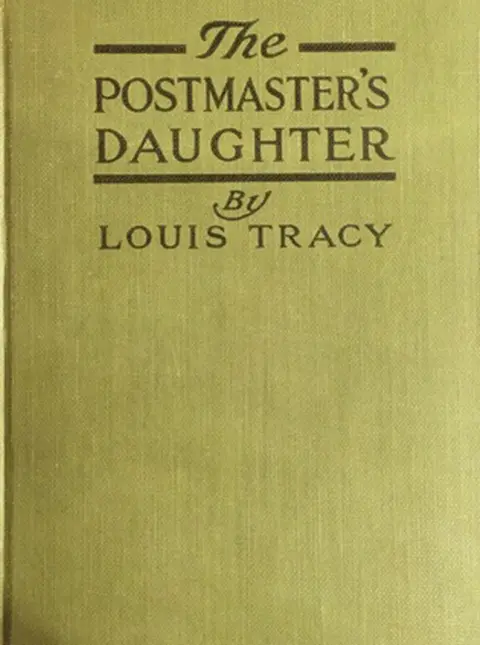
"The Postmaster's Daughter" by Louis Tracy is a mystery novel written in the early 20th century. The story begins with the discovery of a drowned woman, Adelaide Melhuish, whose body is found in the river bordering the estate of John Menzies Grant, a writer and former army officer. The opening establishes a tense atmosphere, hinting at complex relationships, as secrets from the past intertwine with the present, suggesting themes of love, betrayal, and murder. The opening of the book introduces John Menzies Grant as he enjoys a serene morning in his garden, oblivious to the troubling events that will soon unfold. After discovering the body of the drowned woman, he is drawn into a web of suspicion when the police arrive. The narrative hints at his previous connection with the deceased, raising questions about his past relationship with Adelaide and the circumstances leading to her tragic death. Additionally, the presence of Doris Martin, the postmaster's daughter, adds another layer of tension and potential scandal as her involvement with Grant may complicate matters further. The chapter sets the stage for a complex investigation that intertwines personal histories with the broader implications of a crime that disrupts the peace of a small village.
Introduction adapted from the source catalogue; source summaries may be automatically generated.
Free to read · English · 66,859 words · No account needed
MAKE TIME FOR A GOOD BOOK
On by default. Untick to stop anonymous reading totals. Each page counts after 10 seconds in view. How this works.
Anonymous counting is on unless you have switched it off.
Elkin’s remarkable improvement in health was commented on by Hobbs, and Siddle took the credit.
“That last mixture has proved beneficial, then?” he said, eying the
horse-dealer closely.
“Top-hole,” smirked Elkin. “But it’s only fair to say that I’ve chucked whiskey, too.”
“Did you finish the bottle?”
“Which bottle?”
“Mine, of course.”
“Nearly.”
“Don’t take any more. It was decidedly strong. I’ll send a boy early to-morrow morning with a first-rate tonic, and you might give him any old medicine bottles you possess. I’m running short.”
Elkin hesitated a second or two.
“I’ll tell my housekeeper to look ’em up,” he said. After the inquest he communicated this episode to Furneaux as a great joke.
“Queer, isn’t it?” he guffawed. “A couple of dozen bottles went back, as I’m always getting stuff for the gees, but those two weren’t among ’em. You took care of that, eh? When will you have the analysis?”
“It’ll be fully a week yet,” said the detective. “Government offices are not run like express trains, and this is a free job, you know. But, be advised by me. Stick to plain food, and throw physic to the dogs.”
Another singular fact, unobserved by the public at large, was that a policeman, either Robinson or a stranger, patrolled the high-street all day and all night, while no one outside official circles was aware that other members of the force watched The Hollies, or were secreted among the trees on the cliffside, from dusk to dawn.
Next morning, however, there was real cause for talk. Siddle’s shop was closed. Over the letter-box, neatly printed, was gummed a notice:
“Called away on business. Will open for one hour after arrival of 7 p.
m. train. T. S.”
Everyone who passed stopped to read. Even Mr. Franklin joined Furneaux and Peters in a stroll across the road to have a look.
“I want you a minute,” said the big man suddenly to Furneaux. There was that in his tone which forbade questioning, so Peters sheered off, well content with the share permitted him in the inquiry thus far.
“That fellow, Hart, is no fool,” went on Winter rapidly. “He said last night ‘How does one get evidence?’ It was not easy to answer. Siddle has gone to his mother’s funeral. What do you think!”
“You’d turn me into a housebreaker, would you?” whined Furneaux bitterly. “I must do the job, of course, just because I’m a little one. Well, well! After a long and honorable career I have to become a sneak thief. It may cost me my pension.”
Your reading position is saved on this browser. Take it to another device with a library code. Reading pages adapt to text, rather than matching a printed edition.
Louis Tracy
Louis Tracy
Louis Tracy
Louis Tracy
BEHIND THE BOOK
This eBook is for the use of anyone anywhere in the United States and most other parts of the world at no cost and with almost no restrictions whatsoever. You may copy it, give it away or re-use it under the terms of the Project Gutenberg License included with this eBook or online at www.gutenberg.org. If you are not located in the United States, you will have to check the laws of the country where you are located before using this eBook. Read the source licence.
The original source file, including credits and licence, is retained by this library. Request an original-format copy at no charge. Please include the book title and Project Gutenberg identifier #10110.
KEEP YOUR CURIOSITY GOING
Coulson Kernahan

Maurice Baring
Frances Wright
Cécile Tormay

Frederic Jesup Stimson

W. H. P. (William Henry Pope) Jarvis