THE CLASSIC COLLECTION✦Karl GrierCLASSIC FREE BOOKS
Karl Grier
Louis Tracy
THE CLASSIC COLLECTION · 1916
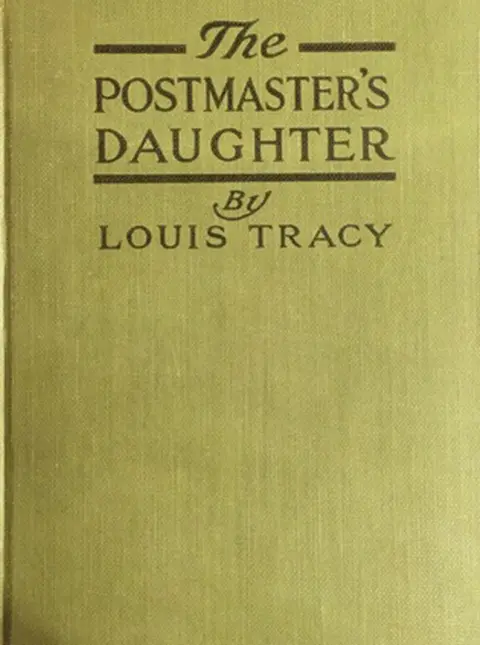
"The Postmaster's Daughter" by Louis Tracy is a mystery novel written in the early 20th century. The story begins with the discovery of a drowned woman, Adelaide Melhuish, whose body is found in the river bordering the estate of John Menzies Grant, a writer and former army officer. The opening establishes a tense atmosphere, hinting at complex relationships, as secrets from the past intertwine with the present, suggesting themes of love, betrayal, and murder. The opening of the book introduces John Menzies Grant as he enjoys a serene morning in his garden, oblivious to the troubling events that will soon unfold. After discovering the body of the drowned woman, he is drawn into a web of suspicion when the police arrive. The narrative hints at his previous connection with the deceased, raising questions about his past relationship with Adelaide and the circumstances leading to her tragic death. Additionally, the presence of Doris Martin, the postmaster's daughter, adds another layer of tension and potential scandal as her involvement with Grant may complicate matters further. The chapter sets the stage for a complex investigation that intertwines personal histories with the broader implications of a crime that disrupts the peace of a small village.
Introduction adapted from the source catalogue; source summaries may be automatically generated.
Free to read · English · 66,859 words · No account needed
MAKE TIME FOR A GOOD BOOK
On by default. Untick to stop anonymous reading totals. Each page counts after 10 seconds in view. How this works.
Anonymous counting is on unless you have switched it off.
“By paying him a tempting price, of course. I’m a weak-minded ass in
such matters.”
The chemist busied himself to oblige the detective, wrapping and tying the packages neatly. Furneaux insisted on paying sixpence for the paper, string, and labor. There was quite a friendly argument, but he carried his point.
The dog-cart then brought him to the station, where he tipped and dismissed the man; a little later, he caught a London-bound train.
At half past seven precisely, Winter turned in through the Knoleworth-side gate of The Hollies (there were two, the approach to the house being semi-circular) and pushed the door open, as it was standing ajar.
Grant was waiting in the hall, and greeted him pleasantly.
“Here’s a telegram which is meant for you, I fancy,” he said.
Winter read:
“Sorry to spoil your party. Compelled to travel to London. Returning
early to-morrow. F.”
“That’s pretty Fanny’s way,” smiled the Chief Inspector. “But there’s something in the wind, or he would never have hurried off in this fashion. He tells me that the only pleasant evening he spent in Steynholme was under your roof, Mr. Grant.”
“Come along in, Don Jaime!” drawled Hart’s voice from the “den,” which had been cleared of its litter, the lawn being deemed somewhat unsuitable for the purposes of a drawing-room on that occasion. It was overlooked from too many quarters.
“Ah, we meet now under less uneven conditions, Mr. Hart,” said Winter. “Do you know that Enrico Suarez is in London?”
Hart, startled for once in his life, gazed at the detective fixedly.
“Since when?” he cried.
“He crossed from Lisbon last week.”
Hart took a revolver from his hip pocket, and opened it, apparently making sure that it was properly loaded.
“What’s the law in England?” he inquired. “Can I shoot first, or must I wait till the other fellow has had a pop?”
Winter laughed.
“It’s all right,” he said. “Suarez is in Holloway, awaiting
extradition. But I owed you one for the rise you took out of me
to-day.”
A bell sounded, and Peters came in. He glanced around.
“Where’s Furneaux?” he demanded.
“Gone to London. Why this keen interest?” said Winter.
“There’s something up. Elkin dropped in at the Hare and Hounds. He was simply bursting with curiosity, and had to talk to somebody. So he chose me.”
“He would,” was the dry comment.
“Fact, ’pon me honor. I didn’t lead him on an inch. It seems that Furneaux bought some prints which caught his eye in Elkin’s house, and Tomlin says that that hexplains hit.”
“Explains what?”
Your reading position is saved on this browser. Take it to another device with a library code. Reading pages adapt to text, rather than matching a printed edition.
Louis Tracy
Louis Tracy
Louis Tracy
Louis Tracy
BEHIND THE BOOK
This eBook is for the use of anyone anywhere in the United States and most other parts of the world at no cost and with almost no restrictions whatsoever. You may copy it, give it away or re-use it under the terms of the Project Gutenberg License included with this eBook or online at www.gutenberg.org. If you are not located in the United States, you will have to check the laws of the country where you are located before using this eBook. Read the source licence.
The original source file, including credits and licence, is retained by this library. Request an original-format copy at no charge. Please include the book title and Project Gutenberg identifier #10110.
KEEP YOUR CURIOSITY GOING
Coulson Kernahan

Maurice Baring
Frances Wright
Cécile Tormay

Frederic Jesup Stimson

W. H. P. (William Henry Pope) Jarvis