THE CLASSIC COLLECTION✦Karl GrierCLASSIC FREE BOOKS
Karl Grier
Louis Tracy
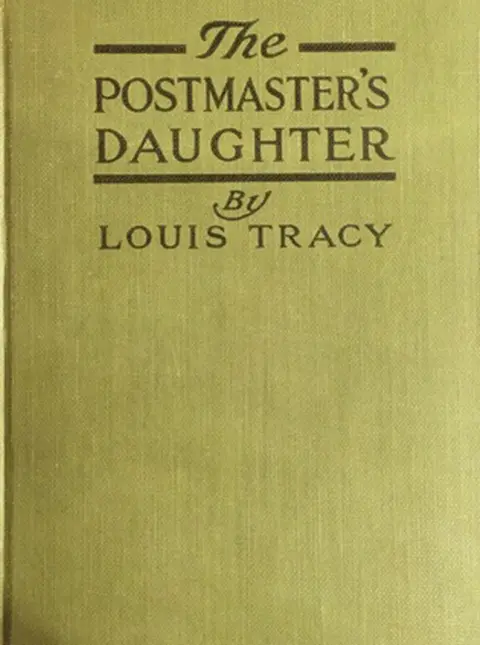
THE CLASSIC COLLECTION · 1916
"The Postmaster's Daughter" by Louis Tracy is a mystery novel written in the early 20th century. The story begins with the discovery of a drowned woman, Adelaide Melhuish, whose body is found in the river bordering the estate of John Menzies Grant, a writer and former army officer. The opening establishes a tense atmosphere, hinting at complex relationships, as secrets from the past intertwine with the present, suggesting themes of love, betrayal, and murder. The opening of the book introduces John Menzies Grant as he enjoys a serene morning in his garden, oblivious to the troubling events that will soon unfold. After discovering the body of the drowned woman, he is drawn into a web of suspicion when the police arrive. The narrative hints at his previous connection with the deceased, raising questions about his past relationship with Adelaide and the circumstances leading to her tragic death. Additionally, the presence of Doris Martin, the postmaster's daughter, adds another layer of tension and potential scandal as her involvement with Grant may complicate matters further. The chapter sets the stage for a complex investigation that intertwines personal histories with the broader implications of a crime that disrupts the peace of a small village.
Introduction adapted from the source catalogue; source summaries may be automatically generated.
Free to read · English · 66,859 words · No account needed
MAKE TIME FOR A GOOD BOOK
On by default. Untick to stop anonymous reading totals. Each page counts after 10 seconds in view. How this works.
Anonymous counting is on unless you have switched it off.
Furneaux laughed shrilly, even derisively, but him his colleague treated with majestic disdain. Then, the chemist having reentered the village, the group broke up, Peters to search his brains for “copy” which should be readable yet contain no hint of the new trail, Winter to take train to Knoleworth, and Furneaux to tackle Fred Elkin, who, he had ascertained earlier, would drive home from a neighboring hamlet about five o’clock.
Elkin had returned when the detective reached the house, a somewhat pretentious place, half farm, half villa, and altogether horsey. The entrance hall bristled with fox masks and brushes. A useful collection of burnished bits and snaffles hung on a side wall. A couple of stuffed badgers held two wicker stands for sticks and umbrellas, and whips and hunting-crops were ranged on hooks beneath a 12-bore and a rook rifle.
A pert maid-servant took Furneaux’s card, blanched when she read it, and forgot to close the door of the dining-room. Hence, the detective heard Elkin’s gruff comments:
“What? That chap? Wants to see me? Not more than I want to see him.
Show him in.”
Furneaux, looking very meek and mild, entered an apartment of the carpet-bag upholstery period. A set of six exceedingly good and rare sporting prints caught his eye.
“Good day,” he said, finding Elkin drinking tea, and eating a boiled egg. “You’re feeling better, I’m glad to see.”
Now, no matter how ungracious a man may be, a courteous solicitude as to his health demands a certain note of civility in return.
“Yes,” he said. “Sit down. Will you join me?”
“I’ll have a cup of tea, with pleasure,” said Furneaux.
“Right-o! Just touch that bell, will you?”
The other obeyed, and took a closer look at one of the prints. Yes, the date was right, 1841, and the stippling admirable.
“Nice lot of pictures, those,” he said cheerfully, when the frightened maid, much to her relief, had been told to bring another cup and a fresh supply of toast.
“Are they?” Elkin had taken them and some kitchen furniture for a bad
debt.
“Yes. Will you sell them?”
“Well, I haven’t thought about it. What’ll you give?”
Furneaux hesitated.
“I can’t resist anything in the art line that takes my fancy,” he said, after a pause of indecision. “What do you say to ten bob each?”
Elkin valued the lot at that figure, but Furneaux was a fool, and
should be treated as such.
“Oh, come now!” he cried roguishly. “They’re worth more than that.”
Furneaux reflected again.
Your reading position is saved on this browser. Take it to another device with a library code. Reading pages adapt to text, rather than matching a printed edition.
Louis Tracy
Louis Tracy
Louis Tracy
Louis Tracy
BEHIND THE BOOK
This eBook is for the use of anyone anywhere in the United States and most other parts of the world at no cost and with almost no restrictions whatsoever. You may copy it, give it away or re-use it under the terms of the Project Gutenberg License included with this eBook or online at www.gutenberg.org. If you are not located in the United States, you will have to check the laws of the country where you are located before using this eBook. Read the source licence.
The original source file, including credits and licence, is retained by this library. Request an original-format copy at no charge. Please include the book title and Project Gutenberg identifier #10110.
KEEP YOUR CURIOSITY GOING
Coulson Kernahan

Maurice Baring
Frances Wright
Cécile Tormay

Frederic Jesup Stimson

W. H. P. (William Henry Pope) Jarvis