THE CLASSIC COLLECTION✦Karl GrierCLASSIC FREE BOOKS
Karl Grier
Louis Tracy
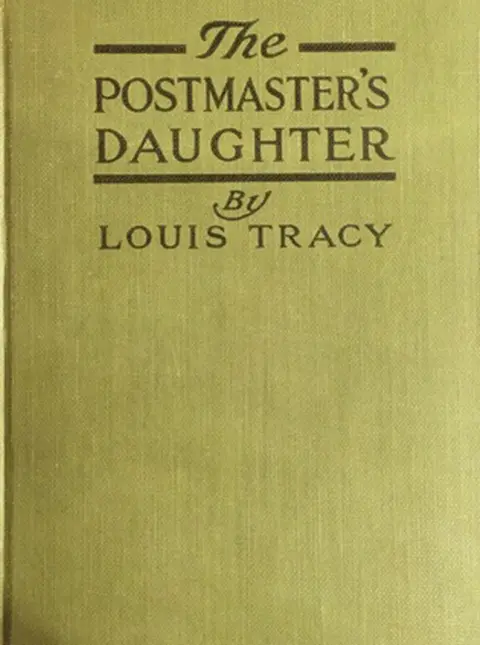
THE CLASSIC COLLECTION · 1916
"The Postmaster's Daughter" by Louis Tracy is a mystery novel written in the early 20th century. The story begins with the discovery of a drowned woman, Adelaide Melhuish, whose body is found in the river bordering the estate of John Menzies Grant, a writer and former army officer. The opening establishes a tense atmosphere, hinting at complex relationships, as secrets from the past intertwine with the present, suggesting themes of love, betrayal, and murder. The opening of the book introduces John Menzies Grant as he enjoys a serene morning in his garden, oblivious to the troubling events that will soon unfold. After discovering the body of the drowned woman, he is drawn into a web of suspicion when the police arrive. The narrative hints at his previous connection with the deceased, raising questions about his past relationship with Adelaide and the circumstances leading to her tragic death. Additionally, the presence of Doris Martin, the postmaster's daughter, adds another layer of tension and potential scandal as her involvement with Grant may complicate matters further. The chapter sets the stage for a complex investigation that intertwines personal histories with the broader implications of a crime that disrupts the peace of a small village.
Introduction adapted from the source catalogue; source summaries may be automatically generated.
Free to read · English · 66,859 words · No account needed
MAKE TIME FOR A GOOD BOOK
On by default. Untick to stop anonymous reading totals. Each page counts after 10 seconds in view. How this works.
Anonymous counting is on unless you have switched it off.
“Well, Tomlin wants a wife.”
Winter laughed joyously.
“Next?” he cried.
“They say that Mr. Siddle is a widower.”
“The chemist? Foreman of the jury?”
“Yes, sir.”
“From appearances, he is a likelier candidate than either Elkin or
Tomlin. Anybody else?”
“I shouldn’t be far wrong if I gave you the name of most among the young unmarried men in the parish.”
“Dear me! I must have a peep at this charmer. But I want those names,
Robinson.”
Winter produced a note-book, so he was evidently taking the matter seriously. The policeman, however, was flustered. His thoughts ran on Elkin, whereas this masterful person from London insisted on discussing Doris Martin.
“My difficulty is, sir, that she has never kep’ company with any of
’em,” he said.
“Never mind. Give me the name of every man who, no matter what his position or prospects, might be irritated, if no more, if he knew that Miss Martin and Mr. Grant were presumably spooning in a garden at a rather late hour.”
It was a totally new line of inquiry for Robinson, but he bent his wits to it, and evolved a list which, if published, would certainly be regarded with incredulous envy by every other girl in the village than the postmaster’s daughter; as for Doris herself, she would be mightily surprised when she saw it, but whether annoyed or secretly gratified none but a pretty girl of nineteen can tell.
Winter departed soon afterwards. Before going to the inn he had a look at the forge. A young woman, standing at the open door of the adjoining cottage, favored him with a frank stare. There was no light in the dwelling. When he returned, after walking a little way down the road, the door was closed.
Next morning, Bates heard of Peters as the detective and of Mr. Franklin as a “millionaire” from South America. Moreover, he scrutinized both in the flesh, and saw Robinson salute Peters but pass the financial potentate with indifference.
Alas, that a reputation, once built, should be destroyed!
“I was mistook, sir,” he reported to Grant later. “There’s another ’tec about, but ’e ain’t the chap I met last night. They say this other bloke is rollin’ in money, an’ buyin’ hosses right an’ left.”
“Then he’ll soon be rolling in the mud, and have no money,” put in
Hart.
“Who is he?” inquired Grant carelessly.
“A Mr. Franklin, from South America, sir.”
Grant and Hart exchanged glances. Curiously enough, Hart remained
silent till Bates had gone.
Your reading position is saved on this browser. Take it to another device with a library code. Reading pages adapt to text, rather than matching a printed edition.
Louis Tracy
Louis Tracy
Louis Tracy
Louis Tracy
BEHIND THE BOOK
This eBook is for the use of anyone anywhere in the United States and most other parts of the world at no cost and with almost no restrictions whatsoever. You may copy it, give it away or re-use it under the terms of the Project Gutenberg License included with this eBook or online at www.gutenberg.org. If you are not located in the United States, you will have to check the laws of the country where you are located before using this eBook. Read the source licence.
The original source file, including credits and licence, is retained by this library. Request an original-format copy at no charge. Please include the book title and Project Gutenberg identifier #10110.
KEEP YOUR CURIOSITY GOING
Coulson Kernahan

Maurice Baring
Frances Wright
Cécile Tormay

Frederic Jesup Stimson

W. H. P. (William Henry Pope) Jarvis