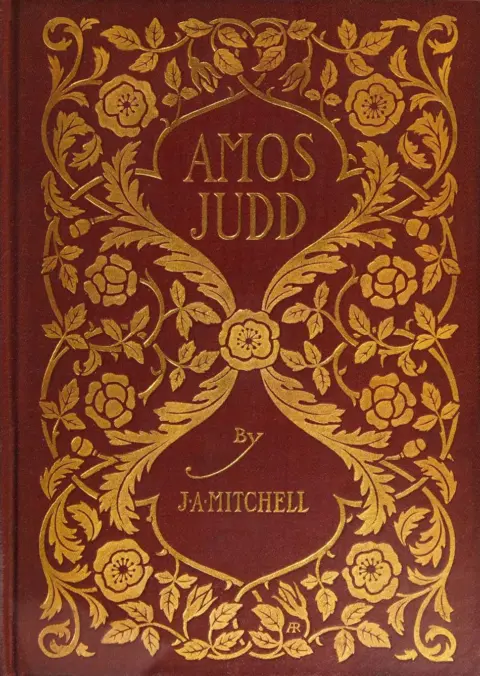
Amos Judd
John Ames Mitchell
THE CLASSIC COLLECTION · 1901
"The Pines of Lory" by John Ames Mitchell is a novel written in the early 20th century. The story introduces an intriguing connection between two main characters, Patrick Boyd, a man returning from Africa, and Elinor Marshall, an orphan with a generous heart. Their adventure begins when they find themselves passengers on a steamer bound for Boyd's Island, but soon they encounter unexpected circumstances that challenge their understanding of each other and compel them to confront deeper themes of love, virtue, and destiny. At the start of the novel, readers are introduced to the atmosphere aboard the steamer as the characters prepare for their journey. Boyd bears the scars of his recent past, still recovering physically and emotionally from his experiences in Africa. The narrative invites readers to witness his playful banter with his friend Billy Townsend, as well as the magnetic charm of Elinor, who is set to visit the Boyds’ house. Tension escalates amidst the humorous and social exchanges when the steamer unexpectedly lands at the wrong location, leaving both characters stranded in an isolated wilderness without someone to guide them. The initial light-heartedness gives way to a gripping tale intertwined with themes of romance and existential contemplation, as both characters are forced to confront their own vulnerabilities amidst unforeseen trials.
Introduction adapted from the source catalogue; source summaries may be automatically generated.
Free to read · English · 39,693 words · No account needed
MAKE TIME FOR A GOOD BOOK
On by default. Untick to stop anonymous reading totals. Each page counts after 10 seconds in view. How this works.
Anonymous counting is on unless you have switched it off.
During dinner, which occurred at noon, there were fewer words that day, and with somewhat more reflection than was usual. The store of provisions now rapidly disappearing, together with no prospect of immediate escape, furnished rich material for thought. Both knew the raft might prove a treacherous reliance. Instead of landing them on the opposite bank of the river there were excellent chances of its carrying them out to sea. And the prevailing westerly wind was almost sure to drive them backward to the east again. Pats had been all over this so many times in his own mind, and with Elinor, that the subject was pretty well exhausted. But still, from habit, he speculated.
"A penny for your thoughts."
He raised his eyes, and as they met her own his habitual cheerfulness returned. "My thoughts are worth more than that, for I was thinking of you."
"Something bad?"
"I was wondering how many days you could foot it through the wilderness
before giving out."
"For ever, little Patsy, if you were with me."
"Then we have nothing to fear. We can both march on for ever. You are not only food and drink to me,--that is, the equivalent of corncake, potatoes, marmalade, and claret,--but your presence is life and strength and a spiritual tonic."
"That is a good sentiment," and she reached forth a hand, which he took.
"Merely to look at you," he continued, "will be exhilarating on a long march. And to hear your voice, and touch you--why, my soul becomes drunk in thinking of it."
"Then you expect to be in a state of intoxication during the whole
journey?"
"That is my hope."
It happened, a few minutes later, that she herself became preoccupied, her eyes fixed thoughtfully upon the little portrait on the opposite chair.
"A dollar for your thoughts."
"Why so much?"
"Because any thought of yours," said Pats, "is worth at least a dollar."
"Thanks."
"You are thinking, as usual, of that woman. The woman who has my place."
"It is her place; she had it before we came."
"But you ought to be looking at me all this time. I am the person for you to think about. I shall end by hating the woman."
"Oh, you mustn't be jealous. You can't hate her. Such a gentle face! And then all the mystery that goes with her! I would give anything to know who she was."
Pats scowled: "You would give Solomon and me, among other things."
"No, never!" And again she extended the hand, but he frowned upon it and drew back into the farther corner of his chair. She laughed. "And is Fatsy really jealous?"
Your reading position is saved on this browser. Take it to another device with a library code. Reading pages adapt to text, rather than matching a printed edition.
John Ames Mitchell
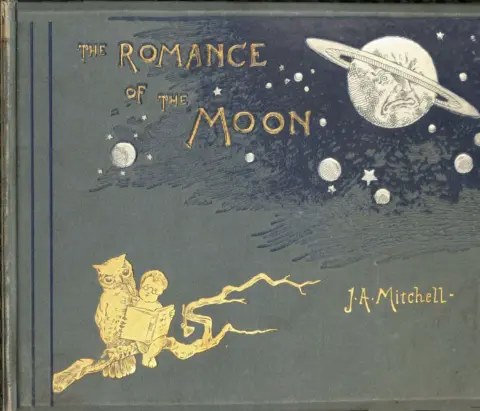
John Ames Mitchell

Francis Davis Millet & W. Hamilton (William Hamilton) Gibson & Will H. (Will Hicok) Low & John Ames Mitchell & Francis Hopkinson Smith
John Ames Mitchell
BEHIND THE BOOK
This eBook is for the use of anyone anywhere in the United States and most other parts of the world at no cost and with almost no restrictions whatsoever. You may copy it, give it away or re-use it under the terms of the Project Gutenberg License included with this eBook or online at www.gutenberg.org. If you are not located in the United States, you will have to check the laws of the country where you are located before using this eBook. Read the source licence.
The original source file, including credits and licence, is retained by this library. Request an original-format copy at no charge. Please include the book title and Project Gutenberg identifier #30600.
KEEP YOUR CURIOSITY GOING
Coulson Kernahan

Maurice Baring
Frances Wright
Cécile Tormay

Frederic Jesup Stimson

W. H. P. (William Henry Pope) Jarvis