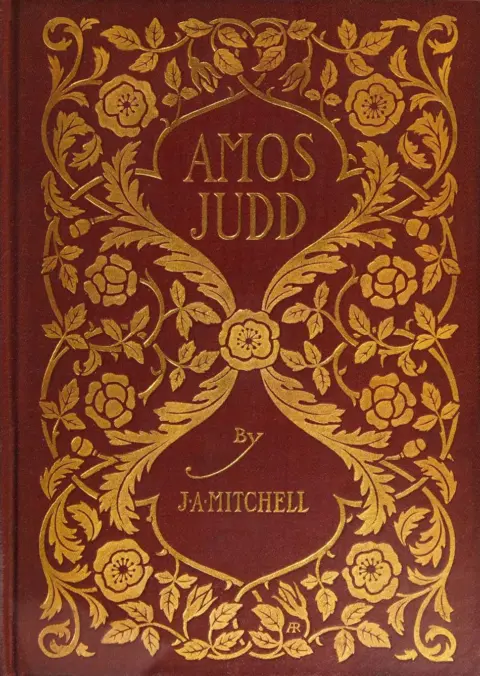
Amos Judd
John Ames Mitchell
THE CLASSIC COLLECTION · 1901
"The Pines of Lory" by John Ames Mitchell is a novel written in the early 20th century. The story introduces an intriguing connection between two main characters, Patrick Boyd, a man returning from Africa, and Elinor Marshall, an orphan with a generous heart. Their adventure begins when they find themselves passengers on a steamer bound for Boyd's Island, but soon they encounter unexpected circumstances that challenge their understanding of each other and compel them to confront deeper themes of love, virtue, and destiny. At the start of the novel, readers are introduced to the atmosphere aboard the steamer as the characters prepare for their journey. Boyd bears the scars of his recent past, still recovering physically and emotionally from his experiences in Africa. The narrative invites readers to witness his playful banter with his friend Billy Townsend, as well as the magnetic charm of Elinor, who is set to visit the Boyds’ house. Tension escalates amidst the humorous and social exchanges when the steamer unexpectedly lands at the wrong location, leaving both characters stranded in an isolated wilderness without someone to guide them. The initial light-heartedness gives way to a gripping tale intertwined with themes of romance and existential contemplation, as both characters are forced to confront their own vulnerabilities amidst unforeseen trials.
Introduction adapted from the source catalogue; source summaries may be automatically generated.
Free to read · English · 39,693 words · No account needed
MAKE TIME FOR A GOOD BOOK
On by default. Untick to stop anonymous reading totals. Each page counts after 10 seconds in view. How this works.
Anonymous counting is on unless you have switched it off.
"No, not jealous; but hurt, disgusted, outraged, and upset."
"Because I insist upon treating our hostess with respect and recognizing
her rights?"
"Our hostess! More likely some female devil who beguiled the old man. Probably he was so ashamed of her he never dared go home again."
"Oh, Pats! I blush for you."
"It's a silly face."
"It is a face full of character."
"Oh, come now, Elinor! It would pass for a portrait of the full moon."
"Well, the full moon has character. And I love those big merry eyes with the funny little melancholy kind of droop at the outer corners. Poor thing! She must have had a sad life out here in the wilderness."
"Thank you."
As their eyes met he frowned again, and she, for the third time, extended the hand. "A sad life, because she had no Pats."
But he refused the hand. "That is very clever, but too late. The stab
had already reached home."
She smiled and began to fold her napkin.
"To return to business, Miss Marshall, of Boston, the provisions are so low that we really must decide on something."
"How long will they last?"
"Perhaps a month or six weeks. Could you pull through the winter on eggs and dried apples--and candles?"
"If necessary."
He laughed. "I believe you could! You are an angel, a Spartan, and a sport. Your nature is simply an extravagant profusion of the highest human attributes. And the worst of it is, you look it. You are too beautiful--in a superior, overtopping way. You scare me."
She pushed back her chair. "You have said all that before."
"You remember the frog who was in love with the moon?"
She regarded him from the corners of her eyes, but made no reply.
"He used to sit in his puddle and adore her. One pleasant evening she came down out of the sky and kissed him."
"That was very good of her. And then what happened?"
"It killed him."
Elinor pushed back her chair, arose from the table and stood beside him. "Do you think it was a happy death?"
"Of course it was! Lucky devil!"
"Well, close your eyes and dream that I am the moon looking down at
you."
With face upturned, just enough to make it easier for the moon, Pats closed his eyes. In serene anticipation he awaited the delectable contact that never failed to send a thrill of pleasure through all his being. But the tranquil, beatific smile changed swiftly to a very different expression as he felt against his lips--a slice of dried apple. And the cold moon stepped back beyond his reach, and laughed.
Your reading position is saved on this browser. Take it to another device with a library code. Reading pages adapt to text, rather than matching a printed edition.
John Ames Mitchell
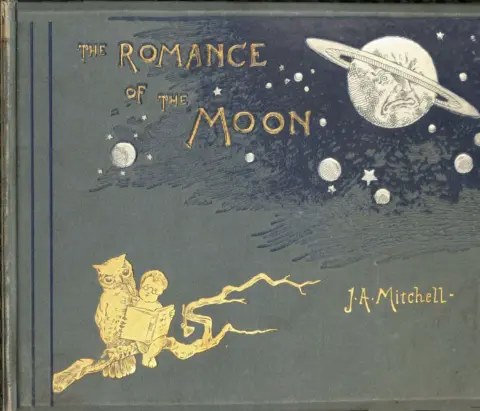
John Ames Mitchell

Francis Davis Millet & W. Hamilton (William Hamilton) Gibson & Will H. (Will Hicok) Low & John Ames Mitchell & Francis Hopkinson Smith
John Ames Mitchell
BEHIND THE BOOK
This eBook is for the use of anyone anywhere in the United States and most other parts of the world at no cost and with almost no restrictions whatsoever. You may copy it, give it away or re-use it under the terms of the Project Gutenberg License included with this eBook or online at www.gutenberg.org. If you are not located in the United States, you will have to check the laws of the country where you are located before using this eBook. Read the source licence.
The original source file, including credits and licence, is retained by this library. Request an original-format copy at no charge. Please include the book title and Project Gutenberg identifier #30600.
KEEP YOUR CURIOSITY GOING
Coulson Kernahan

Maurice Baring
Frances Wright
Cécile Tormay

Frederic Jesup Stimson

W. H. P. (William Henry Pope) Jarvis