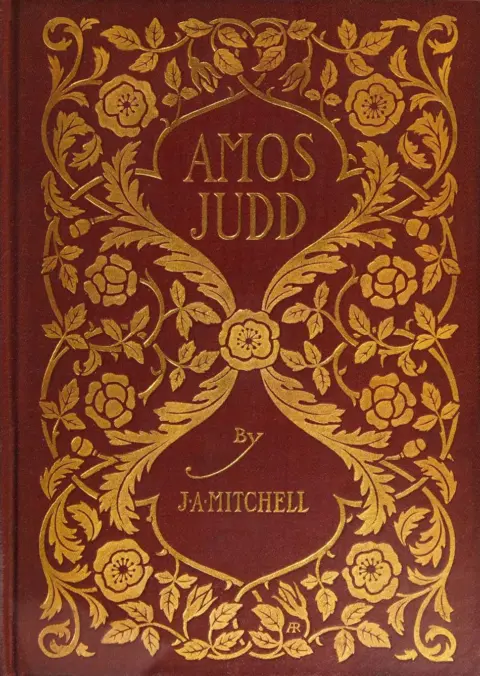
Amos Judd
John Ames Mitchell
THE CLASSIC COLLECTION · 1901
"The Pines of Lory" by John Ames Mitchell is a novel written in the early 20th century. The story introduces an intriguing connection between two main characters, Patrick Boyd, a man returning from Africa, and Elinor Marshall, an orphan with a generous heart. Their adventure begins when they find themselves passengers on a steamer bound for Boyd's Island, but soon they encounter unexpected circumstances that challenge their understanding of each other and compel them to confront deeper themes of love, virtue, and destiny. At the start of the novel, readers are introduced to the atmosphere aboard the steamer as the characters prepare for their journey. Boyd bears the scars of his recent past, still recovering physically and emotionally from his experiences in Africa. The narrative invites readers to witness his playful banter with his friend Billy Townsend, as well as the magnetic charm of Elinor, who is set to visit the Boyds’ house. Tension escalates amidst the humorous and social exchanges when the steamer unexpectedly lands at the wrong location, leaving both characters stranded in an isolated wilderness without someone to guide them. The initial light-heartedness gives way to a gripping tale intertwined with themes of romance and existential contemplation, as both characters are forced to confront their own vulnerabilities amidst unforeseen trials.
Introduction adapted from the source catalogue; source summaries may be automatically generated.
Free to read · English · 39,693 words · No account needed
MAKE TIME FOR A GOOD BOOK
On by default. Untick to stop anonymous reading totals. Each page counts after 10 seconds in view. How this works.
Anonymous counting is on unless you have switched it off.
"What a shame!" And with the back of a hand whose fingers were covered with corn-meal, she brushed a stray lock from her face.
"Yes," he went on, "it's a calamity, for we cannot afford it. I took an account of stock while I was down there, and all we have now in the way of vegetables is the dried apples. Of course, there's the garden truck,--the peas, beans, and the corn,--if it ever ripens."
After further conversation on that subject, Elinor said, with a sigh: "Well, we did enjoy those baked potatoes! We shall have to eat more eggs, that's all."
"Eggs!" and his face became distorted. "I am so chock full of eggs now that everything looks yellow. I dream of them. I cackle in my sleep. My whole interior is egg. I breathe and think egg. I gag when I hear a hen."
"But you are going to eat them all the same. We have a dozen a day, and
you must do your share."
"I won't."
"Yes, you will."
As Pats's eyes fell on Solomon, he brightened up. "There's that dog eats only the very things we are unable to spare. Why shouldn't he eat eggs?"
"You might try and teach him."
"Tell me," said Pats, "why hens should lay nothing but eggs, always eggs? Why shouldn't they lay pears, lemons, tomatoes,--things we really need?"
In silence the lady continued her work.
"Angel Cook?"
"Well?"
"What do you think?"
"I think, considering your years, that your conversation is surprising. Eggs are very nourishing, and we are lucky to have them. Didn't I make you a nice omelette only a few days ago?"
"You did, and I never knew a better for its purpose. I still use it for
cleaning the windows."
"Really! Well, you had better make it last, for you won't get another."
"Oh, don't be angry! I thought you meant it as a keepsake."
He approached with repentant air, but when threatened with her doughy hands, he retreated, and sat on the big chest by the window. This chest had served for his bed since his convalescence.
Elinor frowned, and pointed to the fire. Pats arose and laid on a fresh stick, then knelt upon the hearth and, with a seventeenth-century bellows, inlaid with silver, that would have graced the drawing-room of a palace, he coaxed the fire into a more active life.
"Now go out and bring in some wood. More small sticks. Not the big
ones."
Your reading position is saved on this browser. Take it to another device with a library code. Reading pages adapt to text, rather than matching a printed edition.
John Ames Mitchell
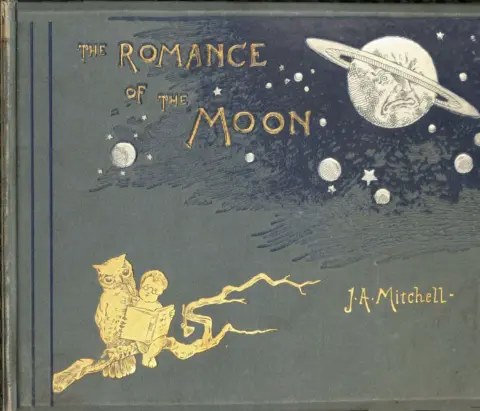
John Ames Mitchell

Francis Davis Millet & W. Hamilton (William Hamilton) Gibson & Will H. (Will Hicok) Low & John Ames Mitchell & Francis Hopkinson Smith
John Ames Mitchell
BEHIND THE BOOK
This eBook is for the use of anyone anywhere in the United States and most other parts of the world at no cost and with almost no restrictions whatsoever. You may copy it, give it away or re-use it under the terms of the Project Gutenberg License included with this eBook or online at www.gutenberg.org. If you are not located in the United States, you will have to check the laws of the country where you are located before using this eBook. Read the source licence.
The original source file, including credits and licence, is retained by this library. Request an original-format copy at no charge. Please include the book title and Project Gutenberg identifier #30600.
KEEP YOUR CURIOSITY GOING
Coulson Kernahan

Maurice Baring
Frances Wright
Cécile Tormay

Frederic Jesup Stimson

W. H. P. (William Henry Pope) Jarvis