Oriental Prisons Prisons and Crime in India, the Andaman Islands, Burmah, China, Japan, Egypt, Turkey
Arthur Griffiths

THE CLASSIC COLLECTION · 1906
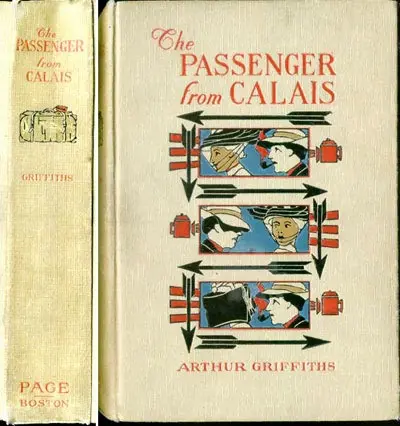
"The Passenger from Calais" by Arthur Griffiths is a novel written in the early 20th century. Set against the backdrop of early 1900s European travel, the story explores themes of intrigue, deception, and the complexities of human relationships. The plot centers around Colonel Basil Annesley, who finds himself embroiled in the mysterious circumstances surrounding a woman named Mrs. Blair, who has a troubled past. The opening of the book introduces Colonel Annesley as he embarks on a seemingly routine train journey from Calais to Basle. He quickly becomes aware of a peculiar situation in the train where he is the only passenger, soon joined by Mrs. Blair, who arrives with a child and her maid. The tension builds as her nervousness about traveling with just a few people, including Annesley, hints at a dark secret tied to her past. Annesley is drawn to Mrs. Blair but is also troubled by the ambiguous nature of her character, which raises questions about her true intentions. As the narrative unfolds, the presence of a sinister figure, Domenico Falfani, introduces an additional layer of conflict, setting the stage for a thrilling exploration of crime and morality along their journey.
Introduction adapted from the source catalogue; source summaries may be automatically generated.
Free to read · English · 57,623 words · No account needed
MAKE TIME FOR A GOOD BOOK
On by default. Untick to stop anonymous reading totals. Each page counts after 10 seconds in view. How this works.
Anonymous counting is on unless you have switched it off.
When that audacious and intemperate English Colonel so far forgot himself as to assault my lord the Right Honourable the Earl of Blackadder at Culoz Station in the open light of day before us all, I greatly rejoiced; for, although horror-stricken at his ruffianly conduct, I knew that he would get his deserts at last. The French authorities would certainly not tolerate brawling in the precincts of the railway station, and justice must promptly overtake the sole offender. The blackguard Colonel, the cause and origin of the disturbance, would, of course, be at once arrested and removed.
The fracas had naturally attracted general attention. One or two porters ran up and endeavoured, with Tiler and myself, to rescue my lord from his cowardly assailant. A crowd quickly gathered around us, many passengers and a number of idlers, who drop from nowhere, as it might be, all drawn to the spot by overmastering curiosity. Everybody talked at the same time, asking questions, volunteering answers, some laughing shamelessly at my lord's discomfiture, a few expressing indignation, and declaring that such a scandal should not be permitted, and the guilty parties held strictly to account.
The gendarmes on duty--a couple of them are always at hand in a French railway station--soon appeared, and, taking in the situation at the first glance, imposed silence peremptorily.
"Let some one, one person only, speak and explain." The brigadier, or sergeant, addressed himself to me, no doubt seeing that I had assumed a prominent place in the forefront, and seemed a person of importance.
"Monsieur here," I said, pointing to the Colonel, who, in spite of all we could do, still held my lord tight, "was the aggressor, as you can see for yourselves. Oblige him, I pray you, to desist. He will do my lord some serious injury."
"Is one an English milord, hein? Who, then, is the other?"
"An abominable vaurien," I answered with great heat. "A rank
villain; one who outrages all decency, breaks every law, respects no
rank--"
"Bus, bus," cried the Colonel, in some language of his own, as he put me aside so roughly that I still feel the pain in my shoulder. "That'll do, my fine fellow. Let me speak for myself, if you please. Pardon, M. le brigadier," he went on, saluting him politely. "Here is my card. I am, as you will perceive, an officer of the English army, and I appeal to you as a comrade, for I see by your decorations, no doubt richly deserved, that you are an ancien militaire. I appeal to you for justice and protection."
Your reading position is saved on this browser. Take it to another device with a library code. Reading pages adapt to text, rather than matching a printed edition.
Arthur Griffiths

Arthur Griffiths

Arthur Griffiths
Arthur Griffiths
BEHIND THE BOOK
This eBook is for the use of anyone anywhere in the United States and most other parts of the world at no cost and with almost no restrictions whatsoever. You may copy it, give it away or re-use it under the terms of the Project Gutenberg License included with this eBook or online at www.gutenberg.org. If you are not located in the United States, you will have to check the laws of the country where you are located before using this eBook. Read the source licence.
The original source file, including credits and licence, is retained by this library. Request an original-format copy at no charge. Please include the book title and Project Gutenberg identifier #16339.
KEEP YOUR CURIOSITY GOING
Coulson Kernahan

Maurice Baring
Frances Wright
Cécile Tormay

Frederic Jesup Stimson

W. H. P. (William Henry Pope) Jarvis




