Oriental Prisons Prisons and Crime in India, the Andaman Islands, Burmah, China, Japan, Egypt, Turkey
Arthur Griffiths

THE CLASSIC COLLECTION · 1906
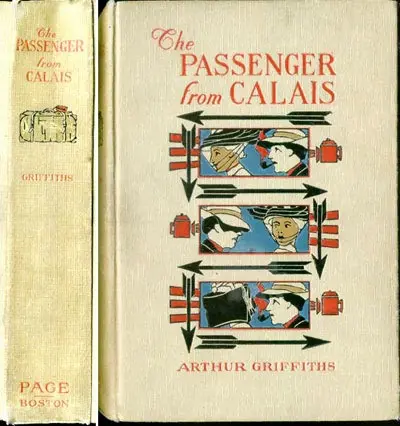
"The Passenger from Calais" by Arthur Griffiths is a novel written in the early 20th century. Set against the backdrop of early 1900s European travel, the story explores themes of intrigue, deception, and the complexities of human relationships. The plot centers around Colonel Basil Annesley, who finds himself embroiled in the mysterious circumstances surrounding a woman named Mrs. Blair, who has a troubled past. The opening of the book introduces Colonel Annesley as he embarks on a seemingly routine train journey from Calais to Basle. He quickly becomes aware of a peculiar situation in the train where he is the only passenger, soon joined by Mrs. Blair, who arrives with a child and her maid. The tension builds as her nervousness about traveling with just a few people, including Annesley, hints at a dark secret tied to her past. Annesley is drawn to Mrs. Blair but is also troubled by the ambiguous nature of her character, which raises questions about her true intentions. As the narrative unfolds, the presence of a sinister figure, Domenico Falfani, introduces an additional layer of conflict, setting the stage for a thrilling exploration of crime and morality along their journey.
Introduction adapted from the source catalogue; source summaries may be automatically generated.
Free to read · English · 57,623 words · No account needed
MAKE TIME FOR A GOOD BOOK
On by default. Untick to stop anonymous reading totals. Each page counts after 10 seconds in view. How this works.
Anonymous counting is on unless you have switched it off.
The crossing from Dover to Calais had been rough; a drizzling rain fell all the time, and most of the passengers had remained below. Strange to say, they were few enough, as I saw on landing. It was a Sunday in late July, and there ought to have been a strong stream setting towards Central Europe. I hardly expected to find much room in the train; not that it mattered, for my place was booked through in the Lucerne sleeping-car of the Engadine express.
Room! When I reached the siding where this train de luxe was drawn up, I saw that I was not merely the first but the only passenger. Five sleeping-cars and a dining-car attached, with the full staff, attendants, chef, waiters--all lay there waiting for me, and me alone.
"Not very busy?" I said, with a laugh to the conductor.
"Parbleu," replied the man, polyglot and cosmopolitan, like most of his class, but a Frenchman, or, more likely from his accent, a Swiss. "I never saw the like before."
"I shall have a compartment to myself, then?"
"Monsieur may have the whole carriage if he wishes--the whole five carriages. It is but to arrange." His eyes glistened at the prospect of something special in this obvious scarcity of coming tips.
"The train will run, I hope? I am anxious to get on."
"But assuredly it will run. Even without monsieur it would run. The carriages are wanted at the other end for the return journey. Stay, what have we here?"
We stood talking together on the platform, and at some little distance from the railway station, the road to which was clear and open all the way, so that I could see a little party of four approaching us, and distinguish them. Two ladies, an official, probably one of the guards, and a porter laden with light luggage.
As they came up I discreetly withdrew to my own compartment, the
window of which was open, so that I could hear and see all that
passed.
"Can we have places for Lucerne?" It was asked in an eager, anxious, but very sweet voice, and in excellent French.
"Places?" echoed the conductor. "Madame can have fifty."
"What did I tell madame?" put in the official who had escorted her.
"I don't want fifty," she replied, pettishly, crossly, "only two. A
separate compartment for myself and maid; the child can come in with
us."
Now for the first time I noticed that the maid was carrying a bundle in her arms, the nature of which was unmistakable. The way in which she swung it to and fro rhythmically was that of a nurse and child.
Your reading position is saved on this browser. Take it to another device with a library code. Reading pages adapt to text, rather than matching a printed edition.
Arthur Griffiths

Arthur Griffiths

Arthur Griffiths
Arthur Griffiths
BEHIND THE BOOK
This eBook is for the use of anyone anywhere in the United States and most other parts of the world at no cost and with almost no restrictions whatsoever. You may copy it, give it away or re-use it under the terms of the Project Gutenberg License included with this eBook or online at www.gutenberg.org. If you are not located in the United States, you will have to check the laws of the country where you are located before using this eBook. Read the source licence.
The original source file, including credits and licence, is retained by this library. Request an original-format copy at no charge. Please include the book title and Project Gutenberg identifier #16339.
KEEP YOUR CURIOSITY GOING
Coulson Kernahan

Maurice Baring
Frances Wright
Cécile Tormay

Frederic Jesup Stimson

W. H. P. (William Henry Pope) Jarvis




