Oriental Prisons Prisons and Crime in India, the Andaman Islands, Burmah, China, Japan, Egypt, Turkey
Arthur Griffiths

THE CLASSIC COLLECTION · 1906
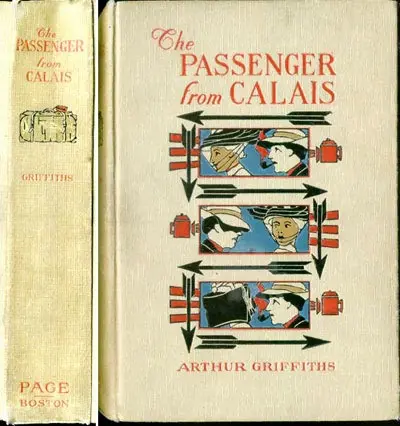
"The Passenger from Calais" by Arthur Griffiths is a novel written in the early 20th century. Set against the backdrop of early 1900s European travel, the story explores themes of intrigue, deception, and the complexities of human relationships. The plot centers around Colonel Basil Annesley, who finds himself embroiled in the mysterious circumstances surrounding a woman named Mrs. Blair, who has a troubled past. The opening of the book introduces Colonel Annesley as he embarks on a seemingly routine train journey from Calais to Basle. He quickly becomes aware of a peculiar situation in the train where he is the only passenger, soon joined by Mrs. Blair, who arrives with a child and her maid. The tension builds as her nervousness about traveling with just a few people, including Annesley, hints at a dark secret tied to her past. Annesley is drawn to Mrs. Blair but is also troubled by the ambiguous nature of her character, which raises questions about her true intentions. As the narrative unfolds, the presence of a sinister figure, Domenico Falfani, introduces an additional layer of conflict, setting the stage for a thrilling exploration of crime and morality along their journey.
Introduction adapted from the source catalogue; source summaries may be automatically generated.
Free to read · English · 57,623 words · No account needed
MAKE TIME FOR A GOOD BOOK
On by default. Untick to stop anonymous reading totals. Each page counts after 10 seconds in view. How this works.
Anonymous counting is on unless you have switched it off.
"Protection, forsooth!" I broke in, contemptuously. "Such as the wolf and the tiger and the snake expect from their victim."
It made me sick to hear him currying favour with the gendarme, and still worse that it was affecting the old trooper, who looked on all as pekins, mere civilians, far inferior to military men.
"Protection you shall have, mon Colonel, if you have a right to it, bien entendu," said the sergeant, civilly but cautiously.
"I ask it because these people have made a dead set at me. They have tried to hustle me and, I fear, to rob me, and I have been obliged to act in my own defence."
Before I could protest against this shameless misrepresentation of the fact, my lord interposed. He was now free, and, gradually recovering, was burning to avenge the insults put upon him.
"It is not true," he shouted. "It is an absolute lie. He knows it is not true; he is perfectly well aware who I am, Lord Blackadder; and that he has no sort of grievance against me nor any of my people. His attack upon me was altogether unprovoked and unjustifiable."
"Let the authorities judge between us," calmly said the Colonel. "Take us before the station-master, or send for the Commissary from the town. I haven't the slightest objection."
"Yes, yes, the Commissaire de police, the judge, the peace officer. Let us go before the highest authorities; nothing less than arrest, imprisonment, the heaviest penalties, will satisfy me," went on my lord.
"With all my heart," cried the Colonel. "We'll refer it to any one you please. Lead on, mon brave, only you must take all or none. I insist upon that. It is my right; let us all go before the Commissary."
"There is no Commissary here in Culoz. You must travel to Aix-les-Bains to find him. Fifteen miles from here."
"Well, why not? I'm quite ready," assented the Colonel, with an
alacrity I did not understand. I began to think he had some game of
his own.
"So am I ready," cried his lordship. "I desire most strongly to haul this hectoring bully before the law, and let his flagrant misconduct be dealt with in a most exemplary fashion."
I caught a curious shadow flitting across my comrade Tiler's face at this speech. He evidently did not approve of my lord's attitude. Why?
I met his eye as soon as I could, and, in answer to my inquiring glance, he came over to me and whispered:
Your reading position is saved on this browser. Take it to another device with a library code. Reading pages adapt to text, rather than matching a printed edition.
Arthur Griffiths

Arthur Griffiths

Arthur Griffiths
Arthur Griffiths
BEHIND THE BOOK
This eBook is for the use of anyone anywhere in the United States and most other parts of the world at no cost and with almost no restrictions whatsoever. You may copy it, give it away or re-use it under the terms of the Project Gutenberg License included with this eBook or online at www.gutenberg.org. If you are not located in the United States, you will have to check the laws of the country where you are located before using this eBook. Read the source licence.
The original source file, including credits and licence, is retained by this library. Request an original-format copy at no charge. Please include the book title and Project Gutenberg identifier #16339.
KEEP YOUR CURIOSITY GOING
Coulson Kernahan

Maurice Baring
Frances Wright
Cécile Tormay

Frederic Jesup Stimson

W. H. P. (William Henry Pope) Jarvis




