
The Truth About an Author
Arnold Bennett
THE CLASSIC COLLECTION · 1913
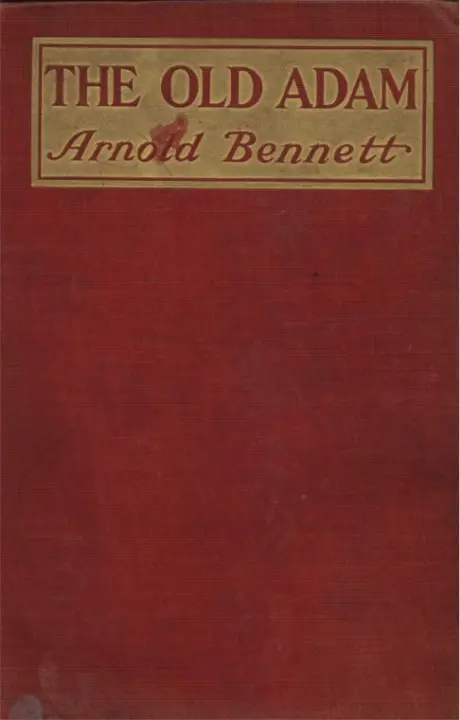
"The Old Adam: A Story of Adventure" by Arnold Bennett is a novel written in the early 20th century. The story follows Edward Henry Machin, a man grappling with the mundane aspects of life despite recent financial success through stock market speculation. Throughout the opening chapters, Edward navigates complex relationships with his wife, Nellie, and their family, against the backdrop of his self-reflections on wealth and happiness. The beginning of the novel introduces Edward Henry Machin as he returns home, struck by a sense of melancholy despite a recent windfall from his investments. As he enters a domestic space filled with the trappings of both comfort and chaos, Edward reflects on the burdens of his life, such as perceived negligence from his wife and children. The narrative quickly escalates into a familial crisis when his son suffers a minor dog bite, which escalates Nellie's worries about potential rabies, prompting Edward’s internal conflict about duty and desire for escapism. This opening sets the tone for a blend of familial dynamics and self-exploration as Edward seeks both change and reassurance within his relationships and financial endeavors.
Introduction adapted from the source catalogue; source summaries may be automatically generated.
Free to read · English · 85,382 words · No account needed
MAKE TIME FOR A GOOD BOOK
On by default. Untick to stop anonymous reading totals. Each page counts after 10 seconds in view. How this works.
Anonymous counting is on unless you have switched it off.
He timed his return with exactitude, and, going straight up-stairs to the chamber known indifferently as "Maisie's room" or "nurse's room," sure enough he found the three children there alone! They were fed, washed, night-gowned, and even dressing-gowned; and this was the hour when, while Nurse repaired the consequences of their revolutionary conduct in the bathroom and other places, they were left to themselves. Robert lay on the hearth-rug, the insteps of his soft, pink feet rubbing idly against the pile of the rug, his elbows digging into the pile, his chin on his fists, and a book perpendicularly beneath his eyes. Ralph, careless adventurer rather than student, had climbed to the glittering brass rail of Maisie's new bedstead, and was thereon imitating a recently seen circus performance. Maisie, in the bed according to regulation, and lying on the flat of her back, was singing nonchalantly to the ceiling. Carlo, unaware that at that moment he might have been a buried corpse but for the benignancy of Providence in his behalf, was feeling sympathetic towards himself because he was slightly bored.
"Hello, kids!" Edward Henry greeted them. As he had seen them before midday dinner, the more formal ceremonies of salutation after absence, so hateful to the Five Towns temperament, were happily over and done with.
Robert turned his head slightly, inspected his father with a judicial detachment that hardly escaped the inimical, and then resumed his book.
("No one would think," said Edward Henry to himself, "that the person who has just entered this room is the most enterprising and enlightened of West End theatrical managers.")
"'Ello, Father!" shrilled Ralph. "Come and help me to stand on this
wire rope."
"It isn't a wire rope," said Robert from the hearth-rug, without
stirring. "It's a brass rail."
"Yes, it is a wire rope, because I can make it bend," Ralph retorted, bumping down on the thing. "Anyhow, it's going to be a wire rope."
Maisie simply stuck several fingers into her mouth, shifted to one side, and smiled at her father in a style of heavenly and mischievous flirtatiousness.
"Well, Robert, what are you reading?" Edward Henry inquired in his best fatherly manner, half authoritative and half humorous, while he formed part of the staff of Ralph's circus.
"I'm not reading, I'm learning my spellings," replied Robert.
Edward Henry, knowing that the discipline of filial politeness must be maintained, said: "'Learning my spellings'--what?"
"Learning my spellings, Father," Robert consented to say, but with a savage air of giving way to the unreasonable demands of affected fools. Why indeed should it be necessary in conversation always to end one's sentence with the name or title of the person addressed?
Your reading position is saved on this browser. Take it to another device with a library code. Reading pages adapt to text, rather than matching a printed edition.
Arnold Bennett

Arnold Bennett
Arnold Bennett
Arnold Bennett
BEHIND THE BOOK
This eBook is for the use of anyone anywhere in the United States and most other parts of the world at no cost and with almost no restrictions whatsoever. You may copy it, give it away or re-use it under the terms of the Project Gutenberg License included with this eBook or online at www.gutenberg.org. If you are not located in the United States, you will have to check the laws of the country where you are located before using this eBook. Read the source licence.
The original source file, including credits and licence, is retained by this library. Request an original-format copy at no charge. Please include the book title and Project Gutenberg identifier #40168.
KEEP YOUR CURIOSITY GOING
Coulson Kernahan

Maurice Baring
Frances Wright
Cécile Tormay

Frederic Jesup Stimson

W. H. P. (William Henry Pope) Jarvis