
The Truth About an Author
Arnold Bennett
THE CLASSIC COLLECTION · 1913
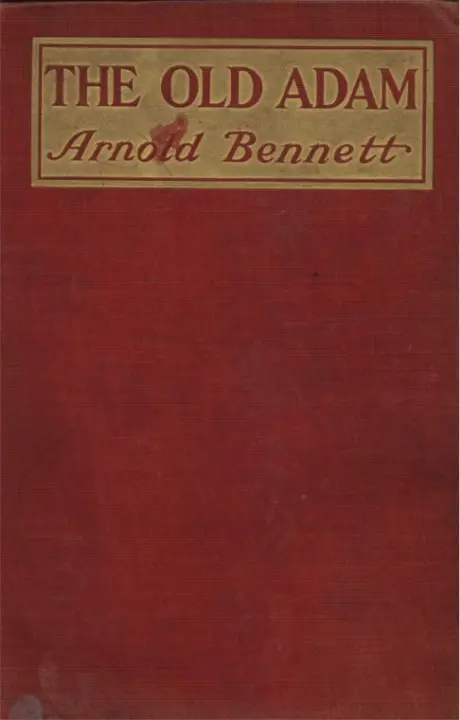
"The Old Adam: A Story of Adventure" by Arnold Bennett is a novel written in the early 20th century. The story follows Edward Henry Machin, a man grappling with the mundane aspects of life despite recent financial success through stock market speculation. Throughout the opening chapters, Edward navigates complex relationships with his wife, Nellie, and their family, against the backdrop of his self-reflections on wealth and happiness. The beginning of the novel introduces Edward Henry Machin as he returns home, struck by a sense of melancholy despite a recent windfall from his investments. As he enters a domestic space filled with the trappings of both comfort and chaos, Edward reflects on the burdens of his life, such as perceived negligence from his wife and children. The narrative quickly escalates into a familial crisis when his son suffers a minor dog bite, which escalates Nellie's worries about potential rabies, prompting Edward’s internal conflict about duty and desire for escapism. This opening sets the tone for a blend of familial dynamics and self-exploration as Edward seeks both change and reassurance within his relationships and financial endeavors.
Introduction adapted from the source catalogue; source summaries may be automatically generated.
Free to read · English · 85,382 words · No account needed
MAKE TIME FOR A GOOD BOOK
On by default. Untick to stop anonymous reading totals. Each page counts after 10 seconds in view. How this works.
Anonymous counting is on unless you have switched it off.
"I say, Cunningham's made a hit!" Mr. Marrier almost shouted at him as he entered the managerial room at the Regent.
"Cunningham? Who's Cunningham?"
Then he remembered. She was the girl who played the Messenger. She had only three words to say, and to say them over and over again; and she had made a hit!
"Seen the notices?" asked Marrier.
"Yes. What of them?"
"Oh! Well!" Marrier drawled. "What would you expect?"
"That's just what I said!" observed Edward Henry.
"You did, did you?" Mr. Marrier exclaimed, as if extremely interested by this corroboration of his views.
Carlo Trent strolled in; he remarked that he happened to be just passing. But the discussion of the situation was not carried very far.
That evening the house was nearly full, except the pit and the gallery, which were nearly empty. Applause was perfunctory.
"How much?" Edward Henry enquired of the box-office manager when figures
were added together.
"Thirty-one pounds two shillings."
"Hem!"
"Of course," said Mr. Marrier. "In the height of the London season, with so many counter-attractions--! Besides, they've got to get used to the idea of it."
Edward Henry did not turn pale. Still, he was aware that it cost him a trifle over sixty pounds "to ring the curtain up" at every performance, and this sum took no account of expenses of production nor of author's fees. The sum would have been higher, but he was calculating as rent of the theatre only the ground-rent plus six per cent. on the total price of the building.
What disgusted him was the duplicity of the first-night audience, and he said to himself violently: "I was right all the time, and I knew I was right! Idiots! Chumps! Of course I was right!"
On the third night the house held twenty-seven pounds and sixpence.
"Naturally," said Mr. Marrier. "In this hot weathah--! I never knew such a hot June! It's the open-air places that are doing us in the eye. In fact I heard to-day that the White City is packed. They simply can't bank their money quick enough."
It was on that day that Edward Henry paid salaries. It appeared to him that he was providing half London with a livelihood: acting managers, stage managers, assistant ditto, property men, stage hands, electricians, prompters, call boys, box-office staff, general staff, dressers, commissionaires, programme girls, cleaners, actors, actresses, understudies, to say nothing of Rose Euclid at a purely nominal salary of one hundred pounds a week. The tenants of the bars were grumbling, but happily he was getting money from them.
The following day was Saturday. It rained--a succession of thunderstorms. The morning and the evening performances produced together sixty-eight pounds.
Your reading position is saved on this browser. Take it to another device with a library code. Reading pages adapt to text, rather than matching a printed edition.
Arnold Bennett

Arnold Bennett
Arnold Bennett
Arnold Bennett
BEHIND THE BOOK
This eBook is for the use of anyone anywhere in the United States and most other parts of the world at no cost and with almost no restrictions whatsoever. You may copy it, give it away or re-use it under the terms of the Project Gutenberg License included with this eBook or online at www.gutenberg.org. If you are not located in the United States, you will have to check the laws of the country where you are located before using this eBook. Read the source licence.
The original source file, including credits and licence, is retained by this library. Request an original-format copy at no charge. Please include the book title and Project Gutenberg identifier #40168.
KEEP YOUR CURIOSITY GOING
Coulson Kernahan

Maurice Baring
Frances Wright
Cécile Tormay

Frederic Jesup Stimson

W. H. P. (William Henry Pope) Jarvis