THE CLASSIC COLLECTION✦The ocean wireless boys of the iceberg patrolCLASSIC FREE BOOKS
The ocean wireless boys of the iceberg patrol
John Henry Goldfrap
THE CLASSIC COLLECTION · 1914
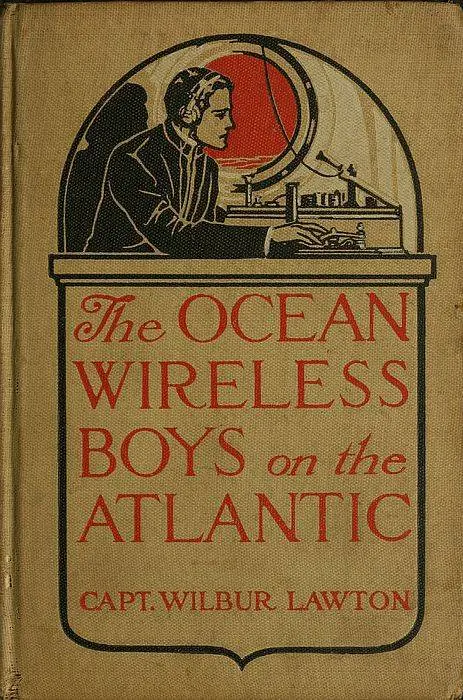
"The Ocean Wireless Boys on the Atlantic" by Captain Wilbur Lawton is a young adult adventure novel written in the early 20th century. The story follows Jack Ready, a determined sixteen-year-old who aspires to be a wireless operator. Faced with numerous rejections, Jack's life takes a thrilling turn when he bravely rescues a drowning girl, which leads to a chance at his dream job aboard a cargo ship. At the start of the novel, readers are introduced to Jack, who is disheartened by his unsuccessful search for work in wireless telegraphy. As he walks near the docks, an emergency arises when a young girl falls overboard, prompting Jack to dive in and rescue her. This heroic act earns him the admiration of the girl's influential father, ship-owner Jacob Jukes. However, Jack chooses to remain humble and declines a reward, believing his actions were simply the right thing to do. Shortly after, he learns that he has secured a position on the Titan Line's tanker, the Ajax, beginning his journey in the thrilling world of maritime adventures and challenges across the Atlantic.
Introduction adapted from the source catalogue; source summaries may be automatically generated.
Free to read · English · 46,772 words · No account needed
MAKE TIME FOR A GOOD BOOK
On by default. Untick to stop anonymous reading totals. Each page counts after 10 seconds in view. How this works.
Anonymous counting is on unless you have switched it off.
When he reached the bridge with this all-important despatch, Jack found the captain in consultation with his officers. Tests of the temperature of the water were being made, and the skipper was listening attentively to the roaring of the siren.
If there was ice in the vicinity, the echo of the great whistle would be flung back and serve as a warning.
“Well, boy?” the captain turned impatiently on Jack.
“A message, sir. I think it’s important,” said the boy deferentially.
The captain glanced through it and whistled.
“Important! I should think it is. Just what I thought. Confound this
ocean!”
He hastened over to his officers and showed them the despatch. A lively consultation followed, which Jack wished he could have overheard. He would have liked to know what further steps could be taken to avert the dangers amid which they were crawling forward.
As a matter of fact, all that could be done had been done. Humanly speaking, the Ajax was as safe as she could be rendered in the midst of the invisible dangers that, like white specters, might be swarming about her even now.
Jack was ordered back to the wireless room and told to stand by for any further information. The captain evidently placed great reliance on getting further word of the location of the ice-fields and bergs.
But, although Jack worked ceaselessly, sending out his crackling, sparkling calls, no reply came back out of the blinding fog. Clearly the ship that had sent the wireless that was so all-important had passed out of his zone, or else the “atmospherics” were arrayed against communication.
It was a thrilling and not altogether a comfortable thought to consider that at any moment there might loom above them, out of the choking mist, a mountainous white form that might well spell annihilation for the sturdy tanker.
Raynor, whose hand was now quite well, poked his head in at the door. He was grimy and soot-covered but cheerful, and was going off watch.
“Hello, Jack,” he cried, “what do you think of this? Burning soft coal in heaven, I guess! Isn’t it a smother, for fair?”
“It sure is,” rejoined Jack, “but the fog isn’t the worst of it.”
Raynor looked surprised.
“What are you driving at? They’ve had us on double watches since it started, stopping and starting up the engines till they must think they’re being run by a gang of crazy engineers.”
“It’s icebergs, old fellow,” said Jack in an awed tone.
“Icebergs! At this time of year, that’s unusual,” said Raynor.
“I don’t know about that, but I got a message from the Westerland
telling about them.”
Your reading position is saved on this browser. Take it to another device with a library code. Reading pages adapt to text, rather than matching a printed edition.
John Henry Goldfrap
John Henry Goldfrap
John Henry Goldfrap

John Henry Goldfrap
BEHIND THE BOOK
This eBook is for the use of anyone anywhere in the United States and most other parts of the world at no cost and with almost no restrictions whatsoever. You may copy it, give it away or re-use it under the terms of the Project Gutenberg License included with this eBook or online at www.gutenberg.org. If you are not located in the United States, you will have to check the laws of the country where you are located before using this eBook. Read the source licence.
The original source file, including credits and licence, is retained by this library. Request an original-format copy at no charge. Please include the book title and Project Gutenberg identifier #48955.
KEEP YOUR CURIOSITY GOING
Coulson Kernahan

Maurice Baring
Frances Wright
Cécile Tormay

Frederic Jesup Stimson

W. H. P. (William Henry Pope) Jarvis