THE CLASSIC COLLECTION✦The ocean wireless boys of the iceberg patrolCLASSIC FREE BOOKS
The ocean wireless boys of the iceberg patrol
John Henry Goldfrap
THE CLASSIC COLLECTION · 1914
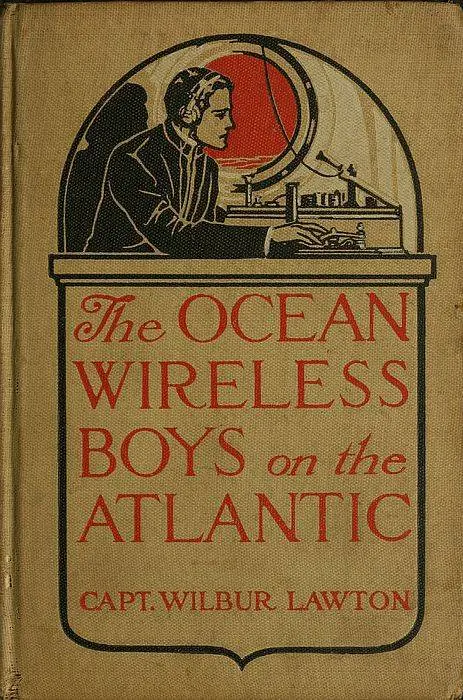
"The Ocean Wireless Boys on the Atlantic" by Captain Wilbur Lawton is a young adult adventure novel written in the early 20th century. The story follows Jack Ready, a determined sixteen-year-old who aspires to be a wireless operator. Faced with numerous rejections, Jack's life takes a thrilling turn when he bravely rescues a drowning girl, which leads to a chance at his dream job aboard a cargo ship. At the start of the novel, readers are introduced to Jack, who is disheartened by his unsuccessful search for work in wireless telegraphy. As he walks near the docks, an emergency arises when a young girl falls overboard, prompting Jack to dive in and rescue her. This heroic act earns him the admiration of the girl's influential father, ship-owner Jacob Jukes. However, Jack chooses to remain humble and declines a reward, believing his actions were simply the right thing to do. Shortly after, he learns that he has secured a position on the Titan Line's tanker, the Ajax, beginning his journey in the thrilling world of maritime adventures and challenges across the Atlantic.
Introduction adapted from the source catalogue; source summaries may be automatically generated.
Free to read · English · 46,772 words · No account needed
MAKE TIME FOR A GOOD BOOK
On by default. Untick to stop anonymous reading totals. Each page counts after 10 seconds in view. How this works.
Anonymous counting is on unless you have switched it off.
The Ajax was to remain two days or so longer in Antwerp, and the boys readily obtained permission from the captain to make all the use they could of their passes. They had already exhausted what they wished to see of Antwerp, including the famous fort on the Tête de Flandre on the opposite bank of the river, the great cathedral, the home of Rubens’ parents, and the magnificent picture gallery.
Now they could enlarge their opportunities, and they decided to take a trip to Brussels and from there to the field of Waterloo. Accordingly, they started in high spirits on their tour as soon as they could get a train. Their passes were marked “first-class,” so they soon ensconced themselves in a leather-lined compartment, while their less fortunate fellow passengers had to be content with “second” and “third.”
“I wonder how this arrangement would go in America?” asked Jack as they sank back in the soft-padded cushions.
“I guess everybody would go first-class,” laughed Raynor. “We haven’t anyone at home willing to brand himself ‘second’ or ‘third’ in the race.”
“Now who on earth is this?” wondered Jack presently, as a brightly uniformed official entered the compartment which they had to themselves.
“Conductor, I guess,” hazarded Raynor.
The official removed his cap and bowed low.
“Bonjours, messieurs,” said he; “les billets, si vous plait.”
“I guess he wants our tickets,” said Jack, fishing for his. This surmise proved to be correct.
The politeness of the official was more marked, if it could be possible, when he saw, from the signature on the passes, that the boys were traveling under “royal auspices.” He raised his cap and bowed again. Not to be outdone, the boys bowed back with equal suavity.
“Merci bien,” he said.
“Merci bien,” responded Jack, who had acquired some French at high
school.
“Mercy beans, too,” sputtered young Raynor, thinking that Jack was giving an order for a Boston lunch. The conductor bowed again and vanished, a bell rang and they were off. The ride lay through a farming region and the road was cool, clean and smooth.
On their arrival in Brussels, they found accommodation at a hotel overlooking the public square. The windows, although the maître de hotel had assured them that it was one of the best rooms in the house, were only four feet high.
“Gee, we have to lie down to look out!” exclaimed Raynor.
“On the square?” asked Jack with a grin.
“No; on the level; that’s the way I lie,” chuckled Raynor. Both lads were in high spirits. Their unexpected stroke of luck had surely proved a windfall.
Your reading position is saved on this browser. Take it to another device with a library code. Reading pages adapt to text, rather than matching a printed edition.
John Henry Goldfrap
John Henry Goldfrap
John Henry Goldfrap
John Henry Goldfrap
BEHIND THE BOOK
This eBook is for the use of anyone anywhere in the United States and most other parts of the world at no cost and with almost no restrictions whatsoever. You may copy it, give it away or re-use it under the terms of the Project Gutenberg License included with this eBook or online at www.gutenberg.org. If you are not located in the United States, you will have to check the laws of the country where you are located before using this eBook. Read the source licence.
The original source file, including credits and licence, is retained by this library. Request an original-format copy at no charge. Please include the book title and Project Gutenberg identifier #48955.
KEEP YOUR CURIOSITY GOING
Coulson Kernahan

Maurice Baring
Frances Wright
Cécile Tormay

Frederic Jesup Stimson

W. H. P. (William Henry Pope) Jarvis