THE CLASSIC COLLECTION✦The ocean wireless boys of the iceberg patrolCLASSIC FREE BOOKS
The ocean wireless boys of the iceberg patrol
John Henry Goldfrap
THE CLASSIC COLLECTION · 1914
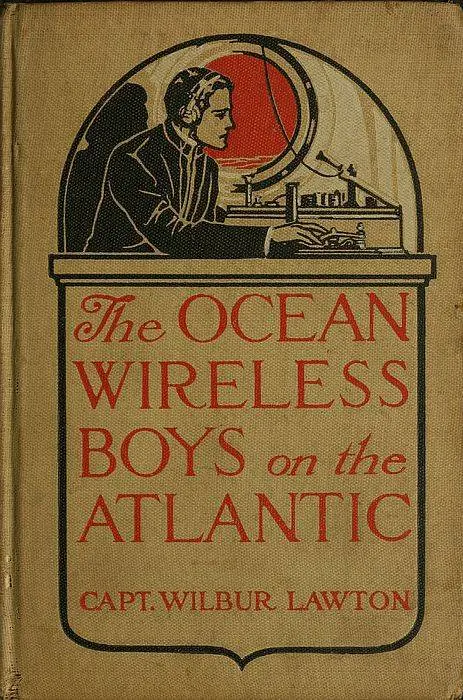
"The Ocean Wireless Boys on the Atlantic" by Captain Wilbur Lawton is a young adult adventure novel written in the early 20th century. The story follows Jack Ready, a determined sixteen-year-old who aspires to be a wireless operator. Faced with numerous rejections, Jack's life takes a thrilling turn when he bravely rescues a drowning girl, which leads to a chance at his dream job aboard a cargo ship. At the start of the novel, readers are introduced to Jack, who is disheartened by his unsuccessful search for work in wireless telegraphy. As he walks near the docks, an emergency arises when a young girl falls overboard, prompting Jack to dive in and rescue her. This heroic act earns him the admiration of the girl's influential father, ship-owner Jacob Jukes. However, Jack chooses to remain humble and declines a reward, believing his actions were simply the right thing to do. Shortly after, he learns that he has secured a position on the Titan Line's tanker, the Ajax, beginning his journey in the thrilling world of maritime adventures and challenges across the Atlantic.
Introduction adapted from the source catalogue; source summaries may be automatically generated.
Free to read · English · 46,772 words · No account needed
MAKE TIME FOR A GOOD BOOK
On by default. Untick to stop anonymous reading totals. Each page counts after 10 seconds in view. How this works.
Anonymous counting is on unless you have switched it off.
“Eet weigh twenty-eight ton,” volunteered the driver again, pointing with his whip to the lion, close access to which was gained by a steep flight of steps. There are two hundred and twenty-six of these steps, and the boys, on climbing them, were considerably out of breath when they reached the summit and saw the historic plain spread out under their feet.
“I’m disappointed,” confessed Jack frankly. “I thought it was much larger. Why, it doesn’t look like much more than a parade ground!”
“Well, it wasn’t much of a ‘parade’ at the time of the battle, with three hundred thousand men tearing at each other’s throats for five or six hours and leaving fifty thousand dead and wounded on the field,” commented Raynor, who was well up in history.
Then they drove over the road built by Napoleon fifteen years before the
battle.
“Might have been a good cavalry road, but it sure is a bone-shaker in this rig,” remarked Jack, and his companion agreed with him. They were much interested in the farm house of Hougomont, or rather its shell-battered ruins. This was the hottest point of the battle. The French assaulted it for hours, but did not succeed in taking it.
The family, who own the house, make a good living selling souvenirs to
visitors.
“I’ve been told,” said Jack, with a smile, “that every fall they plant little bullets and souvenirs. The winter snow and spring rains make the crop ready to be plowed up.”
“Profitable farming,” laughed Raynor. However, the boys bought a grape shot and what purported to be an insignia from an artilleryman’s cap.
“It must have been a great battle,” said Raynor as they paid off their hack bill, the size of which made them raise their eyebrows.
“Yes, and the Belgians are still able to charge,” remarked Jack dryly.
In the railroad carriage on the way back a self-assertive Englishman was holding forth on what a great victory Wellington had achieved. “Which,” he added, turning to the boys, “was all the more creditable because he fought with raw recruits. Most of our seasoned soldiers were in your country at the time.”
“And most of them are planted there yet,” remarked Raynor.
The Englishman glared at him; but Jack smoothed things over and everything was amiable till Raynor again disrupted international peace.
“Deuced funny clothes those beggars wear,” remarked the son of Britain, gazing out at a wooden-shoed, baggy-breeched peasant.
“Oh, I don’t know. Not so much funnier than an Englishman’s,” said the American lad; after which there ensued a silence lasting till the train rolled into Brussels.
Your reading position is saved on this browser. Take it to another device with a library code. Reading pages adapt to text, rather than matching a printed edition.
John Henry Goldfrap
John Henry Goldfrap
John Henry Goldfrap
John Henry Goldfrap
BEHIND THE BOOK
This eBook is for the use of anyone anywhere in the United States and most other parts of the world at no cost and with almost no restrictions whatsoever. You may copy it, give it away or re-use it under the terms of the Project Gutenberg License included with this eBook or online at www.gutenberg.org. If you are not located in the United States, you will have to check the laws of the country where you are located before using this eBook. Read the source licence.
The original source file, including credits and licence, is retained by this library. Request an original-format copy at no charge. Please include the book title and Project Gutenberg identifier #48955.
KEEP YOUR CURIOSITY GOING
Coulson Kernahan

Maurice Baring
Frances Wright
Cécile Tormay

Frederic Jesup Stimson

W. H. P. (William Henry Pope) Jarvis