THE CLASSIC COLLECTION✦The ocean wireless boys of the iceberg patrolCLASSIC FREE BOOKS
The ocean wireless boys of the iceberg patrol
John Henry Goldfrap
THE CLASSIC COLLECTION · 1914
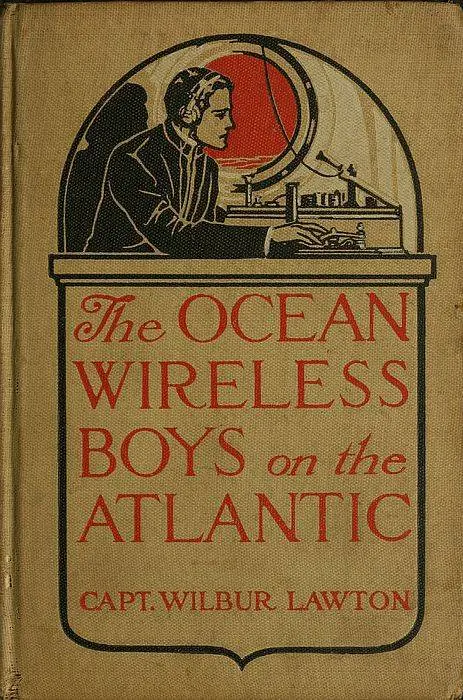
"The Ocean Wireless Boys on the Atlantic" by Captain Wilbur Lawton is a young adult adventure novel written in the early 20th century. The story follows Jack Ready, a determined sixteen-year-old who aspires to be a wireless operator. Faced with numerous rejections, Jack's life takes a thrilling turn when he bravely rescues a drowning girl, which leads to a chance at his dream job aboard a cargo ship. At the start of the novel, readers are introduced to Jack, who is disheartened by his unsuccessful search for work in wireless telegraphy. As he walks near the docks, an emergency arises when a young girl falls overboard, prompting Jack to dive in and rescue her. This heroic act earns him the admiration of the girl's influential father, ship-owner Jacob Jukes. However, Jack chooses to remain humble and declines a reward, believing his actions were simply the right thing to do. Shortly after, he learns that he has secured a position on the Titan Line's tanker, the Ajax, beginning his journey in the thrilling world of maritime adventures and challenges across the Atlantic.
Introduction adapted from the source catalogue; source summaries may be automatically generated.
Free to read · English · 46,772 words · No account needed
MAKE TIME FOR A GOOD BOOK
On by default. Untick to stop anonymous reading totals. Each page counts after 10 seconds in view. How this works.
Anonymous counting is on unless you have switched it off.
“Well, we have a very important letter to the captain with us. If the police get hold of us, they’ll want to do a whole lot of questioning, and goodness knows what time we’ll get back.”
“What shall we do?”
“Take to our heels, I guess. It doesn’t look very honest, but we must get that letter to the captain to-night.”
“That’s so; he said he’d sit up and wait for us,” responded Raynor.
“That is why I’m so anxious not to be detained. Come on.”
The two boys set off, running at top speed.
“Keep in the shadow of the wall,” said Jack; “we don’t want them to see
us.”
But that is just what the police did do. Their leader happened to be keen of eye and almost instantly he detected the two fleeing forms. He shouted something in French.
The boys kept right on. They ran like greyhounds. But the police were
fleet of foot, too.
Then the boys heard behind them a series of sharp, yapping barks.
“What in the world are those dogs for?” asked Raynor pantingly.
They had passed the park now and were running through a street bordered with dark houses. Jack’s reply was startling.
“They’re police dogs!”
“Police dogs?”
“That’s right. They have them in New York, too, and I remember reading in the paper that they were imported from Belgium.”
Shouts came from behind them.
They were in French, but the boys readily guessed their import. As if to emphasize their cries, the police, who believed not unnaturally that they were in pursuit of the miscreants who had disturbed the midnight peace, drew their revolvers.
Bullets spattered at the heels of the boys.
“We’ve got to stop,” panted Raynor.
“If we do, we may get shot,” gasped Jack. “Quick, in here.”
He seized Raynor’s arm and pulled him inside an iron gate in a high wall that surrounded a garden, in which stood a pretty, old-fashioned house. It appeared to be unoccupied.
“We’re in a fine pickle now,” muttered Raynor.
“Yes, I’m sorry we ran. If they catch us now, we’ll have an awful time
explaining.”
Raynor shuddered.
“You don’t mean they’ll send us to jail?”
“I don’t know. I’ve heard a lot about these foreign police. They’re likely to do anything.”
“And we can’t speak their language,” added Raynor. “That makes it
worse.”
“I’m afraid that it does,” agreed Jack. “But hush! here they come.”
Your reading position is saved on this browser. Take it to another device with a library code. Reading pages adapt to text, rather than matching a printed edition.
John Henry Goldfrap
John Henry Goldfrap
John Henry Goldfrap
John Henry Goldfrap
BEHIND THE BOOK
This eBook is for the use of anyone anywhere in the United States and most other parts of the world at no cost and with almost no restrictions whatsoever. You may copy it, give it away or re-use it under the terms of the Project Gutenberg License included with this eBook or online at www.gutenberg.org. If you are not located in the United States, you will have to check the laws of the country where you are located before using this eBook. Read the source licence.
The original source file, including credits and licence, is retained by this library. Request an original-format copy at no charge. Please include the book title and Project Gutenberg identifier #48955.
KEEP YOUR CURIOSITY GOING
Coulson Kernahan

Maurice Baring
Frances Wright
Cécile Tormay

Frederic Jesup Stimson

W. H. P. (William Henry Pope) Jarvis