The Making of the Great West, 1512-1883
Samuel Adams Drake
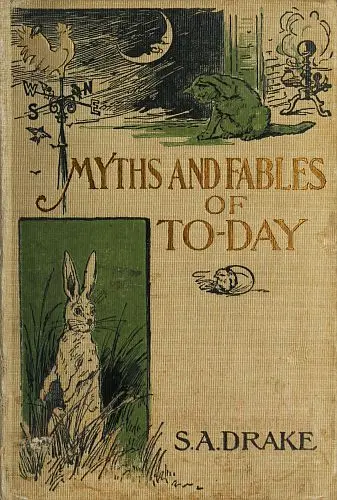
THE CLASSIC COLLECTION · 1900
"The Myths and Fables of To-Day" by Samuel Adams Drake is a historical collection focused on contemporary superstitions and their origins, written in the late 19th century. The book explores the persistence and influence of mythology and superstition in modern life, examining cultural practices and beliefs that have been passed down through generations. The opening portion sets the stage for a compelling analysis of how deeply ingrained superstitions continue to shape human behavior and consciousness. At the start of the text, Drake engages readers with a discussion of superstition as a constant presence in human history, arguing that it remains influential even in an enlightened age. He challenges the notion that superstition is solely a relic of the past, illustrating its continued relevance through examples from folklore, childhood stories, and rituals. By invoking significant cultural references, he highlights how common practices, like the celebration of Christmas and the telling of nursery tales, provide insight into the enduring nature of myth and the human penchant for the supernatural. This opening establishes a thought-provoking premise, inviting readers to reconsider the myths that persist in their own lives.
Introduction adapted from the source catalogue; source summaries may be automatically generated.
Free to read · English · 45,444 words · No account needed
MAKE TIME FOR A GOOD BOOK
On by default. Untick to stop anonymous reading totals. Each page counts after 10 seconds in view. How this works.
Anonymous counting is on unless you have switched it off.
“Chip, chop, chay,
Give a thing, give a thing,
Never take it back again.”
The process of counting a person out in the familiar phrase as being “it,” is fairly traced back to the ancient custom of designating a criminal from among his fellows by lot. The form that we know the best in New England, a sort of barbaric doggerel, according to Mr. Burton, is still current in Cornwall, England, and goes in this wise:--
“Ena, mena, bora, mi:
Kisca, lara, mova, di:
Eggs, butter, cheese, bread,
Stick, stock, stone dead.”
The resemblance between the foregoing, and what is current among playfellows on this side of the water easily suggests that the boys of the “good Old Colony times,” so often referred to with a sigh of regret, brought their games and pastimes along with them. As now remembered, the doggerel charm runs as follows:--
“Eny, meny, mony might,
Huska, lina, bony tight,
Huldy, guldy, boo!”
In getting ready for a game of “tag,” “I spy,” or “hide and seek,” the one to whom this last magic word falls becomes the victim or is said to be “it.” So in like manner the rhymed formula, following, is employed in counting a child “out”:--
“One-ery, two-ery, ickery Ann,
Fillicy, fallicy, Nicholas, John,
Queever, quaver, English knaver,
Stinckelum, stanckelum, Jericho, buck.”
A more simple counting-out rhyme is this:
“One, two, three,
Out goes he (or she).”
“Tit, tat, toe,” is still another form, repeated with variations
according to locality.
These few examples may serve to show that what the performers themselves regard only as a simple expedient in the arranging of their games, if they ever give the matter a thought, is really a survival of the belief in the efficacy of certain magical words, turned into rhyme, to propitiate success. If this idea had not been instilled into our children by long custom and habit, it is not believed that they would continue to repeat such unmeaning drivel. Yet, as childish as it may seem, it advances us one step in solving the intricate problem in hand; for here, too, “the child is father to the man.”
Your reading position is saved on this browser. Take it to another device with a library code. Reading pages adapt to text, rather than matching a printed edition.
Samuel Adams Drake
Samuel Adams Drake
Samuel Adams Drake
Samuel Adams Drake
BEHIND THE BOOK
This eBook is for the use of anyone anywhere in the United States and most other parts of the world at no cost and with almost no restrictions whatsoever. You may copy it, give it away or re-use it under the terms of the Project Gutenberg License included with this eBook or online at www.gutenberg.org. If you are not located in the United States, you will have to check the laws of the country where you are located before using this eBook. Read the source licence.
The original source file, including credits and licence, is retained by this library. Request an original-format copy at no charge. Please include the book title and Project Gutenberg identifier #44177.
KEEP YOUR CURIOSITY GOING
Cécile Tormay

Moritz Busch
John L. Ransom

Maurice Baring
Frances Wright
Cécile Tormay