The Making of the Great West, 1512-1883
Samuel Adams Drake
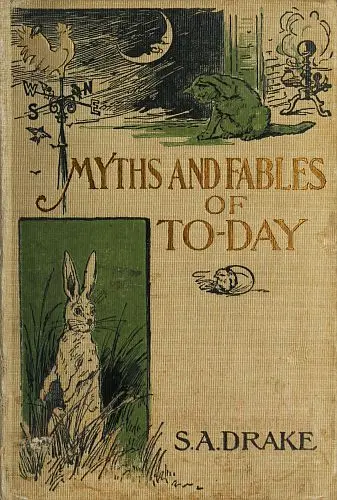
THE CLASSIC COLLECTION · 1900
"The Myths and Fables of To-Day" by Samuel Adams Drake is a historical collection focused on contemporary superstitions and their origins, written in the late 19th century. The book explores the persistence and influence of mythology and superstition in modern life, examining cultural practices and beliefs that have been passed down through generations. The opening portion sets the stage for a compelling analysis of how deeply ingrained superstitions continue to shape human behavior and consciousness. At the start of the text, Drake engages readers with a discussion of superstition as a constant presence in human history, arguing that it remains influential even in an enlightened age. He challenges the notion that superstition is solely a relic of the past, illustrating its continued relevance through examples from folklore, childhood stories, and rituals. By invoking significant cultural references, he highlights how common practices, like the celebration of Christmas and the telling of nursery tales, provide insight into the enduring nature of myth and the human penchant for the supernatural. This opening establishes a thought-provoking premise, inviting readers to reconsider the myths that persist in their own lives.
Introduction adapted from the source catalogue; source summaries may be automatically generated.
Free to read · English · 45,444 words · No account needed
MAKE TIME FOR A GOOD BOOK
On by default. Untick to stop anonymous reading totals. Each page counts after 10 seconds in view. How this works.
Anonymous counting is on unless you have switched it off.
“Authorized by her grandam.”--Macbeth.
If you sneeze before breakfast, you will have company before dinner.
If you pick the common red field lily, it will make you freckled.
A spark in the candle denotes a letter in the post office for you.
To hand a cup with two spoons in it to any one, is a sign of a coming
wedding in the family.
If a cat is allowed to get into bed with an infant, the child will be
strangled by the animal sucking its breath, or by lying across its
chest.
If my right ear burns, some one is talking about me, hence the familiar saying, “I’ll make his ears tingle for him.” Pliny records this omen. Also in “Much Ado About Nothing,” Beatrice exclaims, “What fire is in mine ears!”
When the right ear itches or burns, the person so affected will shortly cry; when it is the left, he will laugh. One version runs in this wise:--
“Left or right
Good at night.”
Late blossoming of vines or fruit trees will be followed by much sickness. This probably rests upon the theory that a mild autumn will be a sickly autumn, which is the same thing as saying that unseasonable weather is pretty sure to be unwholesome weather. The same prediction is expressed by the old saying that “A green Christmas makes a fat church-yard.” Both predictions agree with the observations of medical science.
A spoon in the saucer and another in the cup denote that the person using them will be a spendthrift, and probably come to want; but two spoons to one dish of ice-cream denote foresight and true thrift.
“Sing before you eat,
Cry before you sleep.”
Or, if you sing before breakfast, you will cry before supper.
Pull out one gray hair, and ten will grow in its place.
Should you happen to let drop your scissors, or other sharp instrument, and they should stick upright in the floor, it is a sign that you will soon see a stranger.[5]
Dropping the dishcloth has the same significance.
Two cowlicks, growing on the same person’s head, denote that he will eat his bread in two kingdoms--that is, be a traveller in foreign parts.
Should a cow swallow her cud, the animal will die, unless another cud
be immediately given her.
Hard-hack[6] was thus named by the early colonists, who declared that the tough stalk turned the edge of the mower’s scythe.
If you see a white horse, you will immediately after see a red-haired
woman.
Your reading position is saved on this browser. Take it to another device with a library code. Reading pages adapt to text, rather than matching a printed edition.
Samuel Adams Drake
Samuel Adams Drake
Samuel Adams Drake
Samuel Adams Drake
BEHIND THE BOOK
This eBook is for the use of anyone anywhere in the United States and most other parts of the world at no cost and with almost no restrictions whatsoever. You may copy it, give it away or re-use it under the terms of the Project Gutenberg License included with this eBook or online at www.gutenberg.org. If you are not located in the United States, you will have to check the laws of the country where you are located before using this eBook. Read the source licence.
The original source file, including credits and licence, is retained by this library. Request an original-format copy at no charge. Please include the book title and Project Gutenberg identifier #44177.
KEEP YOUR CURIOSITY GOING
Cécile Tormay

Moritz Busch
John L. Ransom

Maurice Baring
Frances Wright
Cécile Tormay