The Making of the Great West, 1512-1883
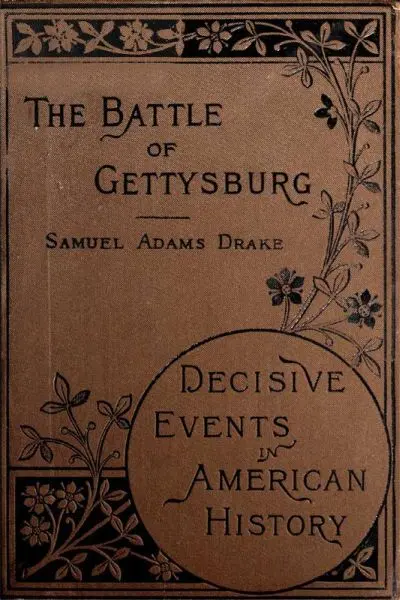
Samuel Adams Drake
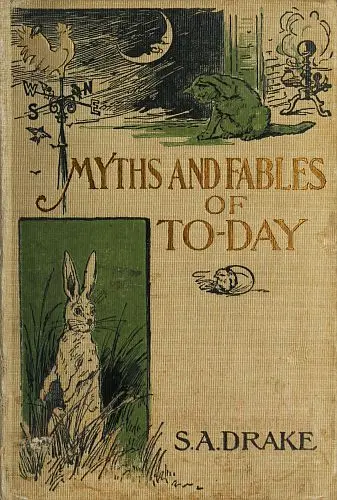
THE CLASSIC COLLECTION · 1900
"The Myths and Fables of To-Day" by Samuel Adams Drake is a historical collection focused on contemporary superstitions and their origins, written in the late 19th century. The book explores the persistence and influence of mythology and superstition in modern life, examining cultural practices and beliefs that have been passed down through generations. The opening portion sets the stage for a compelling analysis of how deeply ingrained superstitions continue to shape human behavior and consciousness. At the start of the text, Drake engages readers with a discussion of superstition as a constant presence in human history, arguing that it remains influential even in an enlightened age. He challenges the notion that superstition is solely a relic of the past, illustrating its continued relevance through examples from folklore, childhood stories, and rituals. By invoking significant cultural references, he highlights how common practices, like the celebration of Christmas and the telling of nursery tales, provide insight into the enduring nature of myth and the human penchant for the supernatural. This opening establishes a thought-provoking premise, inviting readers to reconsider the myths that persist in their own lives.
Introduction adapted from the source catalogue; source summaries may be automatically generated.
Free to read · English · 45,444 words · No account needed
MAKE TIME FOR A GOOD BOOK
On by default. Untick to stop anonymous reading totals. Each page counts after 10 seconds in view. How this works.
Anonymous counting is on unless you have switched it off.
“Why this is the best fooling when all is done.”--Twelfth
Night.
The trite saying that “children and fools are soothsayers” goes straight to the heart of those familiar superstitions with which the folk-lore of childhood abounds. We, the children of a larger growth, often call to mind with what avidity we listened in our childhood’s days to the nursery tales of giants, dwarfs, ghosts, fairies, and the like creations of pure fancy. We still remember how instantly all the emotions of our childish nature were excited by the recital of these marvels--told us, too, with such an air of truth, that never for a moment did we doubt them. Oh, how we hated Blue Beard, and how we adored Jack the Giant-Killer! Are we not treated, just as soon as we are out of the cradle, as if superstition was the first law of nature? What is the wonder, then, that the effects of these early impressions are not easily got rid of, or the impressions themselves soon, if ever, forgotten? “Brownie” is put into the arms of toddling infants before they can articulate two words plainly. Just as soon as the child is able to prattle a little, it is taught the familiar nursery rhyme of
“Bye, bye, Baby Bunting,
Papa’s gone a-hunting,”
drawn from ancient folk-lore, with which the rabbit and hare are so intimately associated. After the innocent face rhymes, found with little variation, in no less than four different languages, giving names to each of the chubby little features,--
“Eyes winker, Tom Tinker,” etc.
come the well-known button rhymes, like this:
“Rich man, poor man, beggar man, thief,
Doctor, lawyer, merchant, chief;”
or this one, told centuries ago to children across the water:--
“A tinker, a tailor,
A soldier or sailor,
A rich man, a poor man,
A priest or a parson,
A ploughman or a thief.”
The virgin soil being thus artfully prepared to receive superstition, the boy or girl goes forth among playmates similarly equipped, with them to practice various forms of conjuration in their innocent sports, without in the least knowing what they are doing. Here are a few of them:--
Making a cross upon the ground before your opponent, at the same time muttering “criss-cross,” when playing at marbles, to make him miss his shot, as I have often seen done in my schoolboy days. This is merely a relic of that superstition attached to making the sign of the cross, as a charm against the power of evil spirits.
The innocent sounding words “criss-cross” we believe originally to have been Christ’s Cross.
Your reading position is saved on this browser. Take it to another device with a library code. Reading pages adapt to text, rather than matching a printed edition.
Samuel Adams Drake
Samuel Adams Drake
Samuel Adams Drake
Samuel Adams Drake
BEHIND THE BOOK
This eBook is for the use of anyone anywhere in the United States and most other parts of the world at no cost and with almost no restrictions whatsoever. You may copy it, give it away or re-use it under the terms of the Project Gutenberg License included with this eBook or online at www.gutenberg.org. If you are not located in the United States, you will have to check the laws of the country where you are located before using this eBook. Read the source licence.
The original source file, including credits and licence, is retained by this library. Request an original-format copy at no charge. Please include the book title and Project Gutenberg identifier #44177.
KEEP YOUR CURIOSITY GOING
Cécile Tormay

Moritz Busch
John L. Ransom

Maurice Baring
Frances Wright
Cécile Tormay