The Making of the Great West, 1512-1883
Samuel Adams Drake
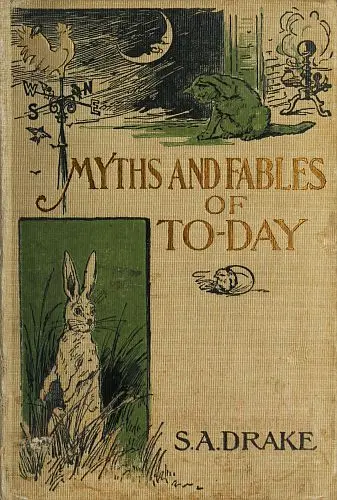
THE CLASSIC COLLECTION · 1900
"The Myths and Fables of To-Day" by Samuel Adams Drake is a historical collection focused on contemporary superstitions and their origins, written in the late 19th century. The book explores the persistence and influence of mythology and superstition in modern life, examining cultural practices and beliefs that have been passed down through generations. The opening portion sets the stage for a compelling analysis of how deeply ingrained superstitions continue to shape human behavior and consciousness. At the start of the text, Drake engages readers with a discussion of superstition as a constant presence in human history, arguing that it remains influential even in an enlightened age. He challenges the notion that superstition is solely a relic of the past, illustrating its continued relevance through examples from folklore, childhood stories, and rituals. By invoking significant cultural references, he highlights how common practices, like the celebration of Christmas and the telling of nursery tales, provide insight into the enduring nature of myth and the human penchant for the supernatural. This opening establishes a thought-provoking premise, inviting readers to reconsider the myths that persist in their own lives.
Introduction adapted from the source catalogue; source summaries may be automatically generated.
Free to read · English · 45,444 words · No account needed
MAKE TIME FOR A GOOD BOOK
On by default. Untick to stop anonymous reading totals. Each page counts after 10 seconds in view. How this works.
Anonymous counting is on unless you have switched it off.
Children of both sexes count apple seeds by means of the pretty jingling rhymes, so like to the German flower oracle, often employed by children of a larger growth. It has been set to music.
“One I love,
Two I love.
Three I love, I say,
Four I love with all my heart,
Five I cast away;
Six he loves,
Seven she loves,
Eight both love;
Nine he comes,
Ten he tarries,
Eleven he courts,
Twelve he marries.”
Holding the pretty field buttercup under another’s chin, in order to see if he or she loves butter, is a good form of divination. So is the practice of blowing off the fluffy dandelion top, after the flower has gone to seed, to determine the hour, as that flower always opens at about five in the morning, and shuts at about eight in the evening, thus making it stand in the room of a clock for shepherds. This plant has also been called the rustic oracle. To find the time of day, as many puffs as it takes to blow away the downy seed balls gives the answer. The same method of divination is employed by children to find out if their mothers want them; or to waft a message to some loved one; or to know if such or such a person is thinking of them; and whether he or she lives north, east, south, or west.
To the same general purport is the invocation:
“Rain, rain, go away,
Come again another day.”
We understand that the equally familiar form,--
“Snail, snail, put out your horn,”
is repeated in China as well as in this country, though sometimes
altered to
“Snail, snail, come out of your hole,
Or else I’ll beat you black as a coal.”
One equally familiar form of childish invocation appears in the pretty little lady-bird rhyme, so often repeated by the young:--
“Lady-bird, lady-bird,
Fly away home,
Your house is on fire,
Your children will burn.”
A favorite way, with boys, of choosing sides for a game of ball is by measuring the stick. To do this, the leader of one side first heaves the stick in the air, skilfully catching it, as it falls, at a point as near a hand’s-breadth to the end as possible, as his opponent must then measure the stick with him, alternately hand-over-hand, from the point where it is caught. The one securing enough of the last of the stick for a hold, has the first choice. This is determination by lot.
Still another form of invocation, formerly much used to clinch a bargain between boys, when “swapping” jack-knives or marbles, runs to this effect:--
Your reading position is saved on this browser. Take it to another device with a library code. Reading pages adapt to text, rather than matching a printed edition.
Samuel Adams Drake
Samuel Adams Drake
Samuel Adams Drake
Samuel Adams Drake
BEHIND THE BOOK
This eBook is for the use of anyone anywhere in the United States and most other parts of the world at no cost and with almost no restrictions whatsoever. You may copy it, give it away or re-use it under the terms of the Project Gutenberg License included with this eBook or online at www.gutenberg.org. If you are not located in the United States, you will have to check the laws of the country where you are located before using this eBook. Read the source licence.
The original source file, including credits and licence, is retained by this library. Request an original-format copy at no charge. Please include the book title and Project Gutenberg identifier #44177.
KEEP YOUR CURIOSITY GOING
Cécile Tormay

Moritz Busch
John L. Ransom

Maurice Baring
Frances Wright
Cécile Tormay