Mississippi Outlaws and the Detectives Don Pedro and the Detectives; Poisoner and the Detectives
Allan Pinkerton
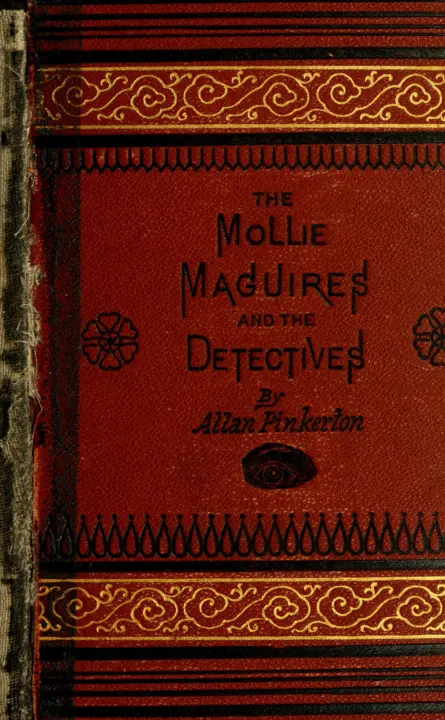
THE CLASSIC COLLECTION · 1877
"The Molly Maguires and the detectives" by Allan Pinkerton is a nonfiction investigative account written in the late 19th century. It chronicles Pinkerton’s covert campaign against the secretive Molly Maguires in Pennsylvania’s anthracite coal region, undertaken at the request of railroad executive Franklin B. Gowen, and follows undercover operative James McParlan (alias James McKenna) as he works to infiltrate the organization amid labor strife, violence, and political intrigue. The opening of the book sets Pinkerton’s pledge to tell a factual, unvarnished story of the coal fields and a violent secret society that, he argues, has evaded justice. Gowen solicits Pinkerton to penetrate the Mollies, whose alibis, intimidation, and sway over local politics have thwarted prosecutions, and Pinkerton accepts with strict conditions of secrecy and a plan to embed an Irish Catholic operative. Pinkerton then selects James McParlan, sketches his background and disguise, and launches him under the alias “James McKenna.” McKenna begins by tramping through towns like Port Clinton, Schuylkillhaven, Tremont, Tower City, and Minersville, posing as a job-seeking laborer while building contacts: he’s refused lodging by a drunken landlord, sheltered by an Irish family (with a comic drunk blocking a door), and quietly probes opinions by discussing scathing newspaper pieces on the Mollies with men like the switchman Fitzgibbons. He cultivates leads through saloon talk (including a former member’s hints that Mahanoy City is fertile ground), descends into a working mine to learn the setting, endures a snowbound stage ride and shabby lodging, and finally settles into a modest boarding house, using evenings in bars and card rooms to deepen his cover and map the society’s haunts.
Introduction adapted from the source catalogue; source summaries may be automatically generated.
Free to read · English · 181,288 words · No account needed
MAKE TIME FOR A GOOD BOOK
On by default. Untick to stop anonymous reading totals. Each page counts after 10 seconds in view. How this works.
Anonymous counting is on unless you have switched it off.
Another thing which troubled him not a little was to obtain a constant supply of good ink. Several small bottles, which he procured and kept hidden in his room, froze solid, and the fluid was spoiled. The Lawler family was not literary. Its members made small use of pens, ink, and paper, and a fragment of red or white chalk employed upon a portion of the bar shelving, and well out of sight behind bottles and cigar-boxes, formed blotter, journal, cash-book, and ledger for Mike. His was a cash business, calling for no account-books. Ink was a superfluity in his house, the absence of which could well be pardoned. Both of the heads of that family believed firmly in meddling with writing as little as possible. But McKenna must have ink. Fortunately for him, Mrs. Lawler was an excellent laundress, and employed liquid bluing to give proper clearness to her husband’s linen. This coloring matter the detective frequently made use of, and there is abundant evidence in his reports, sometimes in the shape of blots and patches not necessary to the adornment of the sheet, that the landlady’s indigo bottle suffered considerably from the inroads made upon it by his busy steel pen. The latter instrument, in a common tin case, he easily managed to carry, with tobacco, keys, cartridges, bits of string and nails, in some of his convenient pockets. Many a time did he creep down the stairs and across the bar-room in his stocking feet, bearing his boots in his hand, of a cold winter night, light a tallow candle, or a miner’s lamp, and sit shivering by the kitchen table, with a miserably dim and uncertain flame, writing up his report, and consuming his substitute for ink, at Mrs. Lawler’s expense. On one or two occasions, in fact, he was reduced to the strait of commingling soot from the fire-place with water for writing purposes, when he had no pencil, the indigo vial was absent from its accustomed place, or the supply of fluid had given out. After completing the composition there came the enveloping and stamping. Diving into his corner in the old boot-leg, he would take out the amount required and carefully replace the remainder. Then, not daring to retain the dangerous missive over night in his possession, he must don his overcoat, and, by the illumination granted by the stars alone, wend his way to the post-office, where he could deposit his parcel in the outside box and no person be the wiser. Sometimes he had to return from these short nocturnal journeys completely saturated with falling rain, or having, in the darkness, stumbled into a ditch or mud-hole, his clothes would present a terribly soiled appearance when he could see them. To save himself trouble in answering unpleasant questions, he would, in such an event, kindle a fire in the cook-stove, dry and cleanse his garments, and then, before retiring, sit up and watch the embers until they expired, in order that Mrs. Lawler might find nothing to make inquiries about. Very luckily for him, his bedfellow was a sound sleeper, and never once awakened when he left the room or returned. Had he done so, however, the detective had ready contrived an excuse which must have silenced suspicion, in any reasonable man, that the absentee was engaged in work not unnecessary for one in his physical condition. All in Lawler’s house slept deeply. This greatly favored the detective’s wanderings at night. But he was not long in discovering that he must find a place where, however small and inconvenient, he could occupy some sort of an apartment quite by himself. Otherwise his reports would be few and scattering, brief and unsatisfactory. He therefore began the search for another boarding-house, with a valid reason for cutting away from the Lawler residence.
Your reading position is saved on this browser. Take it to another device with a library code. Reading pages adapt to text, rather than matching a printed edition.
Allan Pinkerton
Allan Pinkerton
Allan Pinkerton
Allan Pinkerton
BEHIND THE BOOK
This eBook is for the use of anyone anywhere in the United States and most other parts of the world at no cost and with almost no restrictions whatsoever. You may copy it, give it away or re-use it under the terms of the Project Gutenberg License included with this eBook or online at www.gutenberg.org. If you are not located in the United States, you will have to check the laws of the country where you are located before using this eBook. Read the source licence.
The original source file, including credits and licence, is retained by this library. Request an original-format copy at no charge. Please include the book title and Project Gutenberg identifier #76641.
KEEP YOUR CURIOSITY GOING
Cécile Tormay

Moritz Busch
John L. Ransom
Frances Wright
Cécile Tormay

Mabel Potter Daggett