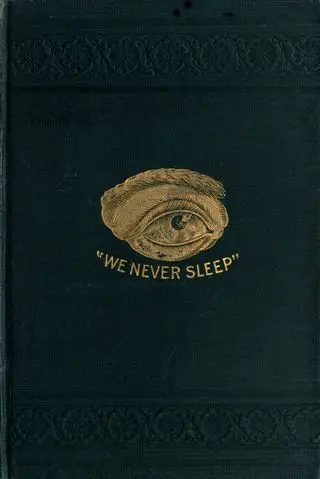
Mississippi Outlaws and the Detectives Don Pedro and the Detectives; Poisoner and the Detectives
Allan Pinkerton
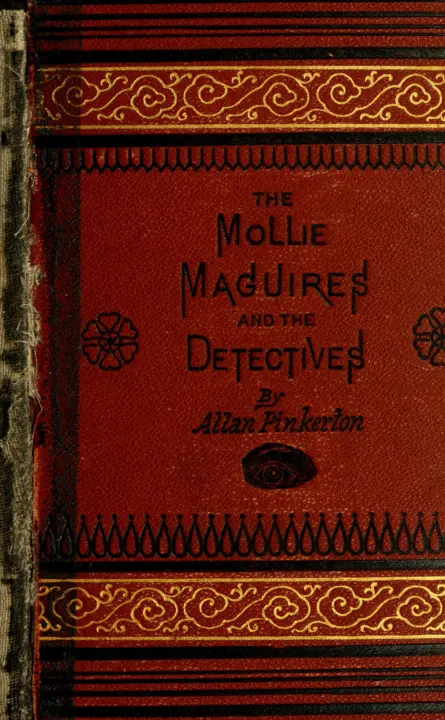
THE CLASSIC COLLECTION · 1877
"The Molly Maguires and the detectives" by Allan Pinkerton is a nonfiction investigative account written in the late 19th century. It chronicles Pinkerton’s covert campaign against the secretive Molly Maguires in Pennsylvania’s anthracite coal region, undertaken at the request of railroad executive Franklin B. Gowen, and follows undercover operative James McParlan (alias James McKenna) as he works to infiltrate the organization amid labor strife, violence, and political intrigue. The opening of the book sets Pinkerton’s pledge to tell a factual, unvarnished story of the coal fields and a violent secret society that, he argues, has evaded justice. Gowen solicits Pinkerton to penetrate the Mollies, whose alibis, intimidation, and sway over local politics have thwarted prosecutions, and Pinkerton accepts with strict conditions of secrecy and a plan to embed an Irish Catholic operative. Pinkerton then selects James McParlan, sketches his background and disguise, and launches him under the alias “James McKenna.” McKenna begins by tramping through towns like Port Clinton, Schuylkillhaven, Tremont, Tower City, and Minersville, posing as a job-seeking laborer while building contacts: he’s refused lodging by a drunken landlord, sheltered by an Irish family (with a comic drunk blocking a door), and quietly probes opinions by discussing scathing newspaper pieces on the Mollies with men like the switchman Fitzgibbons. He cultivates leads through saloon talk (including a former member’s hints that Mahanoy City is fertile ground), descends into a working mine to learn the setting, endures a snowbound stage ride and shabby lodging, and finally settles into a modest boarding house, using evenings in bars and card rooms to deepen his cover and map the society’s haunts.
Introduction adapted from the source catalogue; source summaries may be automatically generated.
Free to read · English · 181,288 words · No account needed
MAKE TIME FOR A GOOD BOOK
On by default. Untick to stop anonymous reading totals. Each page counts after 10 seconds in view. How this works.
Anonymous counting is on unless you have switched it off.
In other parts of the dwelling, the arrangements for home comfort were not extensive or expensive, yet all that could well be expected of people in Mr. and Mrs. Lawler’s sphere in life.
Passing the time very pleasantly at Shenandoah, which is an agreeable and growing city of some three thousand inhabitants, the detective made occasional trips—as he informed his new-found friend, with an expressive wink of the eye, “upon particular business”—to the town of Colorado, where he encountered and became intimate with one Hugh Mulligan, then to Rappahannock and other points, in all of which localities he made good friends among the Sleepers. He eventually took up his abode at Lawler’s house, occupying the bed in the centre apartment, up stairs, in company with Mrs. Lawler’s brother, and paying a reasonable compensation for room and board.
Situated as he now was, in the midst of the hardest characters and most devoted Mollies of the whole country, living in the house, and on most intimate terms of friendship, with the leading spirits of the organization, though not yet a member of the murderous order, it was plainly incumbent upon the detective, if he cared for preserving his own life and promoting the success of the Agency, to exercise more than ordinary prudence and discretion in all of his words and movements, that he might not be thought other than the wandering vagabond, fleeing from justice, that he was generally believed to be. It seemed especially necessary that his correspondence with the Philadelphia office should not be discovered, or even imagined. The precautions and safeguards placed about that portion of the business before McKenna started from the city, would baffle all inquiry, in the end, if once set on foot, but even the breath of suspicion should not be allowed to arise. Men have been murdered from the mere supposition that they might be guilty of acting as detectives, in Ireland, and the same spirit pervaded the ranks of the Mollie Maguires here—hence matters calculated to excite a surmise must be deeply buried. The detective’s compulsory letter-writing, if made public, even though its object and destination were ever so well disguised, might place him in a dangerous predicament. Thus he was alert, and continually vigilant. Excepting it might be in inditing a letter to relatives in the old country, and then only at long intervals, he seldom wrote anything—that is, as far as his companions were apprised. His daily reports must, however, be prepared as usual. This was mandatory upon him, and in no case to be omitted if the duty could be safely performed. Occasionally a day or two might be unavoidably missed, and then the consolidated report would go forward in one envelope. Sometimes he was forced to take a short journey to an adjacent town, secure a room at a second-class hotel, and there indite his letters and mail them to the proper address. Thus they would quickly reach Mr. Franklin. Writing-paper and envelopes he could with safety keep in his possession. They might rest in his satchel, which he frequently left unlocked, without danger of causing those to wonder who might curiously open that receptacle. But any large supply of postage stamps would hardly seem consistent with the character he assumed. He must not purchase them at the Shenandoah post-office, but a quantity were forwarded to him from Philadelphia. These came to him in due season. With the envelope containing them in his hand, he sat upon the side of his bed, and the question arose: “What shall I do with these troublesome little things?” He first thought of hiding them in some of the many pockets with which his rough clothing was furnished. But the chances were that some time, when he was enacting the rôle of the deeply intoxicated man—as he had done, and undoubtedly would again be called upon to do—he might be searched and the mischievous stamps discovered. Besides, from exposure to inclement weather, he was frequently drenched to the skin, and the stamps would in such a case be reduced to pulp and destroyed. They must be concealed—but where? When did one of his countrymen ever give over as hopeless any scheme or plan, when exertion of ingenuity might supply the bridge that would safely bear him over an obstacle? The instances are rare, and McKenna was not to be the subject of one of them. “Can’t I put them under my stocking, next the sole of my boot?” he asked himself. No, that would never do. Moisture, friction, and his weight would combine soon to deface and ruin the stamps. An expedient, in this connection, however, now occurred to him, and, taking out his pocket-knife, he made a small, narrow opening in the sheepskin lining of the leg of one of the heavy top boots, and betwixt that and the heavy leather formed a pouch, the mouth of which was almost invisible, in which, after wrapping them in some strong paper, he deposited the postage-stamps. In this safe place, as long as he remained in the vicinity, he continued to carry them. He was reasonably sure of having them always convenient; and, as he had but one pair of boots at a time, could hardly forget to take those with him, however suddenly he might be called to remove from one point to another.
Your reading position is saved on this browser. Take it to another device with a library code. Reading pages adapt to text, rather than matching a printed edition.
Allan Pinkerton
Allan Pinkerton
Allan Pinkerton
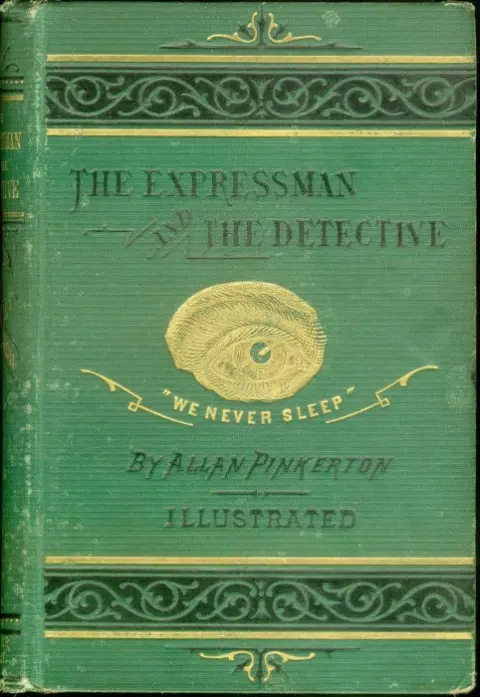
Allan Pinkerton
BEHIND THE BOOK
This eBook is for the use of anyone anywhere in the United States and most other parts of the world at no cost and with almost no restrictions whatsoever. You may copy it, give it away or re-use it under the terms of the Project Gutenberg License included with this eBook or online at www.gutenberg.org. If you are not located in the United States, you will have to check the laws of the country where you are located before using this eBook. Read the source licence.
The original source file, including credits and licence, is retained by this library. Request an original-format copy at no charge. Please include the book title and Project Gutenberg identifier #76641.
KEEP YOUR CURIOSITY GOING
Cécile Tormay

Moritz Busch
John L. Ransom
Frances Wright
Cécile Tormay

Mabel Potter Daggett