Stolen Idols
E. Phillips (Edward Phillips) Oppenheim
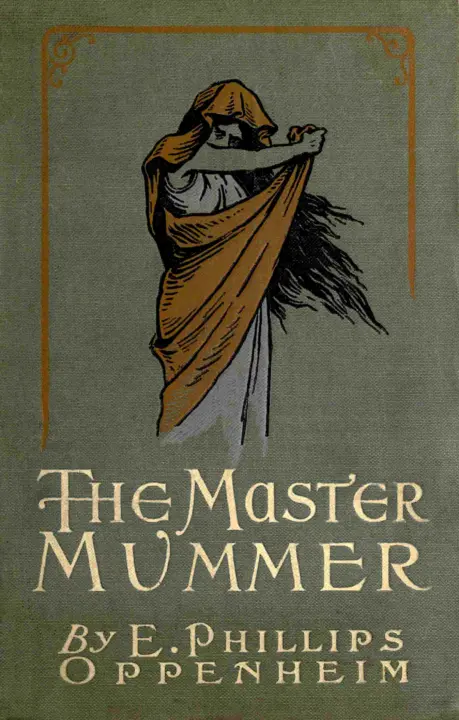
THE CLASSIC COLLECTION · 1904
"The Master Mummer" by E. Phillips Oppenheim is a novel written in the early 20th century. The story revolves around Arnold Greatson, a struggling writer who yearns for a more profound creative experience beyond the superficial lighthearted tales he has been penning. His desire for authenticity drives him to seek out real stories, eventually leading him to a fateful encounter at a train station and a subsequent dramatic incident involving a terrified young girl named Isobel de Sorrens and the mysterious man who claims to be her guardian. The opening portion of the novel introduces us to Arnold in his creative struggles, balancing light-hearted fiction with a deeper yearning for authenticity in his writing. His conversations with his friend Mabane reveal his frustration with the industry and his aspirations to depict genuine human experiences. After some insightful exchanges about the nature of art and inspiration, Arnold takes a decisive step to explore life more fully by venturing into the bustling world outside, where he soon encounters Isobel and witnesses a tragic and profound series of events that will alter his life fundamentally. The narrative weaves elements of mystery and drama, setting the stage for Arnold's transformation from a passive observer into an active participant in the lives of those around him.
Introduction adapted from the source catalogue; source summaries may be automatically generated.
Free to read · English · 75,621 words · No account needed
MAKE TIME FOR A GOOD BOOK
On by default. Untick to stop anonymous reading totals. Each page counts after 10 seconds in view. How this works.
Anonymous counting is on unless you have switched it off.
"As to that," the young man answered, "I am the envoy of her Royal Highness, as I can speedily convince you if you will."
"It is unnecessary," I answered. "The Archduchess has already had my answer. Will you allow me to wish you good-night?"
"I wish, Mr. Greatson," the young man said, "that you would discuss this matter with me in a reasonable spirit."
"At a reasonable hour," I answered, "I might be prepared to do so. But
certainly not now."
It seemed to me that his hand upon the gate tightened. He certainly showed no signs of accepting the dismissal which I was trying to force upon him.
"I have endeavoured to explain my late arrival," he said. "You must not believe me guilty of wilful discourtesy. As for the rest, Mr. Greatson, what does it matter whether the hour is late or early? The matter is an important one. Between ourselves, her Highness has made up her mind to undertake the charge of the young lady, and I may tell you that when her Highness has made up her mind to anything she is not one to be disappointed."
"In her own country," I said, "the will of the Archduchess is doubtless paramount. Out here, however, she must take her chance amongst the others."
"But you have no claim--no shadow of a claim upon the child," the Baron
declared.
"If the Archduchess thinks she has a better," I answered, "the law
courts are open to her."
My visitor was apparently becoming annoyed. There were traces of
irritation in his tone.
"Do you imagine, my dear Mr. Greatson," he said, "that her Highness can possibly desire to bring before the notice of the world the peccadiloes of her illustrious relative? No, the law courts are not to be thought of. We rely upon your good sense!"
"And failing that?"
The Baron hesitated. It seemed to me that he was peering into the
shadows beyond the hedge.
"The position," he murmured, "is a singular one. Where neither side for different reasons is disposed to submit its case to the courts, then it must be admitted that possession becomes a very important feature in the case."
"That," I remarked, "is entirely my view. May I take the liberty, Baron von Leibingen, of wishing you good-night? I see no advantage in continuing this discussion."
"Possession for the moment," he said slowly, "is with you. Have you reflected, Mr. Greatson, that it may not always be so?"
"Will you favour me," I said, "by becoming a little more explicit?"
Your reading position is saved on this browser. Take it to another device with a library code. Reading pages adapt to text, rather than matching a printed edition.
E. Phillips (Edward Phillips) Oppenheim
E. Phillips (Edward Phillips) Oppenheim
E. Phillips (Edward Phillips) Oppenheim
E. Phillips (Edward Phillips) Oppenheim
BEHIND THE BOOK
This eBook is for the use of anyone anywhere in the United States and most other parts of the world at no cost and with almost no restrictions whatsoever. You may copy it, give it away or re-use it under the terms of the Project Gutenberg License included with this eBook or online at www.gutenberg.org. If you are not located in the United States, you will have to check the laws of the country where you are located before using this eBook. Read the source licence.
The original source file, including credits and licence, is retained by this library. Request an original-format copy at no charge. Please include the book title and Project Gutenberg identifier #28161.
KEEP YOUR CURIOSITY GOING
Coulson Kernahan

Maurice Baring
Frances Wright
Cécile Tormay

Frederic Jesup Stimson

W. H. P. (William Henry Pope) Jarvis