Stolen Idols
E. Phillips (Edward Phillips) Oppenheim
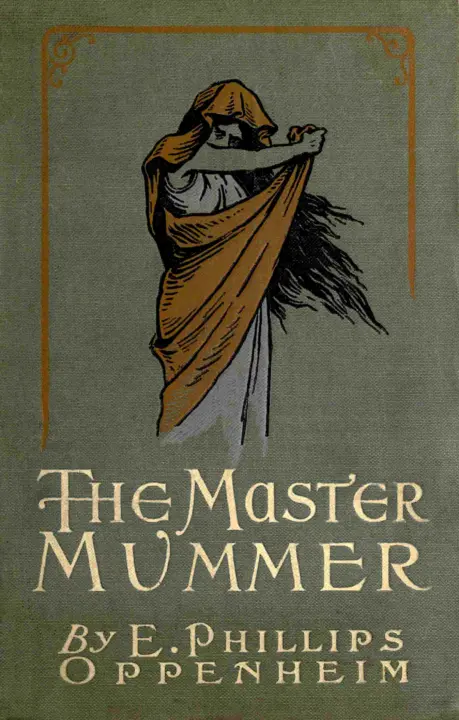
THE CLASSIC COLLECTION · 1904
"The Master Mummer" by E. Phillips Oppenheim is a novel written in the early 20th century. The story revolves around Arnold Greatson, a struggling writer who yearns for a more profound creative experience beyond the superficial lighthearted tales he has been penning. His desire for authenticity drives him to seek out real stories, eventually leading him to a fateful encounter at a train station and a subsequent dramatic incident involving a terrified young girl named Isobel de Sorrens and the mysterious man who claims to be her guardian. The opening portion of the novel introduces us to Arnold in his creative struggles, balancing light-hearted fiction with a deeper yearning for authenticity in his writing. His conversations with his friend Mabane reveal his frustration with the industry and his aspirations to depict genuine human experiences. After some insightful exchanges about the nature of art and inspiration, Arnold takes a decisive step to explore life more fully by venturing into the bustling world outside, where he soon encounters Isobel and witnesses a tragic and profound series of events that will alter his life fundamentally. The narrative weaves elements of mystery and drama, setting the stage for Arnold's transformation from a passive observer into an active participant in the lives of those around him.
Introduction adapted from the source catalogue; source summaries may be automatically generated.
Free to read · English · 75,621 words · No account needed
MAKE TIME FOR A GOOD BOOK
On by default. Untick to stop anonymous reading totals. Each page counts after 10 seconds in view. How this works.
Anonymous counting is on unless you have switched it off.
"Great heavens, yes!" he answered vehemently.
"You are very good," she murmured, "very good to me. All my life I shall
remember this."
She held out both her hands. Her eyes were fixed still upon mine. Mabane laid his hand upon her shoulder.
"Dear child," he said, "do not forget that there are three of us. I too am very happy to be one of your guardians."
She gave him the hand which Arthur had seized upon. I think that we had none of us before seen a smile so dazzling as hers.
"Dear friends," she murmured, "I only hope that you will never regret this great, great kindness."
Then suddenly she flitted away and went to her room. We three men were
left alone.
I think that for the first few moments there was some slight awkwardness, for we were men, and we spoke seldom of the things which touched us most. Arthur, however, broke almost immediately into speech, and relieved the tension.
"And to think that it was I," he exclaimed, "who sent you out plot hunting to the station! Arnold, what a sensible chap you are!"
We all laughed.
"A good many people," Mabane remarked quietly, "would call us three fools. Tell us, Arnold, did you really discover nothing?"
"Absolutely nothing," I declared. "Stop, though. I did find out this. There is some secret about the child's parentage. I have spoken with two people who know it, and one of them warned me that in keeping the child we were interfering in a greater matter than we had any idea of. Of course it might have been a bluff, but I fancy that Lady Delahaye was in earnest."
"You do not think," Mabane asked, "that she was Major Delahaye's
daughter?"
"I do not," I answered, with a little shudder. "I am sure that she was
not."
"Whoever she is," Arthur declared, "there's one thing jolly certain, and that is she's thoroughbred. She has the most marvellous nerve I ever knew. We got in a tight corner this morning. I took her down to Guildford in a trailer, and I had to jump the pavement to avoid a runaway. She never flinched for a moment. Half the girls I know would have squealed like mad. She only laughed, and asked whether she should get out. She's as thoroughbred as they make them."
"Perhaps," I answered, "but I'm not going to have you risk her life with your beastly motoring, Arthur. Take her out in a car, if you want to. Who's this?"
We turned towards the door. Was it the ghost of Madame Richard who stood there pale, cold, and in the sombre garb of her sisterhood?
Your reading position is saved on this browser. Take it to another device with a library code. Reading pages adapt to text, rather than matching a printed edition.
E. Phillips (Edward Phillips) Oppenheim
E. Phillips (Edward Phillips) Oppenheim
E. Phillips (Edward Phillips) Oppenheim
E. Phillips (Edward Phillips) Oppenheim
BEHIND THE BOOK
This eBook is for the use of anyone anywhere in the United States and most other parts of the world at no cost and with almost no restrictions whatsoever. You may copy it, give it away or re-use it under the terms of the Project Gutenberg License included with this eBook or online at www.gutenberg.org. If you are not located in the United States, you will have to check the laws of the country where you are located before using this eBook. Read the source licence.
The original source file, including credits and licence, is retained by this library. Request an original-format copy at no charge. Please include the book title and Project Gutenberg identifier #28161.
KEEP YOUR CURIOSITY GOING
Coulson Kernahan

Maurice Baring
Frances Wright
Cécile Tormay

Frederic Jesup Stimson

W. H. P. (William Henry Pope) Jarvis