Stolen Idols
E. Phillips (Edward Phillips) Oppenheim
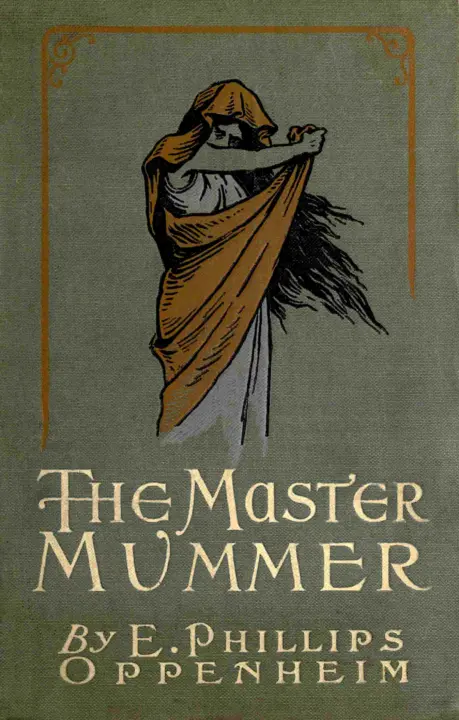
THE CLASSIC COLLECTION · 1904
"The Master Mummer" by E. Phillips Oppenheim is a novel written in the early 20th century. The story revolves around Arnold Greatson, a struggling writer who yearns for a more profound creative experience beyond the superficial lighthearted tales he has been penning. His desire for authenticity drives him to seek out real stories, eventually leading him to a fateful encounter at a train station and a subsequent dramatic incident involving a terrified young girl named Isobel de Sorrens and the mysterious man who claims to be her guardian. The opening portion of the novel introduces us to Arnold in his creative struggles, balancing light-hearted fiction with a deeper yearning for authenticity in his writing. His conversations with his friend Mabane reveal his frustration with the industry and his aspirations to depict genuine human experiences. After some insightful exchanges about the nature of art and inspiration, Arnold takes a decisive step to explore life more fully by venturing into the bustling world outside, where he soon encounters Isobel and witnesses a tragic and profound series of events that will alter his life fundamentally. The narrative weaves elements of mystery and drama, setting the stage for Arnold's transformation from a passive observer into an active participant in the lives of those around him.
Introduction adapted from the source catalogue; source summaries may be automatically generated.
Free to read · English · 75,621 words · No account needed
MAKE TIME FOR A GOOD BOOK
On by default. Untick to stop anonymous reading totals. Each page counts after 10 seconds in view. How this works.
Anonymous counting is on unless you have switched it off.
"I will not detain you any further, Madame," I said.
"A messenger is already in London to bring back the child," she
remarked.
"As to that," I answered, "it is perhaps better to be frank with you, Madame Richard. Your messenger will return alone."
For the first time the woman's face showed some signs of feeling. Her dark eyebrows contracted a little. Her expression was coldly repellent.
"You have no claim upon the child," she said.
"Neither do I know of any other person who has," I answered.
"We have had the charge of her for ten years. That itself is a claim. It is unseemly that she should remain with you."
"Madame," I answered, "Isobel is meant for life--not a living death."
The woman crossed herself.
"There is but one life," she said. "We wish to prepare Isobel for it."
"Madame," I said, "as to that, argument between us is impossible. I shall consult with my friends. Your messenger shall bring back word as to our decision."
The face of the woman grew darker.
"But surely," she protested, "you will not dare to keep the child?"
"Madame," I answered, "humanity makes sometimes strange claims upon us. Isobel is as yet a child. She came into my keeping by the strangest of chances. I did not seek the charge of her. It was, to tell the truth, an embarrassment to me. Yet she is under my care to-day, and I shall do what I believe to be the right thing."
"Monsieur," she said, "you are interfering in matters greater than you
have any knowledge of."
"It is in your power," I reminded her, "to enlighten me."
"It is not a power which I am able to use," she answered.
"Then I will not detain you further, Madame," I said.
As I passed out she leaned over towards me. She had already rung a bell, and outside I could hear the shuffling footsteps of the old servant who had admitted me.
"Monsieur," she said, "if you keep the child you make enemies--very powerful enemies. It is long since I lived in the world, but I think that the times have not changed very much. Of the child's parentage I may not tell you, but as I hope for salvation I will tell you this. It will be better for you, and better for the child, that she comes back here, even to embrace what you have called the living death."
"Madame," I said, "I will consider all these things."
Your reading position is saved on this browser. Take it to another device with a library code. Reading pages adapt to text, rather than matching a printed edition.
E. Phillips (Edward Phillips) Oppenheim
E. Phillips (Edward Phillips) Oppenheim
E. Phillips (Edward Phillips) Oppenheim
E. Phillips (Edward Phillips) Oppenheim
BEHIND THE BOOK
This eBook is for the use of anyone anywhere in the United States and most other parts of the world at no cost and with almost no restrictions whatsoever. You may copy it, give it away or re-use it under the terms of the Project Gutenberg License included with this eBook or online at www.gutenberg.org. If you are not located in the United States, you will have to check the laws of the country where you are located before using this eBook. Read the source licence.
The original source file, including credits and licence, is retained by this library. Request an original-format copy at no charge. Please include the book title and Project Gutenberg identifier #28161.
KEEP YOUR CURIOSITY GOING
Coulson Kernahan

Maurice Baring
Frances Wright
Cécile Tormay

Frederic Jesup Stimson

W. H. P. (William Henry Pope) Jarvis